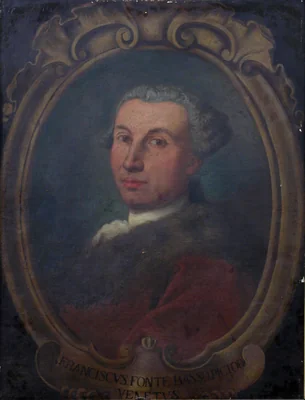
Francesco Fontebasso
Francesco Fontebasso (1707-1769) stands as an important, yet occasionally overshadowed, figure within the vibrant artistic sphere of eighteenth-century Venice. Operating at the stylistic crossroads of the late-Baroque and the emerging Rococo, Fontebasso initially trained under the accomplished Sebastiano Ricci. While Ricci provided the necessary technical foundation, Fontebasso quickly gravitated toward the brilliant, airy sensibilities and dynamic compositional lightness of his primary contemporary influence, Giovanni Battista Tiepolo. This decisive stylistic alignment shaped Fontebasso’s mature hand, characterized by a bright palette, kinetic figures, and an emphasis on graceful, sophisticated decorative schemes designed for aristocratic interiors and major religious venues.
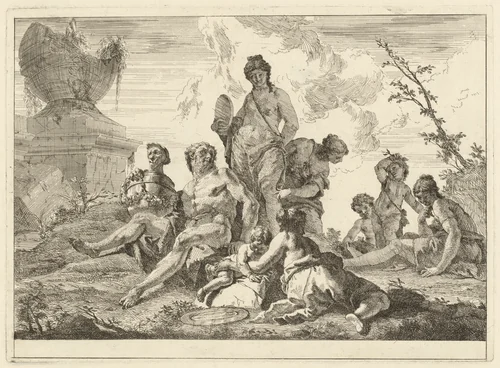
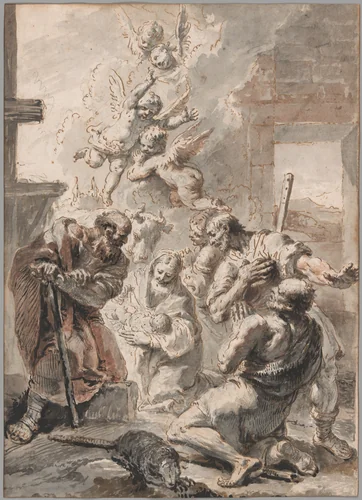
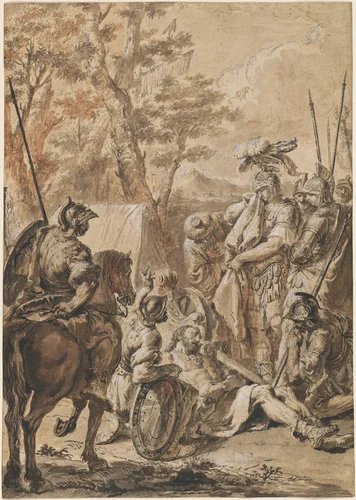
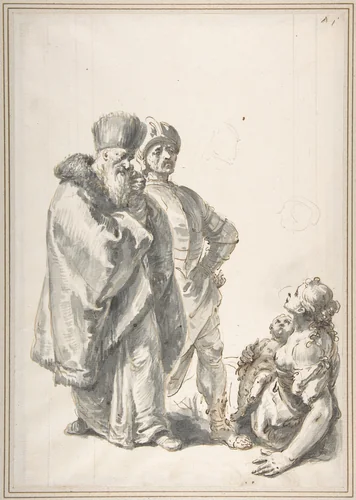
Fontebasso’s output, represented in leading collections such as the National Gallery of Art and the Art Institute of Chicago, provides clear insight into his proficiency across media. Though his surviving oeuvre is dominated by preparatory drawings and studies, his commissioned subject matter ranged widely. He produced dramatic interpretations of religious history, including the vigorous Death of Saint Jerome, and classic New Testament scenes like Christ among the Doctors and Christ and the Woman of Samaria. Further demonstrating his versatility beyond purely devotional work, his production included compelling genre studies, such as the detailed observation of artistic professional life captured in Architect Submitting Designs to Patron. While he may lack the overwhelming documentation of certain peers, the high-quality prints available from existing records confirm his significant contribution to Venetian painting.
The pinnacle of Fontebasso’s career occurred far from the lagoons of Venice. Responding to the tremendous demand for Italian Rococo masters across Europe, he traveled in 1761 to Saint Petersburg. There, he executed extensive ceiling paintings and decorative programs within the newly constructed Winter Palace. It is perhaps one of the great historical ironies that a style so intrinsically Venetian reached its maximum opulent expression in the northern capital of Russia.
Following this impressive international tenure, Fontebasso returned to Venice in 1768, dedicating his final years to local religious commitments, most notably assisting in the decoration of a chapel within San Francesco della Vigna. Today, the enduring interest in Francesco Fontebasso paintings ensures that his downloadable artwork continues to circulate, connecting contemporary audiences with the refined elegance of the Venetian settecento.
Source: Wikipedia · CC BY-SA 4.0