Francesco di Giorgio Martini
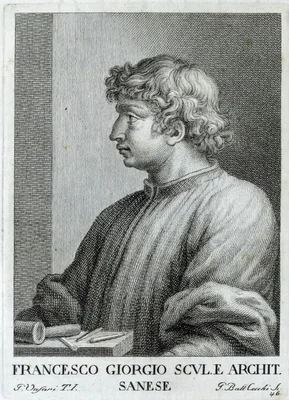
Francesco di Giorgio Martini was a pivotal figure of the Italian Quattrocento, demonstrating a comprehensive mastery across architecture, engineering, painting, sculpture, and theoretical writing. Active particularly between 1465 and 1485, Martini transcended typical categorization, being recognized by Nikolaus Pevsner as "one of the most interesting later Quattrocento architects." This extraordinary versatility defined a career dedicated to bridging the conceptual rigor of humanist theory with practical execution in both the fine arts and military engineering.
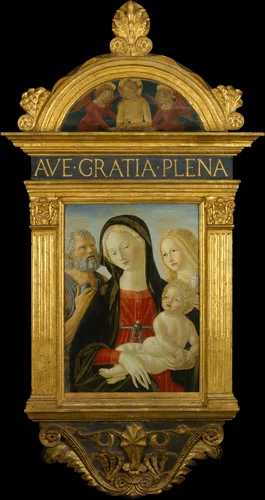
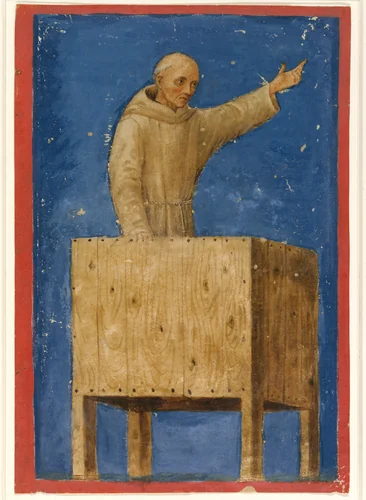
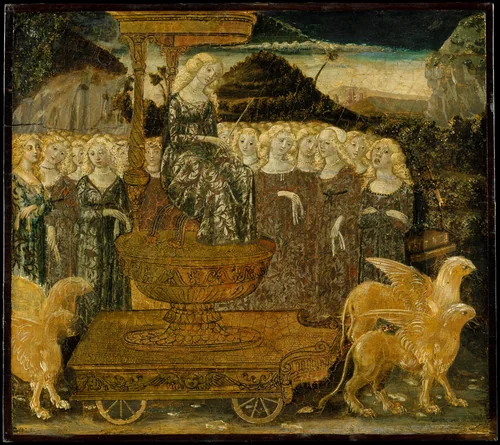
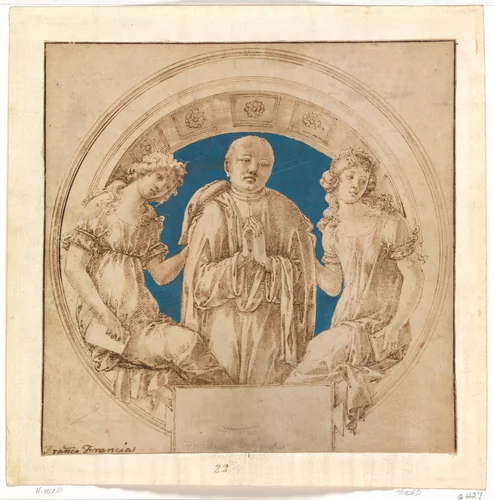
While his principal renown rests upon his exhaustive architectural treatises and engineering prowess, his output as a painter firmly established him within the refinement of the Sienese School tradition. His surviving panel works, which include the compelling The Man of Sorrows with Two Angels and the narrative Saint Bernardino Preaching from a Pulpit, are characterized by delicate line work and sophisticated compositional control. These Francesco di Giorgio Martini paintings, housed in collections such as the Metropolitan Museum of Art and the National Gallery of Art, offer valuable insight into the intellectual and artistic climate of the ducal courts he served. His distinctive style is also evident in complex allegories such as the Goddess of Chaste Love.
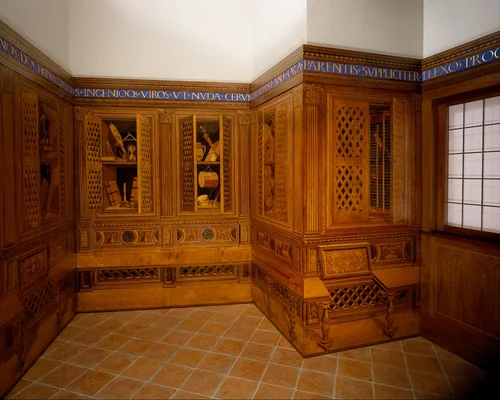
Martini served notably under Federico da Montefeltro, Count of Urbino, functioning as chief military engineer. He was responsible for executing architectural designs and building almost seventy fortifications, transforming defensive strategy across the region. A subtle observation of his contribution is his pioneering role in developing early examples of star-shaped fortifications, successfully transforming necessary defense into geometric art. Beyond external defenses, Martini excelled in interior design and complex decorative application, evidenced by his contribution to the famous wood inlay of the Studiolo from the Ducal Palace in Gubbio.
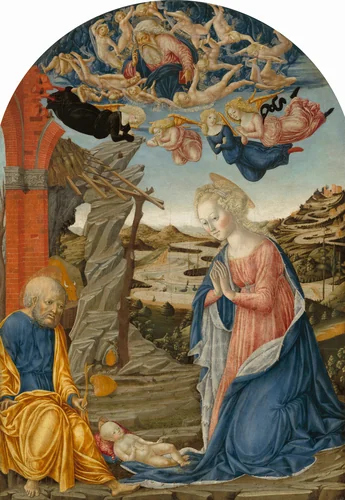
Martini’s comprehensive legacy secured his place not merely as a craftsman but as a profound theorist whose detailed manuscripts provided blueprints for future generations. While his originals remain museum-quality assets, works such as The Nativity, with God the Father Surrounded by Angels and Cherubim are widely accessible. High-quality prints and downloadable artwork of his designs and paintings often fall into the public domain, ensuring continued study and appreciation of this central Renaissance polymath.
Source: Wikipedia · CC BY-SA 4.0