Francesco Denanto
Francesco Denanto, an Italian woodcutter, operated during the pivotal mid-fifteenth century, a critical period when printmaking rapidly revolutionized visual culture in the early Renaissance. His established active period, circa 1452, places him among the foundational figures whose work translated complex religious narratives into repeatable, accessible forms. Denanto’s use of the woodcut technique facilitated the broad dissemination of popular piety, serving as a primary means of distributing visual information before painting could fulfill that role for a broader audience.
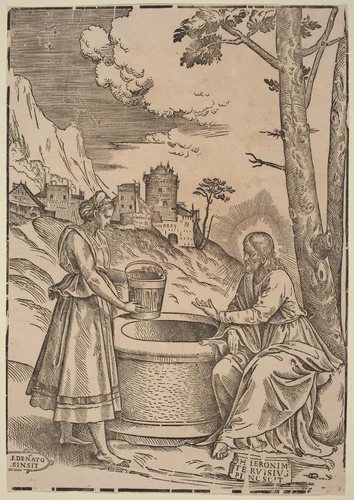
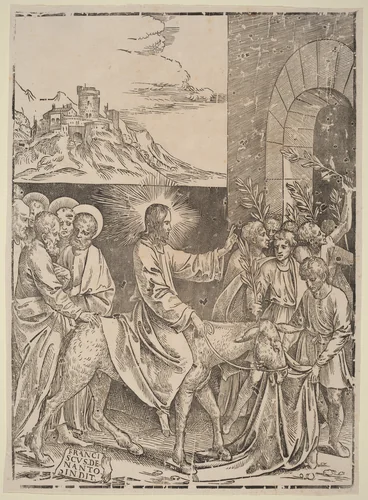
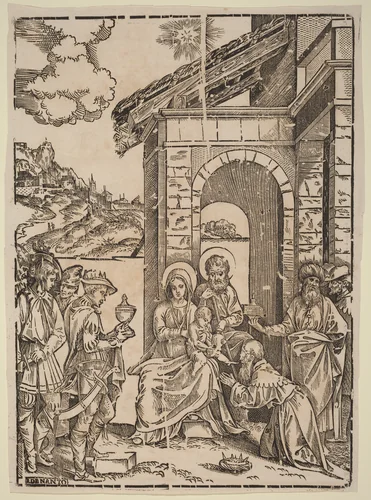
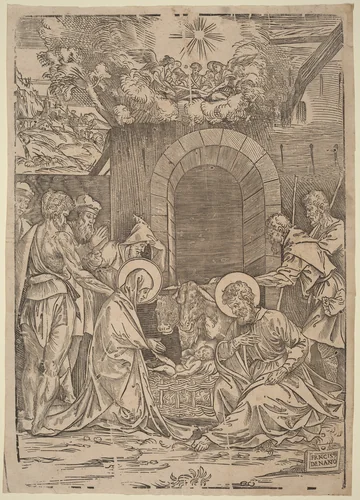
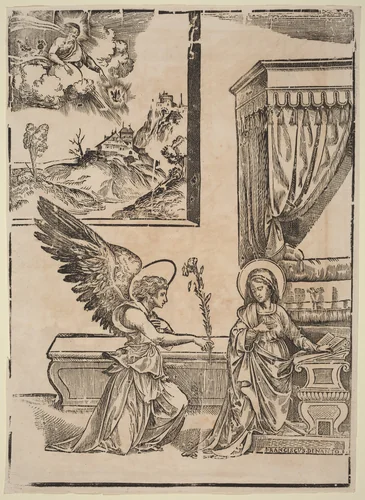
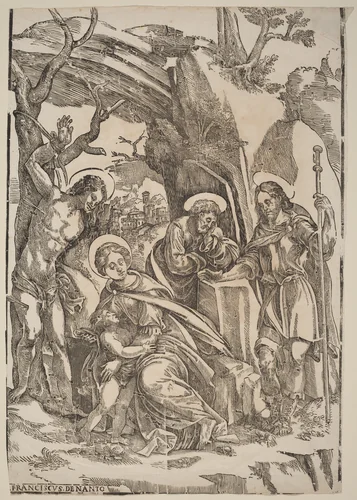
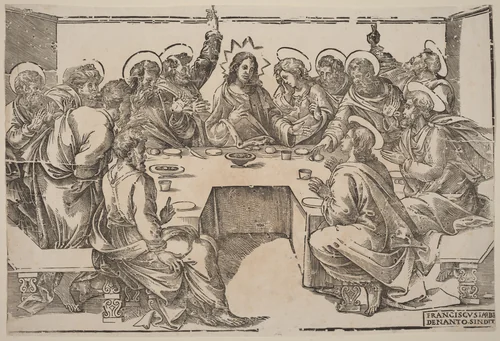
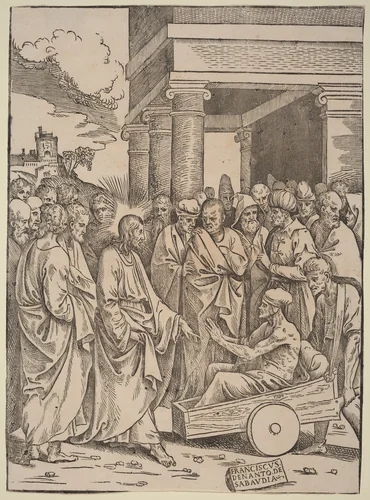
The body of known Francesco Denanto prints is relatively small, consisting of only eight recorded subjects, yet they secure his position as a skilled and influential practitioner of the demanding medium. Denanto’s surviving output concentrates entirely on scenes from the life of Christ, clearly intended for devotional study and contemplation. Works such as The Annunciation, Christ and the Woman of Samaria, and The Adoration of the Magi exhibit a direct narrative style essential for the woodcutter’s craft. Unlike the later, more detailed copperplate engravings, these early prints prioritize powerful outlines and defined forms, reflecting the necessity of clarity imposed by cutting directly into a wood block.
It is perhaps characteristic of this early era of mechanical reproduction that the maker himself remains largely a shadow; while we have clear evidence of his meticulous artistic hand, the biographical specifics of Denanto’s personal life remain frustratingly sparse. He was, above all, a professional visual communicator who understood the power of repeatable imagery.
Despite this historical anonymity, the enduring quality of his production ensures his lasting relevance. Denanto’s importance is underscored by the inclusion of his works in major institutional holdings, most notably the National Gallery of Art. Today, these early religious subjects are often sought out as high-quality prints, providing direct and intimate access to the visual environment of the mid-Renaissance. Since many of these historical artifacts now reside in the public domain, Denanto’s craftsmanship continues to instruct contemporary printmakers and historians alike.
Source: Wikipedia · CC BY-SA 4.0