Francesco Curia
Francesco Curia holds a concise yet important place within the artistic flourishing of sixteenth-century Naples. Primarily known as a painter, his modern significance rests largely on the small corpus of highly refined preparatory drawings that survived the Renaissance period. Active around 1565, Curia worked within the established traditions of his hometown, following in the professional footsteps of his father, the painter Michele Curia.
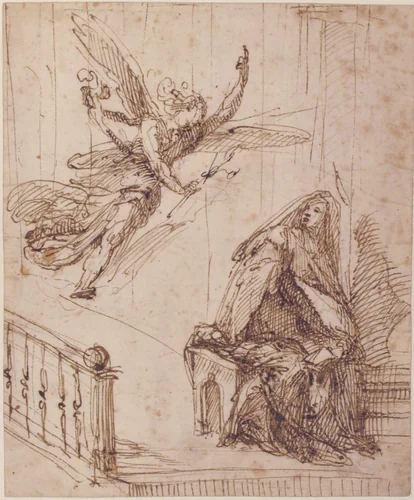
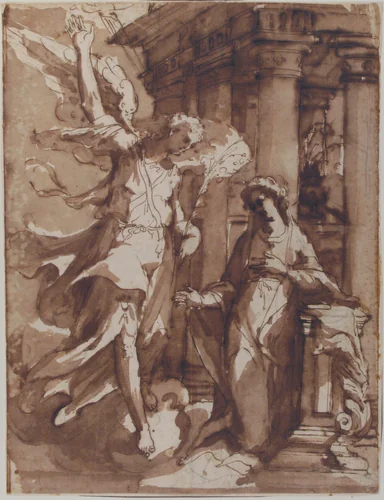
The eleven identified drawings attributed to him offer a critical window into his technique and thematic interests. These sheets demonstrate his commitment to figure study and complex composition, several of which are now preserved in major international repositories, including the collection of the Metropolitan Museum of Art. Curia trained under Giovanni Filippo Criscuolo, grounding him in the foundational drawing techniques necessary for grand narrative painting.
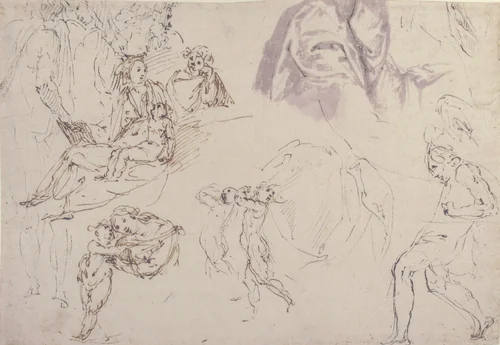
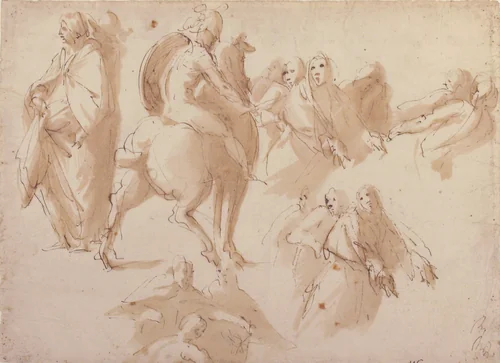
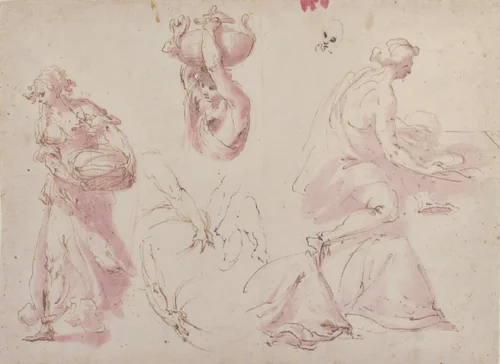
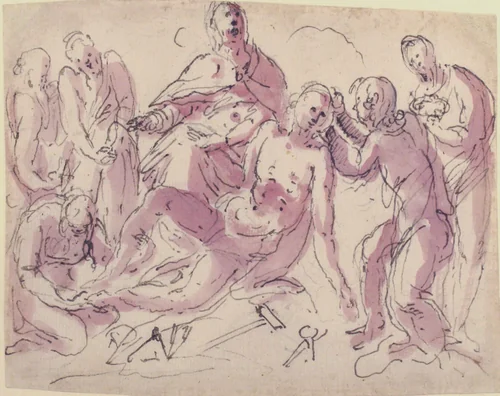
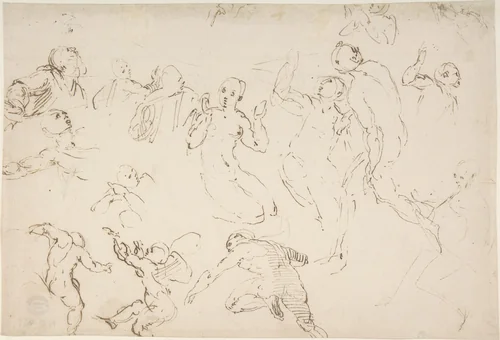
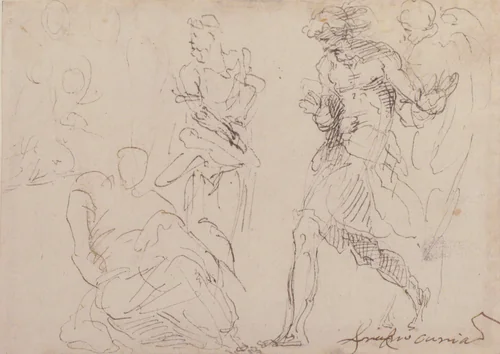
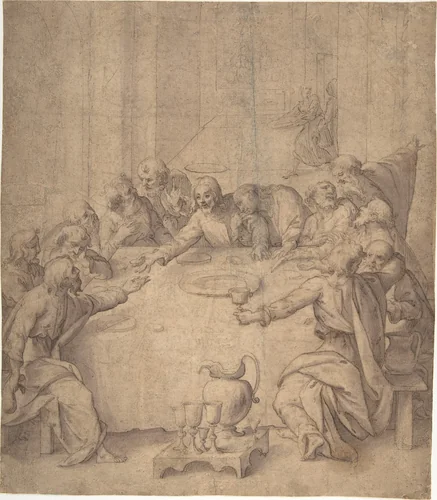
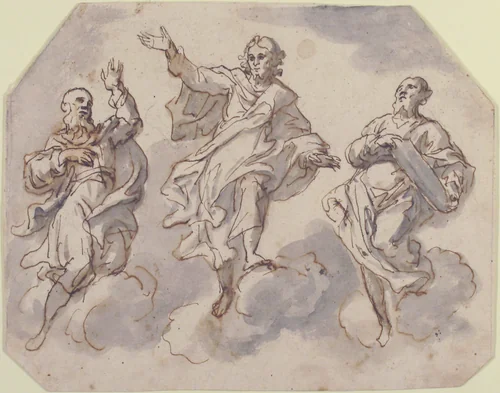
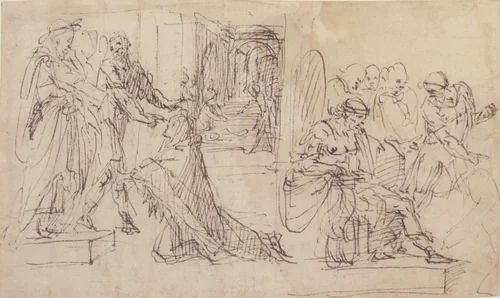
His extant works are almost exclusively figure studies, demonstrating an exceptional focus on human form and motion. These include detailed sheet compositions such as Figure Studies: Warrior on Horseback, and Groups of Standing Female Figures, and anatomical examinations like Figure Studies: The Holy Family, a Running or Dancing Child, Drapery Studies. A particularly charming observation is the frequency with which he depicted putti in flight, suggesting perhaps that even the serious business of Renaissance composition was occasionally subject to gravity defying whimsy, as evidenced in his sheet Standing and Kneeling Figures, and Studies of Flying Putti. The sensitivity and precision of these drawings confirm Curia’s role as a skillful academic draftsman, capable of rendering complex emotional narratives, notably the surviving study for Lamentation over the Dead Christ.
Beyond his own output, Curia served as a vital link in the Neapolitan artistic genealogy. He was a recognized master and instructor whose pupils included the important artists Fabrizio Santafede and Ippolito Borghese. Curia’s influence, therefore, extended well into the following generation of Neapolitan painters. While few authenticated Francesco Curia paintings survive today, the available sketches and studies are now accessible globally as high-quality prints and downloadable artwork. These museum-quality examples, widely available in the public domain, ensure that this skilled draftsman’s contributions remain central to the study of Southern Italian Renaissance preparation and practice.
Source: Wikipedia · CC BY-SA 4.0