Francesco Casanova
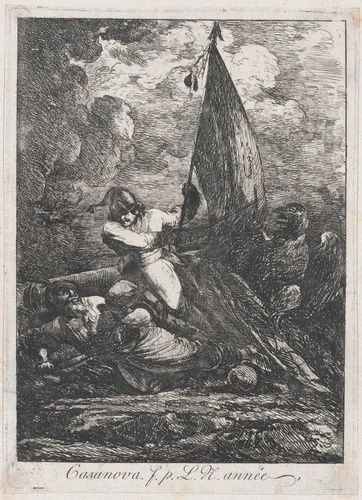
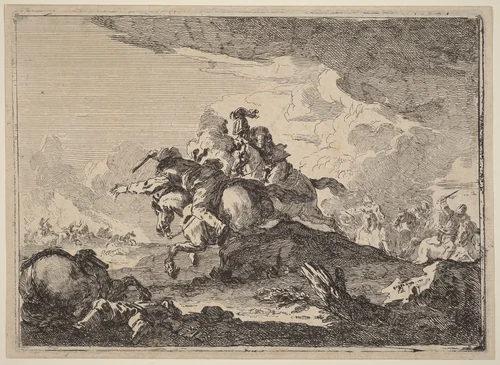
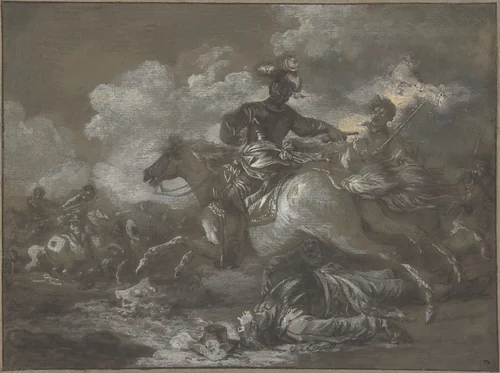
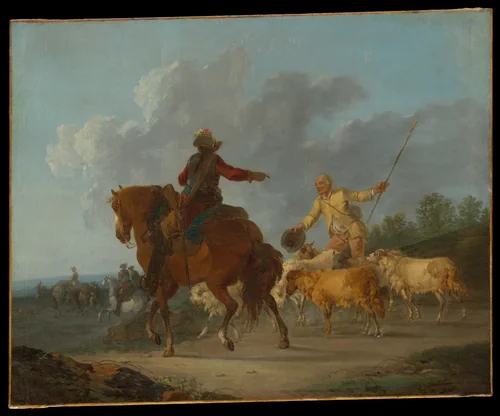
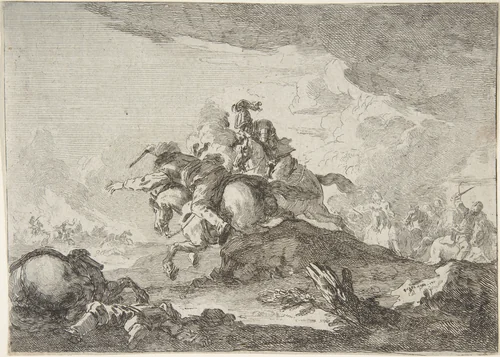
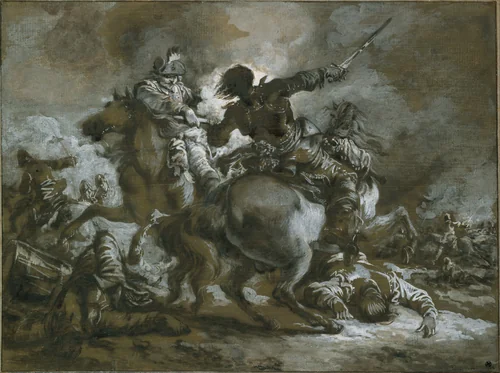
Francesco Casanova (1727-1780) was an influential Italian painter and printmaker recognized throughout the 18th century for his skillful mastery of the genre de bataille. Active for over fifty years, he specialized in dynamic, large-scale representations of military conflict, rendering complex arrangements of cavalry, infantry, and the chaotic atmosphere of the battlefield with remarkable energy.
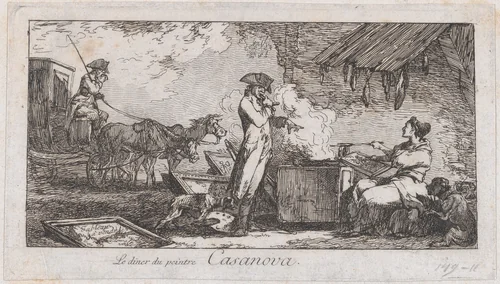
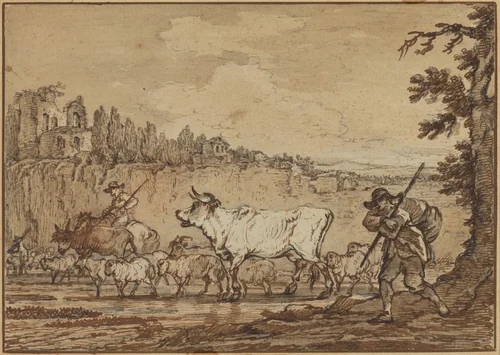
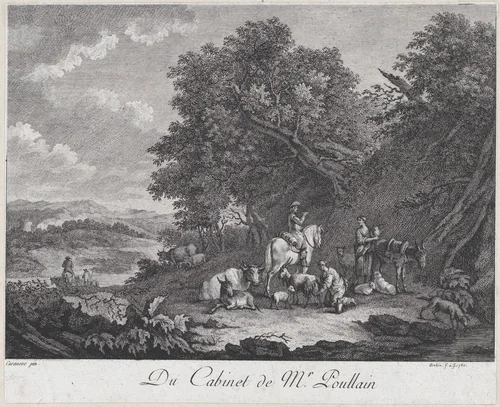
Though his output included commissioned canvases, such as the documented work The Dinner of the Painter Casanova, his legacy is arguably better preserved through his prolific production of drawings and prints. Documentation shows he produced at least eight significant prints and three detailed drawings, demonstrating his adeptness across media. These works allowed his highly sought-after compositions to circulate widely, securing his reputation as a definitive chronicler of military drama during the late Rococo period.
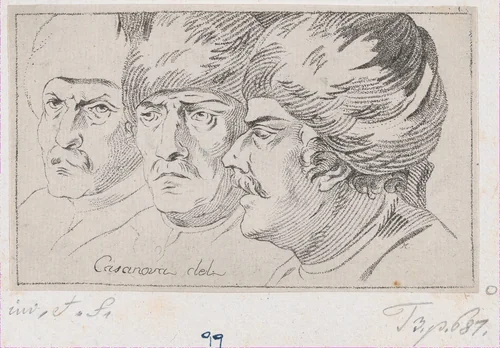
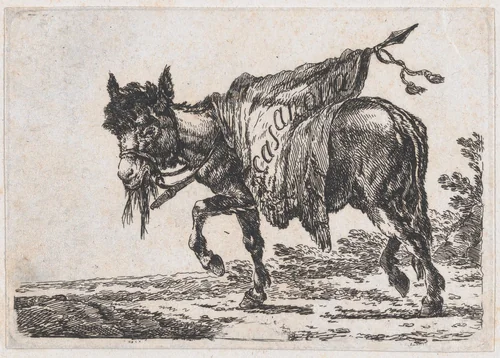
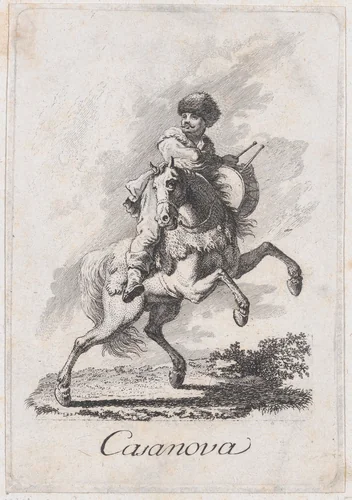
Casanova often employed a meticulous, academic approach to character study, distinguishing his preparation from contemporaries who focused solely on grand action. This is evident in studies like Three views of the head of a man with a mustache wearing a turban, which explores specific physiognomy crucial for historical figuration. Simultaneously, his catalogue reveals an artist capable of injecting wry humor and specific detail into military life, seen in unexpected subjects such as Man playing drums on horseback or the particularly curious Donkey carrying a flag on its back. This duality suggests an artist deeply engaged in the theatrical currents of the age, finding dramatic or sometimes amusing tension within the pomp of warfare.
The professional achievements of Francesco, who also worked alongside his younger brother Giovanni Casanova, often stand in the shadow of his famous older sibling, the adventurer Giacomo Casanova. Nonetheless, Francesco maintained a significant, independent career path supported by institutional validation. His representation in global institutions, including the National Gallery of Art and the Metropolitan Museum of Art, confirms the enduring museum-quality of his work. Due to the historical age and volume of his graphic output, many Francesco Casanova prints are now part of the public domain, increasingly available to researchers and collectors as high-quality prints.