Francesco Barbazza; Giuseppe Palazzi
Francesco Barbazza and Giuseppe Palazzi were a pair of artists active primarily between 1782 and 1785, known for their collaborative production of detailed topographical and festival prints. Their documented output provides important visual records of temporary architectural and scenic design in late eighteenth-century Rome.
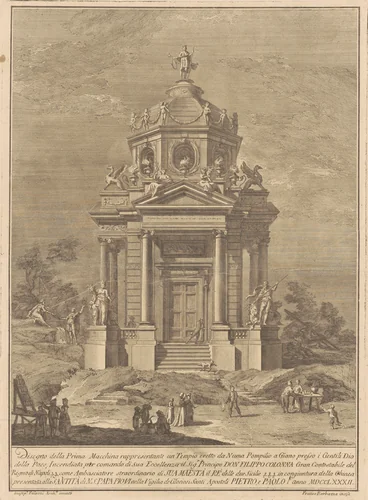
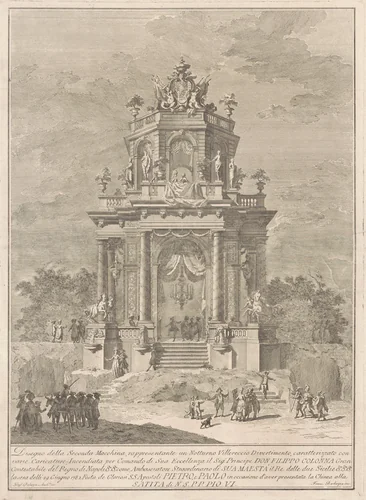
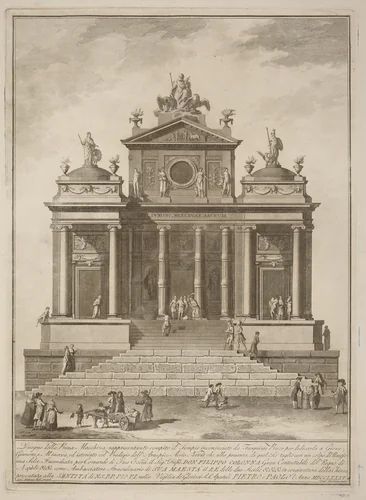
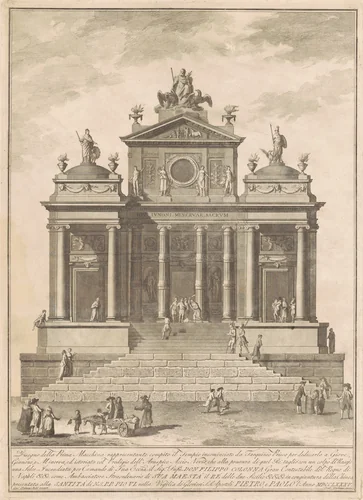
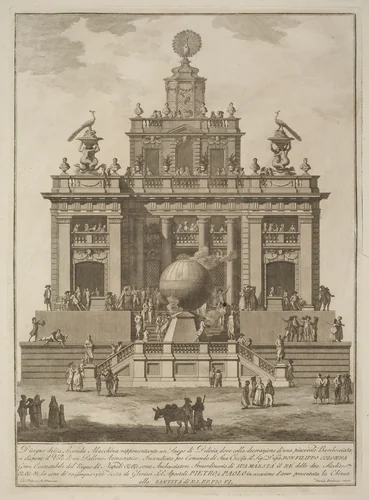
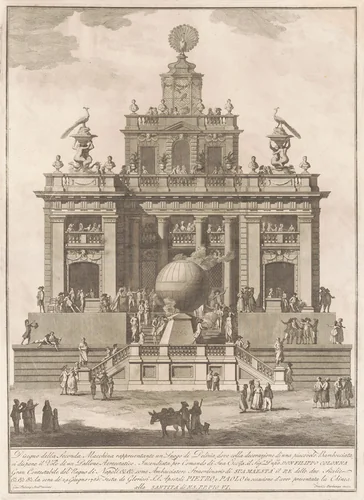
The core body of their work documents the spectacular annual Festa della Chinea, a ceremonial event that required the construction of elaborate temporary decorative structures, known as macchine. Their prints function as historical documentation, capturing the ephemeral splendor and complex allegorical programs of these theatrical displays before they were dismantled.
Six prints representing the collaboration of Francesco Barbazza and Giuseppe Palazzi are preserved in museum collections, including the National Gallery of Art. These records detail the grand structures erected for the 1782 and 1785 festivities. Key works represented include The Prima Macchina for the Chinea of 1782: The Temple of Janus Built by Numa Pompilius, The Seconda Macchina for the Chinea of 1782: A Countryside Festival at Night, and The Seconda Macchina for the Chinea of 1785: A Pleasure Palace with an Air Balloon. These historical engravings are valued today as high-quality prints. Much of the known output by Francesco Barbazza and Giuseppe Palazzi is now considered to be in the public domain, offering access to this significant body of late Baroque festival design documentation as downloadable artwork.