Fra Filippo Lippi
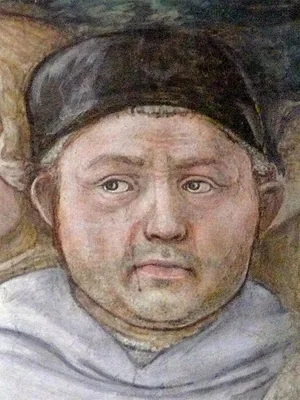
Fra Filippo Lippi (c. 1406-1469), often simply known as Lippo Lippi, stands as one of the essential masters of the Italian Quattrocento. A Carmelite priest, Lippi balanced his clerical duties with a profoundly influential career as a painter, bridging the severe monumentality of early Florentine Renaissance art with a greater emphasis on naturalistic grace and emotional immediacy. Active between 1426 and 1458, his work defined the devotional aesthetic of the mid-fifteenth century, combining spiritual fervor with a compelling, humanist approach to form. His Fra Filippo Lippi paintings were highly sought after by wealthy patrons and religious institutions alike, establishing him as a central figure in the artistic landscape of Florence.
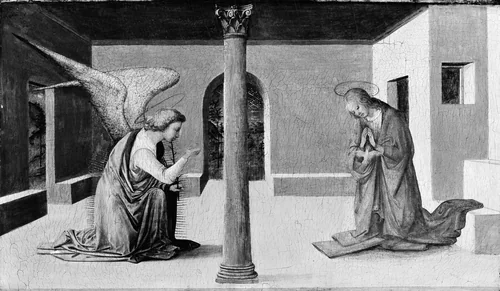
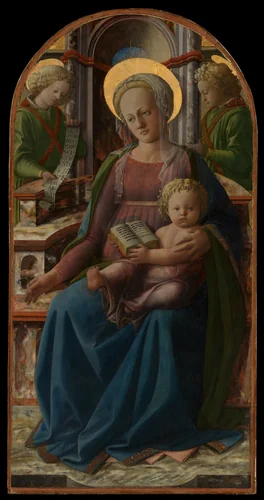
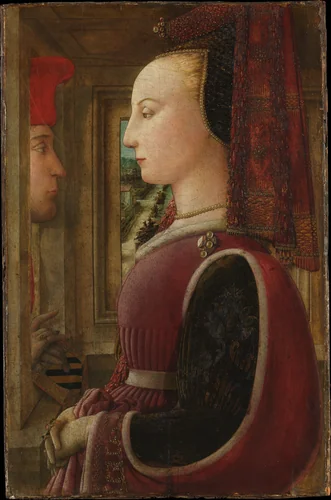
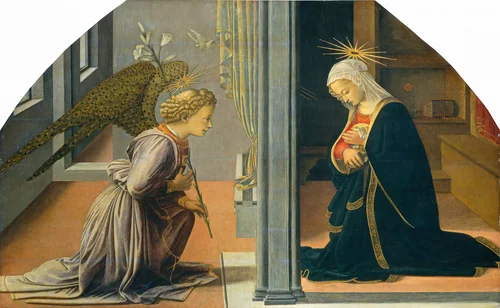
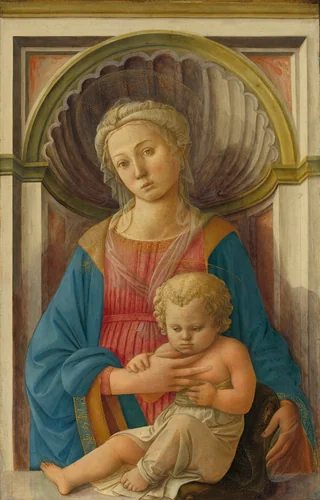
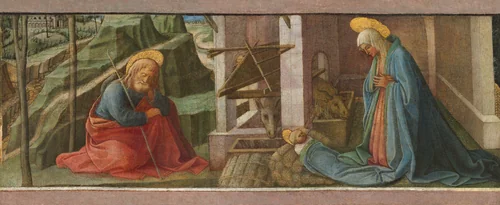
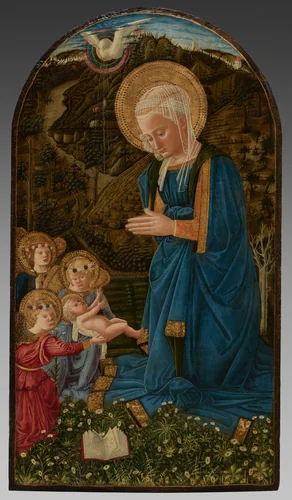
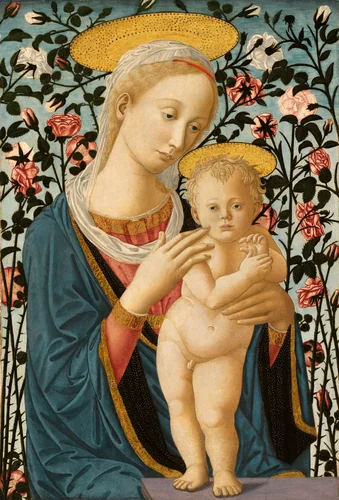
Lippi operated a highly successful painting workshop, refining technical practices and establishing compositional standards that would influence painting for decades. His treatment of the Annunciation narrative, exemplified by the panel simply titled The Annunciation, introduced refined architectural settings and a sense of intimate humanity between the figures. Similarly, his numerous treatments of the Madonna and Child, such as Madonna and Child Enthroned with Two Angels, demonstrate his innovation in softening the gaze and rendering opulent fabrics with remarkable realism. His rare excursions into secular subject matter, including the intriguing Portrait of a Woman with a Man at a Casement, reveal a pioneering approach to individualized characterization in Florentine portraiture.
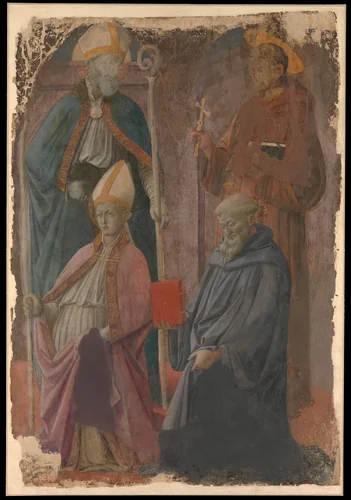
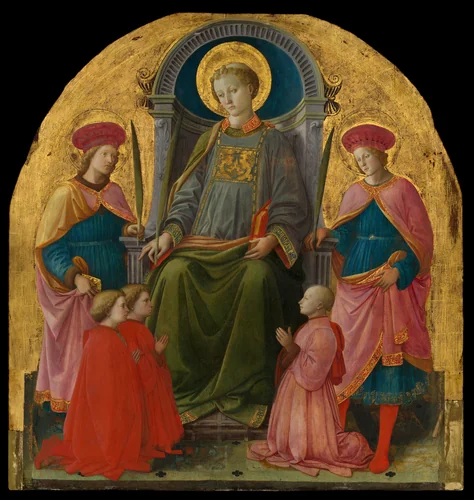
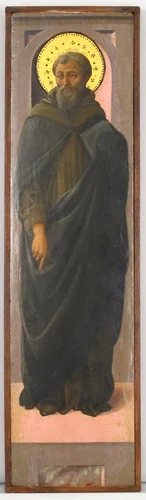
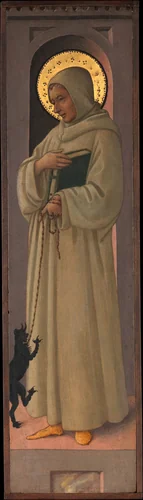
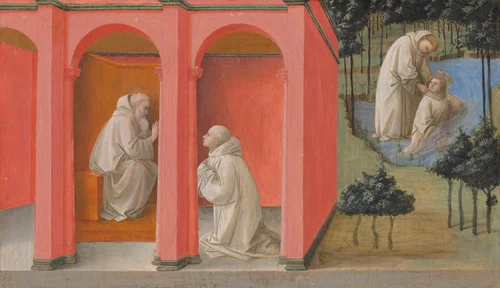
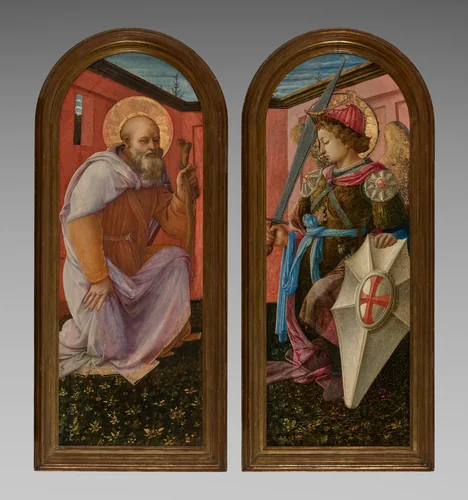
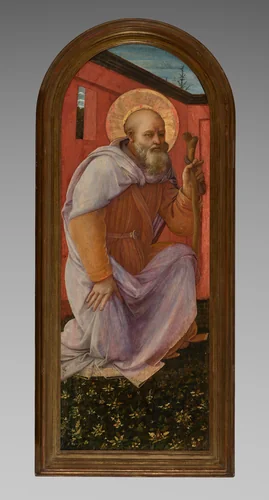
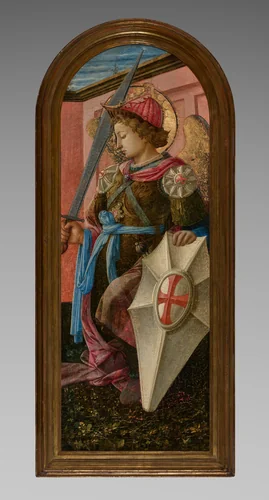
Lippi’s historical impact extends significantly through his capacity as a tutor. He fostered the careers of several major talents, most notably Sandro Botticelli, whose famous lyrical style owes a profound debt to Lippi’s handling of line and color. His own son, Filippino Lippi, also trained under him, assisting with late commissions and carrying the workshop's aesthetic traditions into the next generation. It is perhaps the single, engaging irony of his career that this dedicated Carmelite priest, who created some of the era's most serene sacred imagery, was also a notably turbulent and occasionally unorthodox figure in his private life, a tension that subtly surfaces as an engaging, earthy realism in his figures. Today, much of his significant output is preserved in museum collections globally. Many of his most celebrated pieces, like Saints Augustine and Francis, a Bishop Saint, and Saint Benedict, are now in the public domain, making high-quality prints accessible for scholars and admirers worldwide.
Source: Wikipedia · CC BY-SA 4.0