Fra Bartolommeo
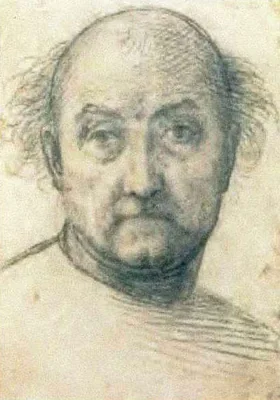
Fra Bartolommeo, born Bartolommeo di Pagholo and nicknamed Baccio della Porta, stands as a pivotal figure among the Italian Renaissance painters who defined the early Florentine High Renaissance. Specializing almost exclusively in solemn religious subjects, his foundational training occurred in Florence under Cosimo Rosselli. While his early style was rooted in this quattrocento tradition, his mature work evolved quickly, demonstrating a profound interest in compositional clarity, volumetric figure modeling, and the subtle interplay of color and light.
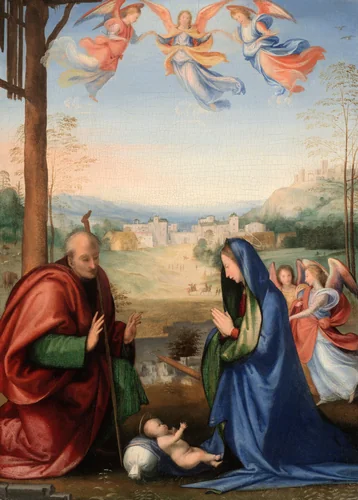
Working predominantly in Florence, Fra Bartolommeo paintings are characterized by their sense of spiritual gravitas and monumental scale. He often conceived subjects, such as The Virgin and Child Surrounded by Saints and Angels, as static yet deeply harmonious arrangements of figures, lending his compositions a timeless, processional quality. This dedication to architectural composition influenced his younger contemporary, Raphael, during the latter’s time in Florence, suggesting Bartolommeo's key, if sometimes overlooked, role in shaping the aesthetic tenets of the Cinquecento.
The arc of the artist's career took an unusual turn in the late 1490s. Profoundly affected by the teachings of the severe Dominican reformer Girolamo Savonarola, Bartolommeo became a Dominican friar in 1500, taking the name Fra Bartolommeo di San Marco. This religious commitment led to a temporary, yet striking, renunciation of painting—a self-imposed professional silence that lasted several years before he was encouraged to resume his craft, focusing his output largely on commissions for his Order. Despite this interruption, his influence spread geographically when he traveled outside Tuscany to work in cities as far south as Rome in his mid-forties.
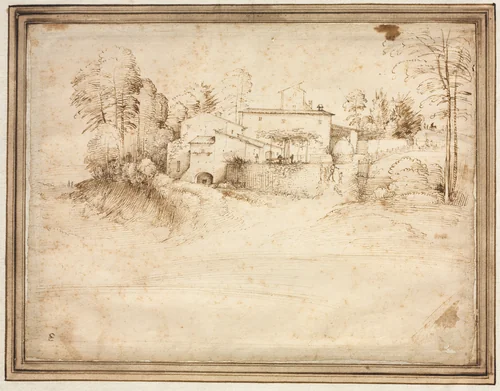
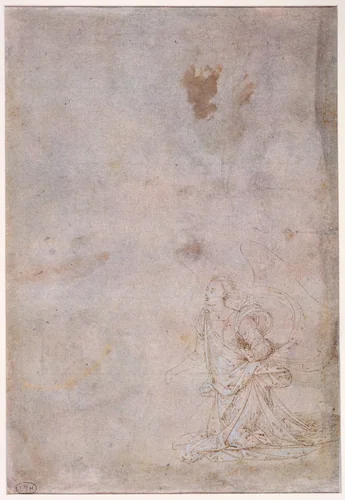
Fra Bartolommeo was also a prolific and masterly draftsman. His extant drawings, such as the focused study A Kneeling Angel (held by the National Gallery of Art) or the double-sided sheet Two Friars on a Hillside [recto] and Bare Tree [verso], evidence the technical dexterity necessary for his large panel paintings. Today, many of his essential studies and finished works are held in major institutions, including the Art Institute of Chicago and the Cleveland Museum of Art. These important historical works reside firmly in the public domain, making high-quality prints of Bartolommeo’s draftsmanship readily available for study and appreciation.
Source: Wikipedia · CC BY-SA 4.0
![Bare Tree [verso] by Fra Bartolommeo, drawing, 1472-1517](https://img.artbee.org/862bfa7d-858b-4385-a838-b76908665487/small.webp)
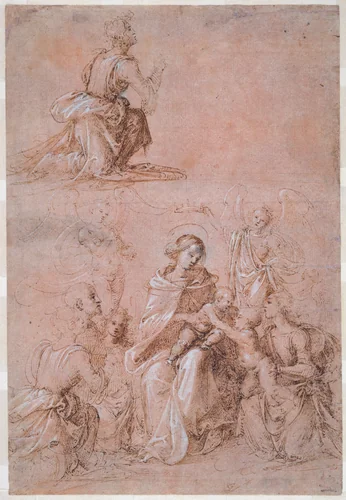
![Two Friars on a Hillside [recto] by Fra Bartolommeo, drawing, 1472-1517](https://img.artbee.org/fde4369b-9d7b-4205-91f6-dfeb5bda251b/small.webp)
![Head of a Child [recto] by Fra Bartolommeo, drawing, 1490](https://img.artbee.org/0c6593d2-282f-440b-97e6-dfe48cd8c31b/small.webp)
![A Monk [verso] by Fra Bartolommeo, drawing, 1500](https://img.artbee.org/f20e7cc1-c334-48be-86b1-7f1b94a13a30/small.webp)
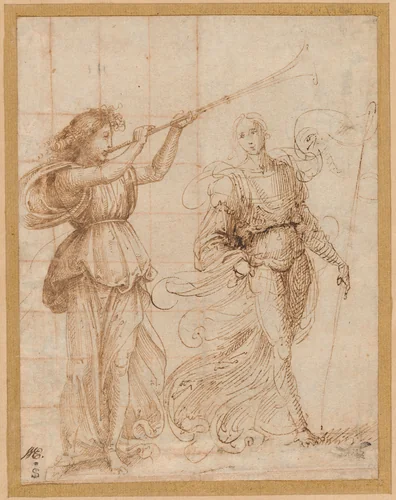
![The Angel of the Annunciation [recto] by Fra Bartolommeo, drawing, 1500-1504](https://img.artbee.org/de0dd249-7a0f-433c-bbb0-b2a41b932402/small.webp)