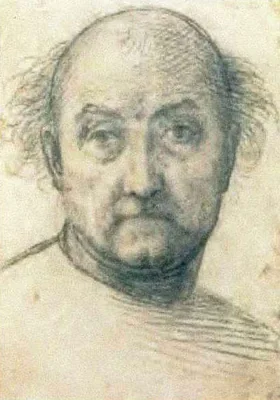
Fra Bartolomeo
Fra Bartolomeo, born Bartolommeo di Pagholo and known early in his career by the evocative nickname Baccio della Porta, ranks among the most significant Italian Renaissance painters operating in Florence at the cusp of the 16th century. Active from 1472 until his death in 1512, he dedicated his career almost exclusively to religious subjects, developing a style characterized by balanced composition, classical restraint, and profound spiritual sincerity. His production of Fra Bartolomeo paintings, along with his extraordinary corpus of drawings, secures his position as a crucial link between the quattrocento masters and the giants of the High Renaissance.
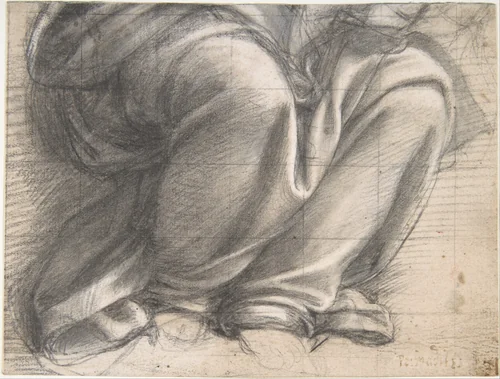
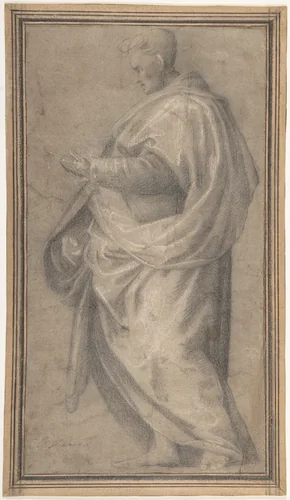
Trained initially in Florence under Cosimo Rosselli, Bartolomeo established his reputation early through exceptional draughtsmanship. Evidence of this technical precision remains visible in preparatory studies, such as the exacting Study of Drapery over the Knees of a Seated Figure, works that reveal his mastery of form and light. However, the trajectory of his artistic life was fundamentally altered in the 1490s when he fell under the intense, reforming influence of the Dominican preacher Girolamo Savonarola.
This allegiance led him to renounce painting entirely upon becoming a Dominican friar in 1500. It is a peculiar, illuminating irony of art history that one of Florence’s most gifted colorists willingly laid down his brushes for several years in devotion to a figure known for radical austerity.
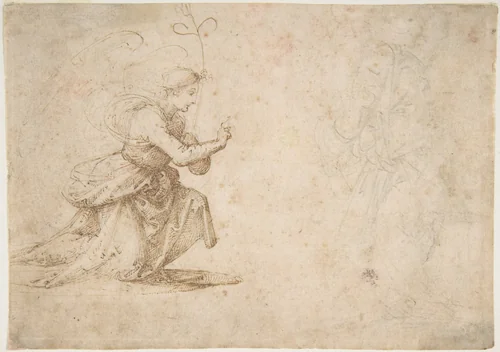
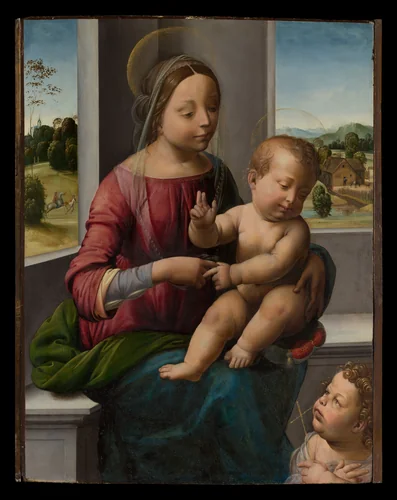
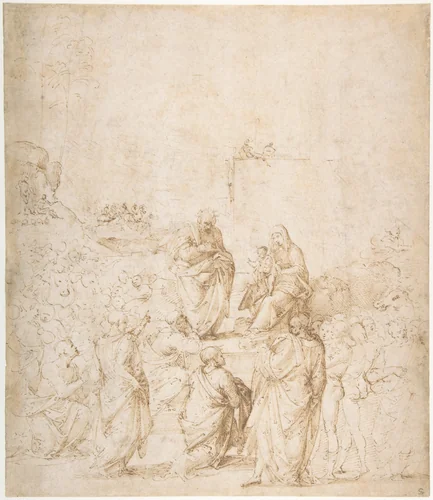
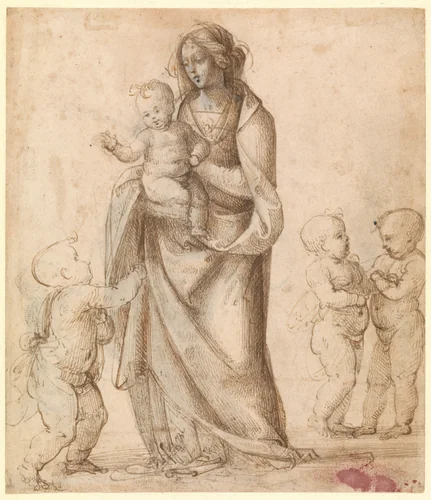
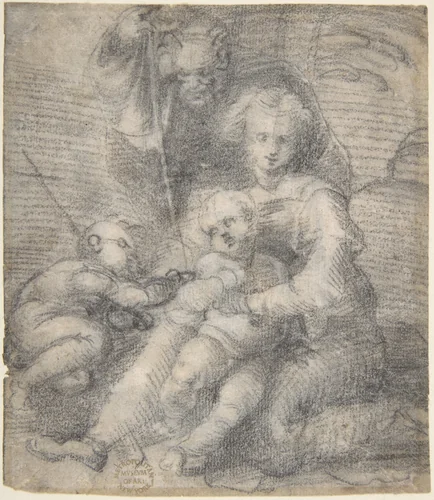
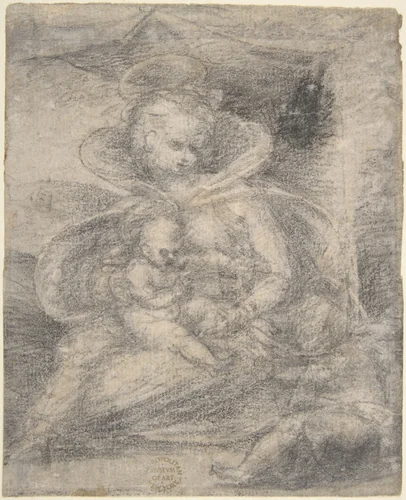
Upon resuming his practice, Bartolomeo developed the mature, monumental style for which he is remembered. Typical compositions, such as The Annunciation and Madonna and Child with the Young Saint John the Baptist, feature static, harmoniously grouped figures imbued with quiet dignity. Around his mid-forties, he broadened his influences, traveling beyond Florence, including a pivotal journey south to Rome. This exposure to contemporary and classical work further refined the gravitas of his compositions. Today, his exceptional works, including The Adoration of the Magi, are preserved in major institutions like the Metropolitan Museum of Art. Because much of his oeuvre predates standard copyright protections, many key pieces are now in the public domain, making high-quality prints of his distinguished artistry widely accessible.
Source: Wikipedia · CC BY-SA 4.0