Fra Angelico
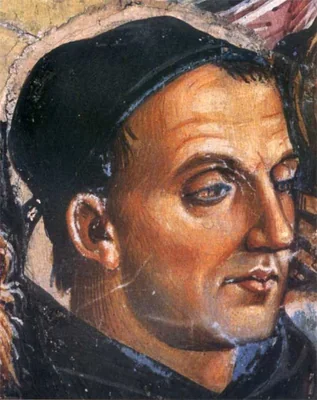
Fra Angelico, born Guido di Pietro (c. 1387-1455), stands as one of the essential figures bridging the devout pietism of the late Medieval period with the emerging visual rhetoric of the Italian Early Renaissance. Distinguished by his dual vocation as a highly accomplished painter and a Dominican friar (O.P.), he brought an unparalleled spiritual intensity to the technical innovations emerging in quattrocento Florence. The biographer Giorgio Vasari captured this rare synthesis of piety and talent, describing Angelico as possessing “a rare and perfect talent” in his Lives of the Artists.
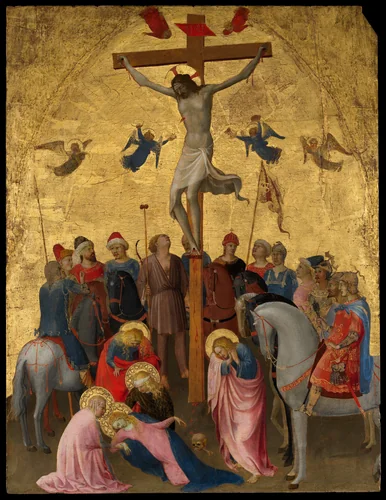
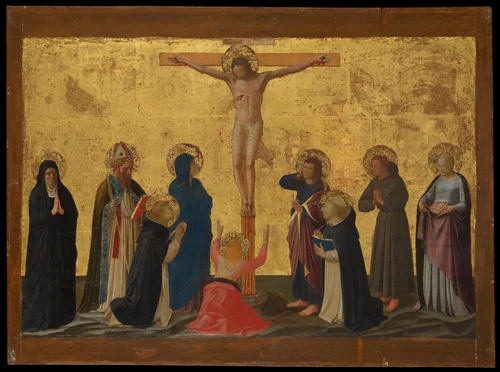
His formidable reputation rests primarily upon the extensive series of frescoes he executed for his own community, the Dominican Convent of San Marco in Florence. During the 1430s and 1440s, Angelico oversaw the systematic decoration of the convent, transforming its austere corridors and private cells. These works, designed not merely as decoration but as visual aids to private contemplation, required a rigorous simplicity that stripped away excess ornamentation, focusing the viewer entirely on the narrative and the emotional tenor of scenes like The Crucifixion. Following the successful completion of the Florentine commission, Angelico worked extensively in Rome and other cities, applying his mastery of atmospheric light and nascent perspective in further devotional cycles.
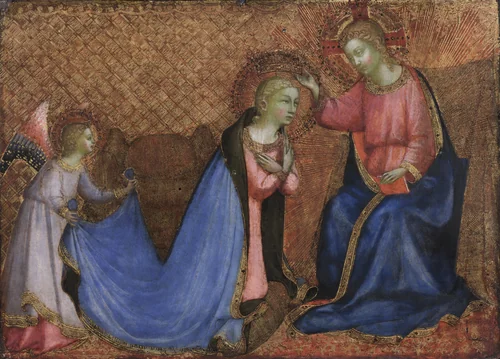
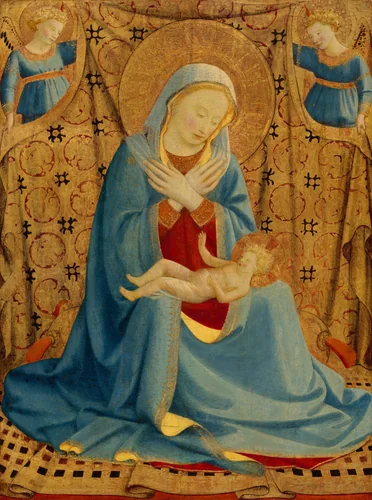
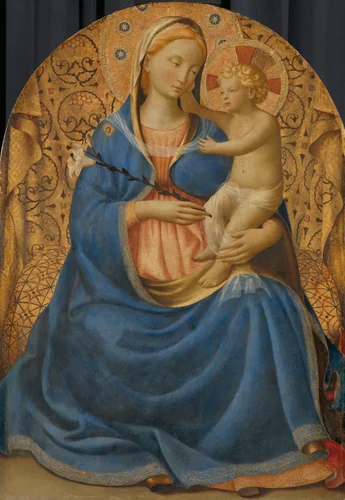
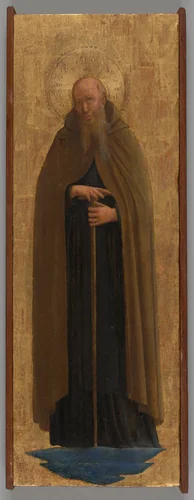
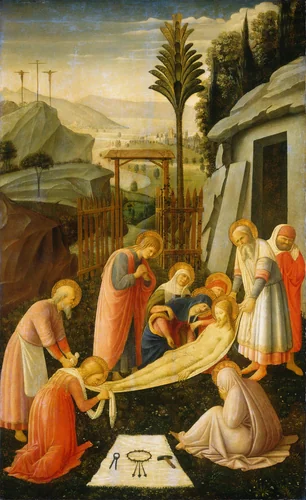
Angelico’s oeuvre is unique in its unwavering focus, as virtually all his known output, including extant panel works such as Coronation of the Virgin and The Madonna of Humility, consists entirely of religious subjects. This self-imposed constraint, adhering strictly to his spiritual commitment, resulted in images of astonishing clarity and purity, establishing him as the Renaissance master of transcendental light. He mastered the newly favored illusionism of his peers, such as Masaccio, yet ensured that anatomical precision always served devotional clarity, never spectacle.
Today, scholars and enthusiasts seeking detailed study of Fra Angelico paintings can access many of his most important panels in collections ranging from the Metropolitan Museum of Art to the Rijksmuseum. Because much of his work, now centuries old, resides in the public domain, it remains readily accessible, allowing for the circulation of high-quality prints and downloadable artwork suitable for academic research or institutional display. His legacy is one of the harmonious fusion of earthly skill and divine inspiration, a spiritual painter whose revolutionary technical abilities propelled the development of Renaissance art.
Source: Wikipedia · CC BY-SA 4.0