Ford Madox Brown
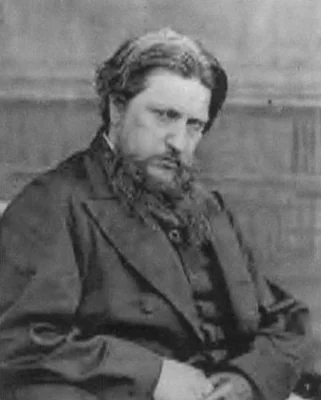
Ford Madox Brown (1821-1893) holds a singular and influential position in 19th-century British art. While often closely associated with the Pre-Raphaelite movement due to his commitment to intense detail and color saturation, he maintained a fierce independence, declining formal membership in the Brotherhood. This autonomy allowed him to forge a distinct style that was powerfully graphic and often Hogarthian in its approach to social critique and moral narrative. His work moved beyond mere academic history painting, insisting that contemporary life and common labor were worthy of the grand scale.
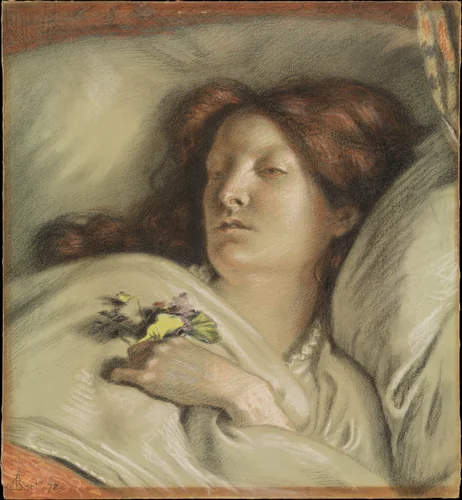
His most widely recognized achievement in modern social realism is the monumental painting Work (1852–1865). This complex canvas portrays the structured chaos of a London street scene, meticulously depicting laborers, intellectuals, and the disenfranchised. It stands as Brown's most comprehensive visual statement on the structure and utility of Victorian society. His intense dedication to preparatory detail is visible across his output, exemplified by powerful surviving drawings such as The Virgin Swooning [recto] and Two Drapery Studies [verso], which demonstrate his mastery of line and light necessary for such ambitious compositions.
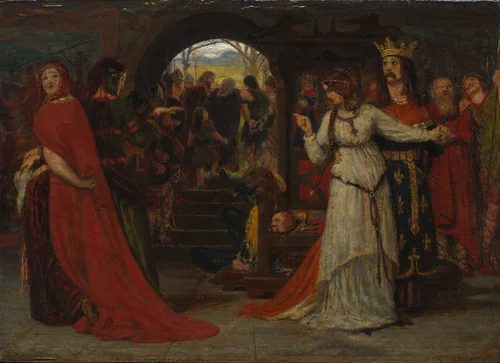
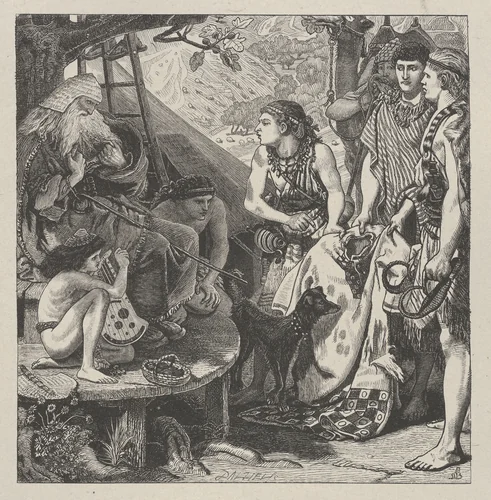
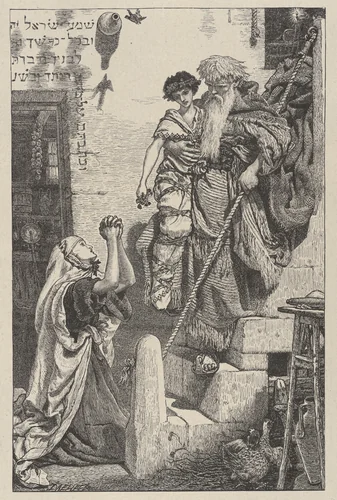
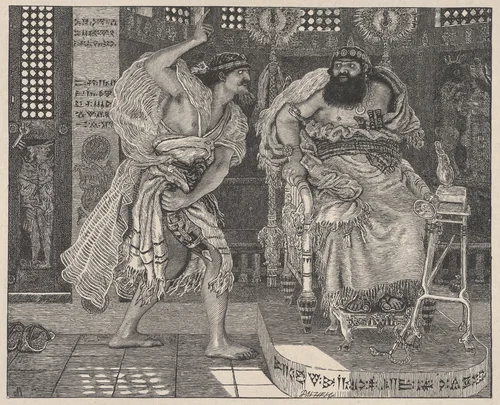
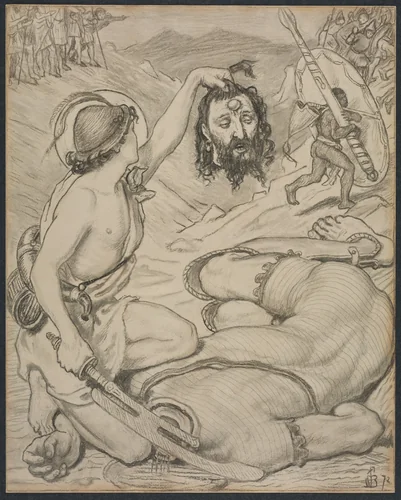
Brown was also a prolific graphic artist. His profound sense of narrative translated seamlessly into illustration, producing memorable images like Cordelia Parting from her Sisters and the powerful Biblical scenes Joseph's Coat and Elijah and the Widow's Son for Dalziels’ Bible Gallery. These works confirm that his ability to distill high drama into a single, compelling image was foundational to his practice. Because of the age of these designs, many of his Ford Madox Brown prints are now available as free art prints through large institutional collections, securing their continued study by the public.
The final decades of Brown’s life were dedicated almost entirely to civic art. From 1878 onward, he executed the demanding cycle known as The Manchester Murals, a sequence of twelve large paintings detailing the history of Mancunian life for Manchester Town Hall. This project, which required immense dedication to historical research and technical execution, solidified his reputation as one of the era’s most devoted and ambitious narrative painters. Today, major North American institutions, including the Metropolitan Museum of Art, the National Gallery of Art, and the Cleveland Museum of Art, preserve museum-quality examples of his work, confirming his lasting, foundational importance to Victorian visual culture.
Source: Wikipedia · CC BY-SA 4.0
![The Virgin Swooning [recto] by Ford Madox Brown, drawing, 1844](https://img.artbee.org/e609bf0a-3612-40c8-b20d-8a7cf2496b88/small.webp)
![Two Drapery Studies [verso] by Ford Madox Brown, drawing, 1844](https://img.artbee.org/6f2fede5-d37c-413e-b5e5-b1e1012b0e22/small.webp)