Florentine
The designation Florentine refers not to a single individual, but defines the highly influential school of artistic production originating from the city of Florence and the surrounding Republic between 1390 and 1600. This lengthy period of activity encompasses the crucial transition from the late Gothic style into the intellectual rigor of the early and High Renaissance, establishing a visual language based on mathematical perspective, anatomical precision, and an intense focus on humanistic thought.
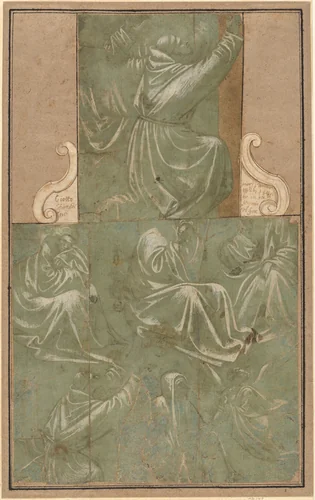
The resulting corpus of work, preserved globally in institutions such as the Art Institute of Chicago and the National Gallery of Art, demonstrates remarkable versatility, spanning drawings, significant metalwork, and devotional paintings. Florentine artists were characterized by their disciplined approach to preparation, prioritizing disegno (drawing) as the foundation of all visual creation. This meticulous method is exquisitely represented by studies such as Studies of Saint Francis Kneeling and Other Figures, which captures rapid compositional thought alongside careful execution.
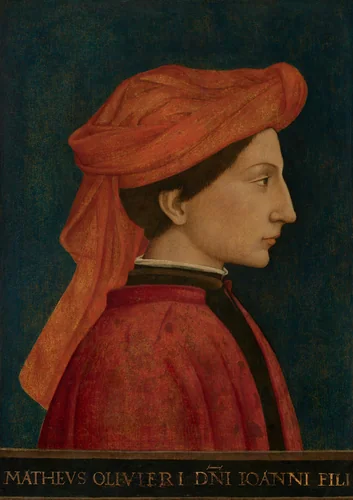
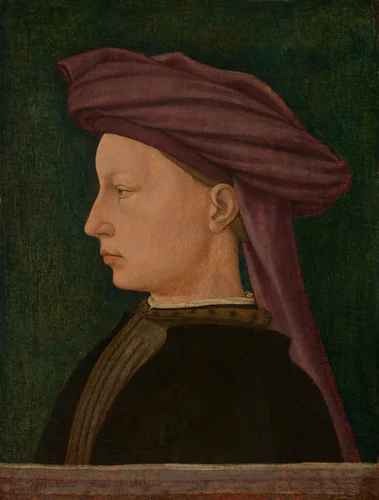
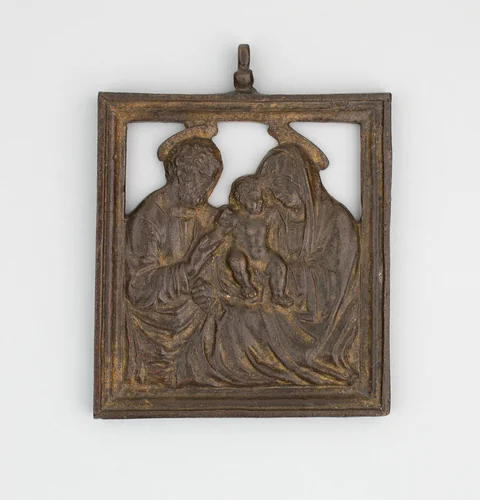
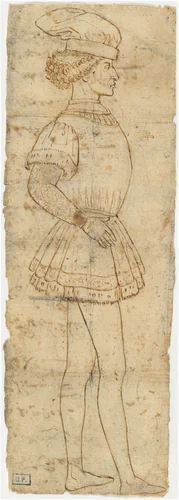
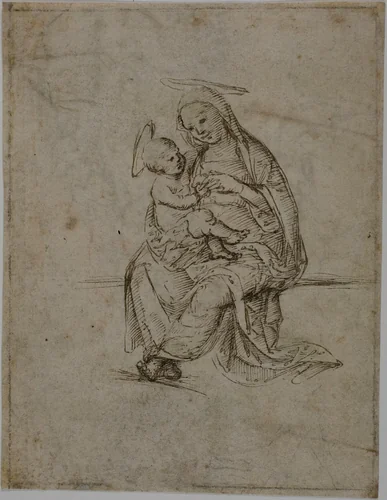
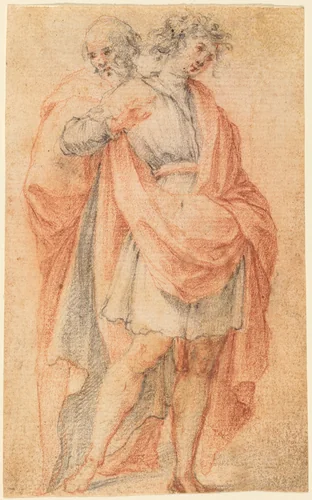
The surviving collection reveals the Florentine mastery of both religious narrative and individualized portraiture. Works like the Holy Family adhere to traditional religious subjects, yet infuse them with a novel, relatable humanity. Conversely, pieces such as the focused Profile Portrait of a Young Man and the subtly rendered Matteo Olivieri (?) reflect the era’s rising appreciation for the status and character of the secular patron, moving portraiture toward psychological depth. The emphasis on the idealized male form is also apparent in drawings like Standing Youth.
It is perhaps the greatest achievement of the Florentine school that its standards of artistic and technical sophistication were so rigorously defined and maintained, allowing the term to serve as a reliable identifier for artistic excellence across two centuries of profound change. Today, this rich history is made accessible through museum collections globally, with numerous preparatory sketches and Florentine prints available as high-quality prints and downloadable artwork in the public domain.