Florence Henri
Florence Henri (1893-1982) stands as a foundational figure in interwar European photography, bridging the formal rigor of the Bauhaus with the expressive disorientation of Surrealism. Her artistic path was notably diverse, rooted initially in music and extensive European travel throughout her youth in Paris, Vienna, and Rome, where she encountered the energies of Futurism.
Born in 1893, Henri spent her early career studying piano extensively, notably under Egon Petri and Ferruccio Busoni in Berlin (1910-1922). During World War I, she supported herself by composing original tracks for silent films, a demanding creative discipline that perhaps foreshadowed her later mastery of light and structural composition.
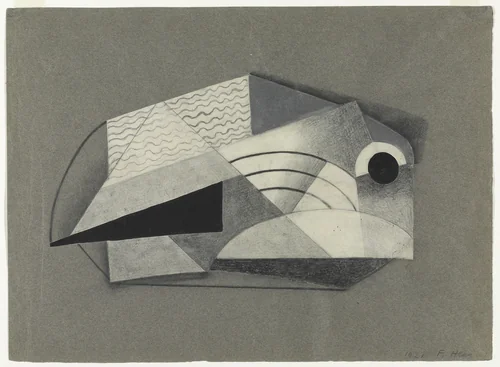
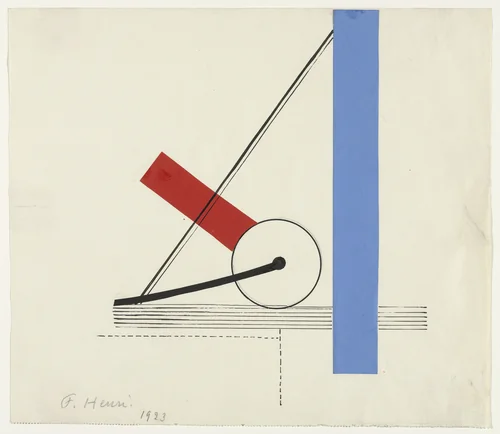
Following her musical career, Henri devoted herself entirely to visual art, immersing herself in the Paris avant-garde. She studied painting at the Académie Moderne under Purist leaders Fernand Léger and Amédée Ozenfant (1924-1925). The critical shift occurred in 1927 when she enrolled at the Bauhaus in Dessau. Under the tutelage of Josef Albers and, crucially, László Moholy-Nagy, Henri embraced the camera as a central tool for modern expression, realizing its capacity for abstraction.
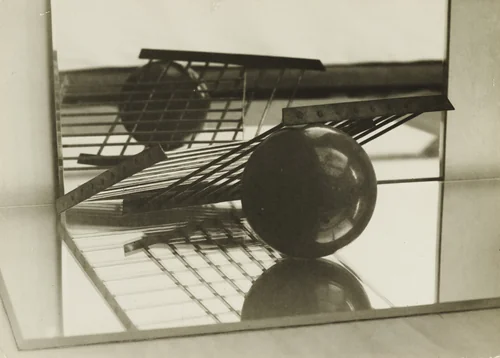
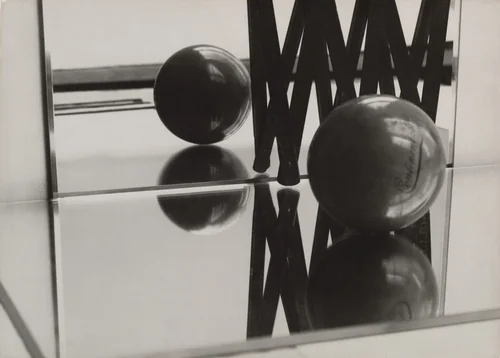
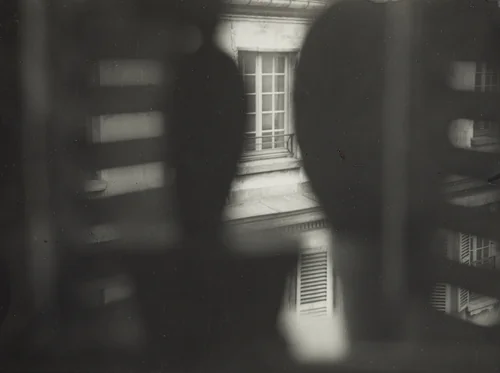
Returning to Paris in 1929, Henri quickly established herself as a leading practitioner of experimental photography. Her mature work from this period utilized mirrors, severe cropping, high contrast, and extreme angles to destabilize spatial reality, challenging the viewer’s perception in compositions like Black-White-Silver No. 11 and Composition No. 19. These innovative techniques placed her squarely in the company of artists defining the new vision of European modernism. Her practice extended beyond experimental forms into commercial work, advertising, and sensitive portraits, many featuring her contemporaries. Today, these seminal photographic works are highly sought after and available as museum-quality prints in major collections, including the Museum of Modern Art.
Although primarily remembered for her photographic breakthroughs, Henri continued to explore visual forms until the end of her life, concentrating on Florence Henri paintings after moving to Compiègne in 1963. Her legacy remains defined by her capacity to synthesize disparate influences, producing a distinctive oeuvre critical to understanding the dialogue between German Modernism and Parisian Surrealism.
Source: Wikipedia · CC BY-SA 4.0