Flaminio Torre
Flaminio Torre, sometimes recorded as Flaminio Torri, was a pivotal Italian exponent of the Bolognese School during the Baroque period, active primarily between 1615 and 1641. His enduring presence in global institutional collections, including the Metropolitan Museum of Art and the Art Institute of Chicago, attests to the high quality and sustained influence of his oeuvre, which synthesized the idealism of his Roman predecessors with the emotional intensity of 17th-century Bologna.
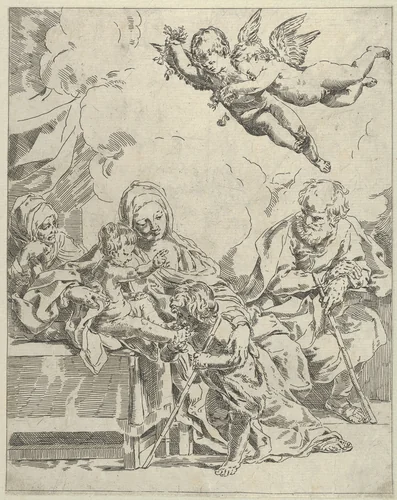
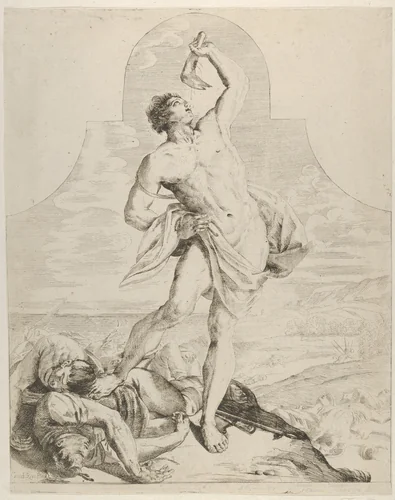
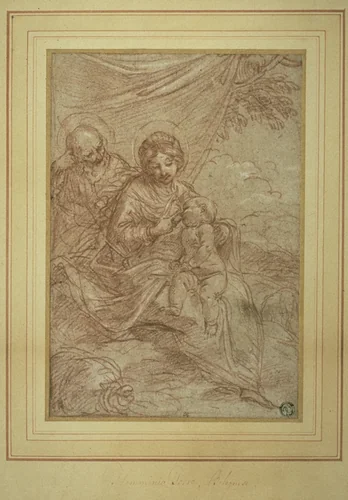
While the historical record confirms Torre as a trained painter, he is perhaps best recognized today through his exquisite graphic output. His Flaminio Torre prints and drawings demonstrate a masterful command over line and composition, positioning him as a crucial figure in the dissemination of the region’s artistic ideas. Torre frequently dedicated his effort to translating the complex visual vocabulary of greater Bolognese masters, particularly Guido Reni, whose large-scale narratives he often interpreted. This dedication is evident in works such as The Holy Family with young John the Baptist and Saint Elizabeth, two angels above, and the dynamic, tapered rendering of Samson holding the jaw bone of an ass over his head.
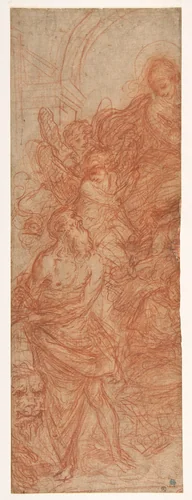
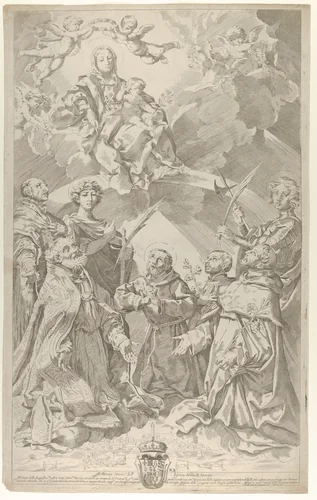
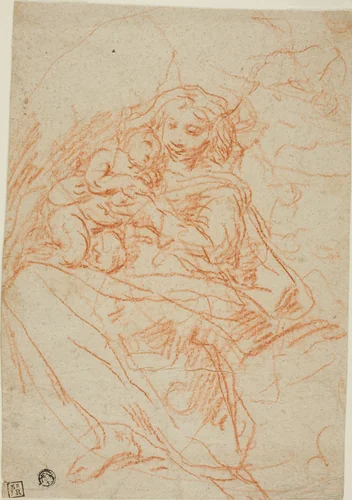
Torre’s practice was central to ensuring the accessibility of the Bolognese aesthetic across Europe. His prints served as vital teaching tools, providing widespread access to sophisticated religious and mythological compositions like Patron saints of Bologna looking upwards at the Virgin, a common subject for the city's artists. A subtle insight into his pragmatic working methods can be observed in a surviving sheet that contains two disparate studies: the primary composition The Virgin Appearing to Saint Jerome on the recto and, surprisingly, a Head of a Young Woman with Braided Hair sketched on the verso, suggesting the careful reuse of expensive materials.
Today, thanks to the diligence of major institutions, many Flaminio Torre paintings and prints are secured within the public domain. This ensures that the clarity and technical rigor of his graphic legacy continues to be studied and appreciated worldwide, providing contemporary access to museum-quality and high-quality prints and downloadable artwork that solidify his role as a key transmitter of the Italian Baroque style.
Source: Wikipedia · CC BY-SA 4.0