Fitz Henry Lane
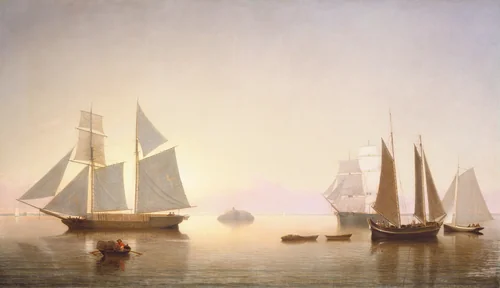
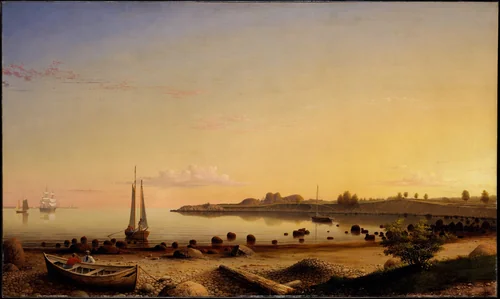
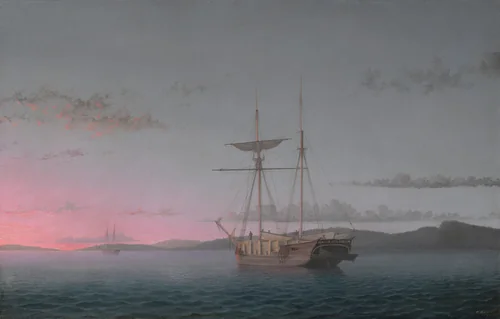
Fitz Henry Lane (1804-1865) holds a foundational position in the history of American nineteenth-century painting. Active primarily from 1835 until his death, Lane worked as both a painter and a printmaker, developing the rigorous, light-infused aesthetic now retrospectively termed Luminism. This movement is characterized by its meticulous draftsmanship, smooth, almost invisible brushwork, and the pervasive sense of brilliant, atmospheric light that defines the scene.
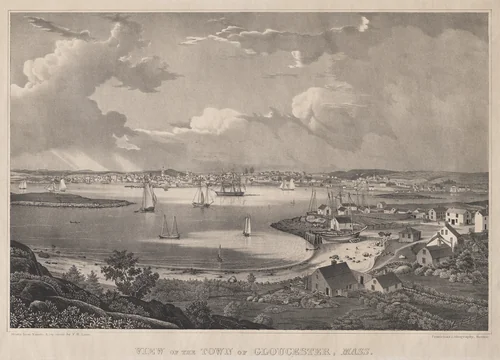
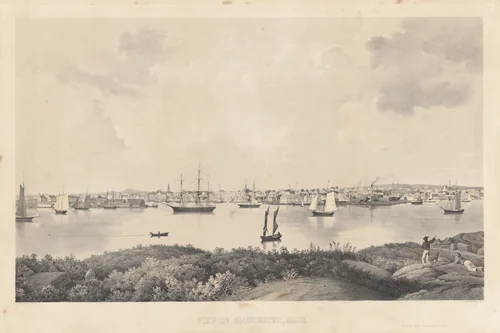
Working primarily from his native Gloucester, Massachusetts, Lane specialized in marine and coastal subjects, capturing the increasing importance of maritime commerce and shipbuilding in the burgeoning American economy. His early career saw him execute numerous lithographs, resulting in many of the seminal Fitz Henry Lane prints that documented the changing profile of New England harbors. This early training provided the technical discipline evident in his oil paintings, where every sail, piece of rigging, and atmospheric reflection is rendered with extraordinary precision.
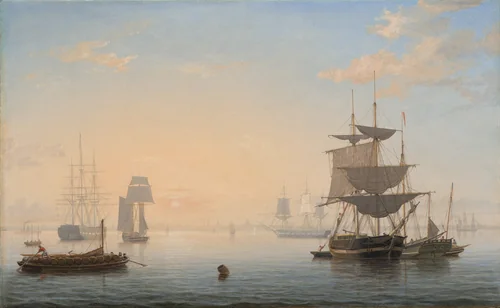
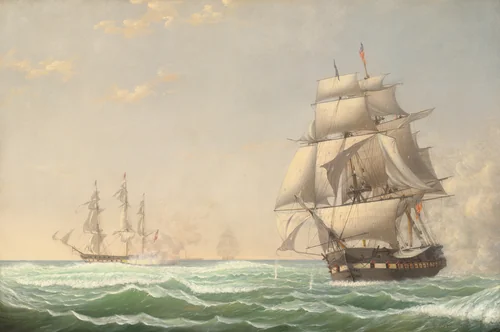
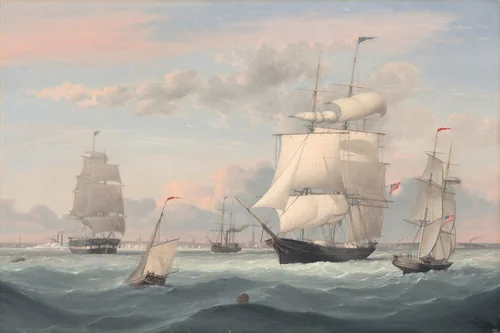
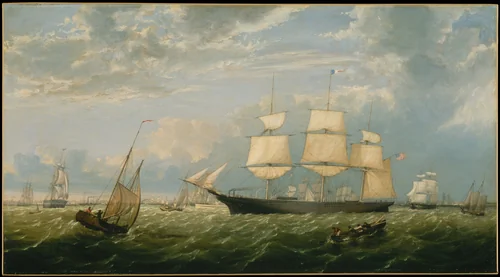
Lane’s major oil compositions function as detailed civic and historical records. The technical skill required to capture vast spaces with such clarity is apparent in works like Harbor of Boston, with the City in the Distance and the detailed representation of commercial activity in The Golden State Entering New York Harbor. He extended his subject matter beyond local ports, occasionally tackling naval history, as seen in The United States Frigate "President" Engaging the British Squadron, 1815.
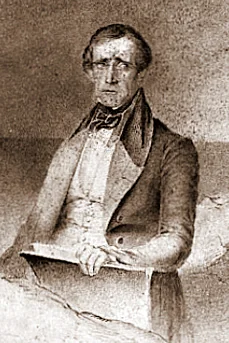
Despite suffering a debilitating physical ailment early in life that required him to rely on crutches, Lane’s output was remarkably controlled and consistent. His capacity to paint vast, complex scenes often relying solely on memory or small preparatory sketches speaks to immense visual self-discipline.
Today, Lane’s contribution to American art is firmly established through his inclusion in prestigious institutions such as the Metropolitan Museum of Art and the National Gallery of Art. These museum-quality Fitz Henry Lane paintings are central to understanding the aesthetic shift toward Luminism. Furthermore, given their status as cultural cornerstones, many of these works are now in the public domain, allowing for free art prints and high-quality prints of his downloadable artwork to be utilized globally for educational and archival purposes.
Source: Wikipedia · CC BY-SA 4.0