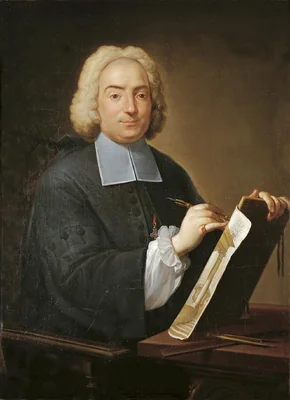
Filippo Juvarra
Filippo Juvarra (1676-1715) was a central figure in the architectural and visual arts of the early eighteenth century, bridging the dramatic vitality of the High Baroque with emerging Classical sensitivities. Active across Italy, Spain, and Portugal, Juvarra’s professional identity was unusually comprehensive; he operated successfully as an architect, scenographer, engraver, and goldsmith. This multidisciplinary skill set allowed him to approach design not merely as structure, but as a total immersive experience, often utilizing theatrical principles to maximize the emotional impact of built space.
Though his active career lasted less than two decades, Juvarra left an indelible mark on European design, particularly through his sophisticated graphic work. While his significant architectural commissions spanned royal and ecclesiastical projects throughout Southern Europe, it is his comprehensive body of drawings, now preserved in collections such as the Metropolitan Museum of Art and the National Gallery of Art, that offers the clearest insight into his methodology.
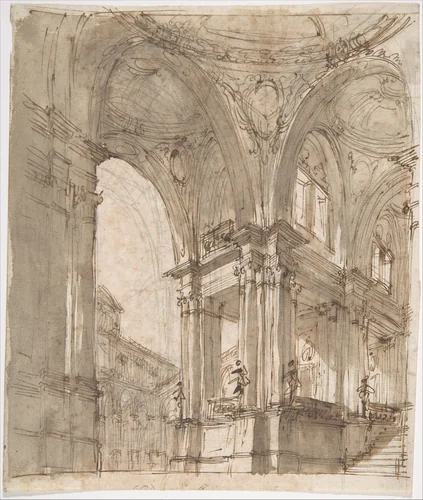
These works reveal a remarkable duality: the pragmatic master builder alongside the boundless imaginative designer. Drawings such as the detailed Studies for the Façade of Santa Cristina illustrate his precision in manipulating Late-Baroque massing and ornament. Conversely, visionary works like Architectural Fantasies with Temples and Pyramids showcase his mastery of the capriccio, demonstrating his ability to conceive colossal, fictional environments that profoundly influenced later generations of decorative artists. Juvarra’s conceptual output, frequently circulated as high-quality prints, was fundamental to the dissemination of the nascent Rococo style.
Juvarra treated every commission, whether a practical floor plan or an elaborate elevation, with the attention of a director blocking a scene. The subtle personality element that defines his legacy is this dedication to the theatricality of movement: treating a two-dimensional architectural study almost as a choreography score for light, shadow, and human transit. Today, much of this foundational graphic work is available in public domain collections, confirming his status as a key interpreter of European courtly design.
Source: Wikipedia · CC BY-SA 4.0
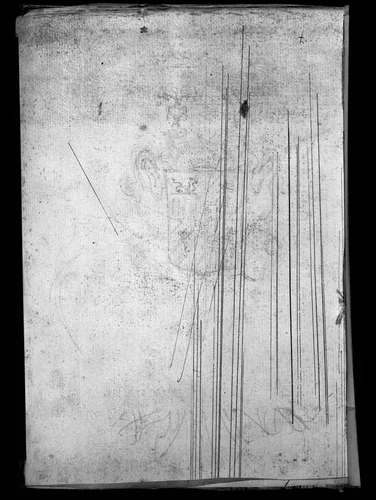
![Floor Plan [verso] by Filippo Juvarra, drawing, 1678-1736](https://img.artbee.org/df2eccbe-c34f-4e76-bee7-8b905625d2e6/small.webp)
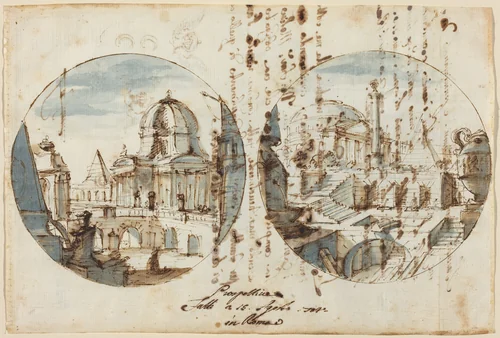
![Studies for the Façade of Santa Cristina [recto] by Filippo Juvarra, drawing, 1715](https://img.artbee.org/bdc8a396-433b-4038-8ced-56fe017c3103/small.webp)