Filippo Bellini
Filippo Bellini, active primarily from 1550 to 1585, was an Italian painter who emerged from the fertile artistic environment of Urbino during the later phase of the Renaissance. Bellini is chiefly recognized for his foundational role in disseminating the artistic idioms established by his influential contemporary, Federico Barocci, focusing these dramatic, nuanced sensibilities within the regional centers of Central Italy.
While his presence did not dominate the major cosmopolitan currents of Rome or Florence, Bellini maintained a prolific and highly respected career, serving significant ecclesiastical patrons throughout the Marche and Romagne regions. His practice was heavily concentrated in areas now covered by the province of Ancona and Macerata, where much of his devotional work remains housed in local churches and established regional museums. The limited corpus of authenticated Filippo Bellini paintings includes his noted portrait of Pope Sixtus V, a work critical to establishing his reputation beyond local patronage.
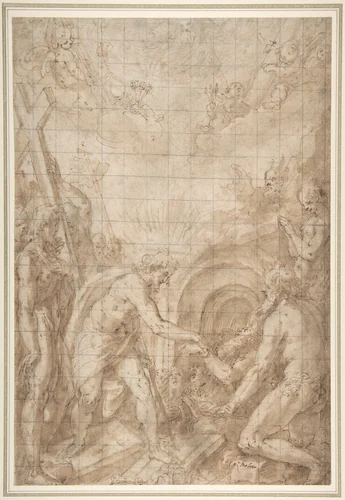
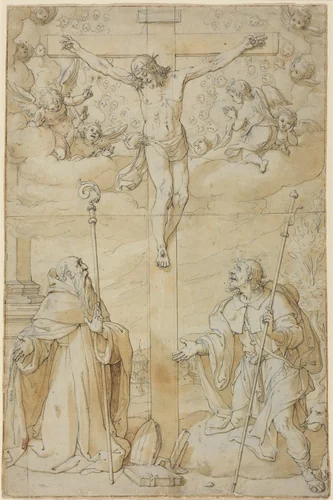
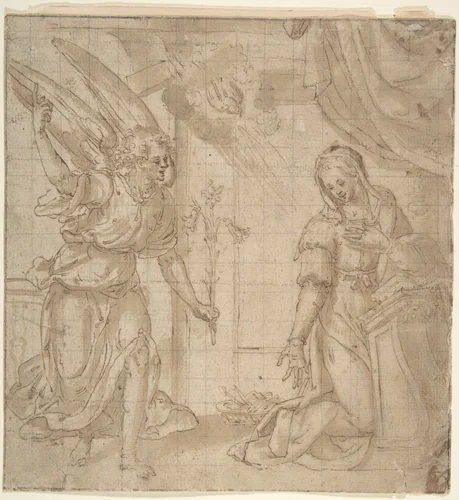
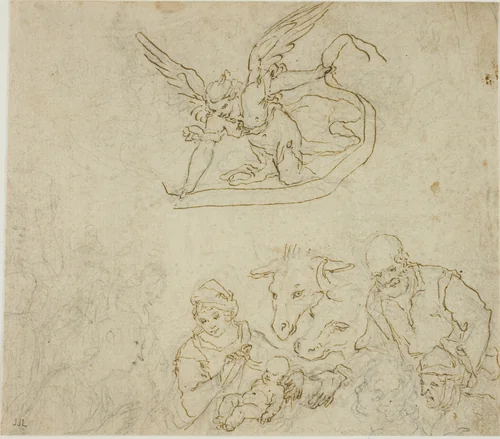
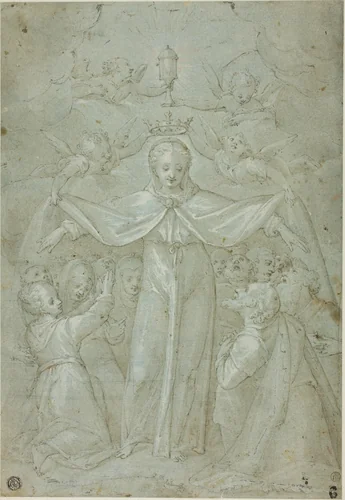
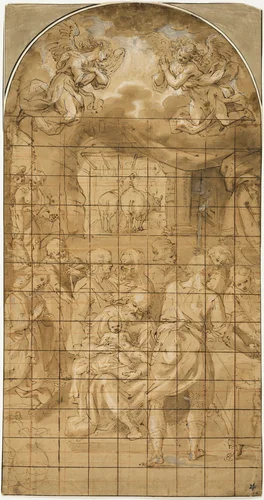
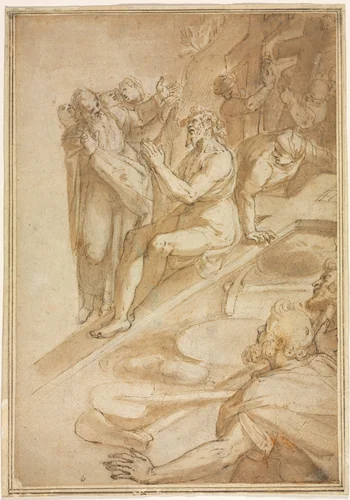
Bellini’s surviving graphic works, such as the seven known drawings currently held in major North American collections including the Metropolitan Museum of Art and the National Gallery of Art, reveal a master draftsman focused intently on complex religious narratives. These drawings range from preparatory studies like Christ in Limbo: Design for the Standard of a Confraternity to finished devotional images such as the Virgin of Mercy (Madonna della Misericordia). The detailed nature of these sheets, occasionally featuring recto and verso studies like the Nativity (recto); Virgin and Child, Angel (verso), provides crucial insight into late sixteenth-century workshop methods, attesting to their continued museum-quality relevance for scholars.
To maintain a successful regional career in the long shadow of a monumental figure like Barocci requires not just technical skill, but a remarkable, steady consistency; Bellini achieved exactly this. His contribution lies not in revolution but in robust articulation, bringing sophisticated Urbino taste to provincial centers. Consequently, many preparatory drawings are now available for study as high-quality prints, allowing modern audiences direct access to the meticulous planning that underpinned his substantial output.
Source: Wikipedia · CC BY-SA 4.0