Ferdinando Galli Bibiena
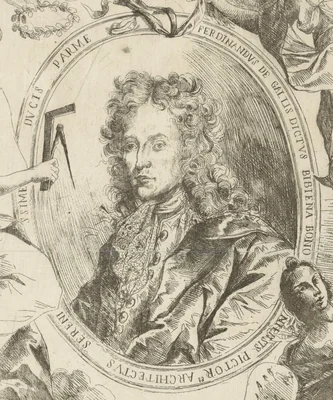
Ferdinando Galli Bibiena (1657-1720) stands as one of the most inventive and influential forces in Italian Baroque design, successfully synthesizing the seemingly disparate roles of architect, stage designer, and illusionistic painter. Active across the major courts of Europe, including Vienna and Barcelona, he was the progenitor of a dynasty of artists, the Galli da Bibiena family, whose expertise in theatrical perspective dominated stagecraft for nearly a century.
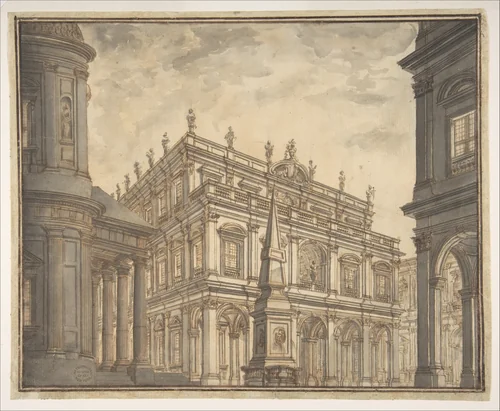
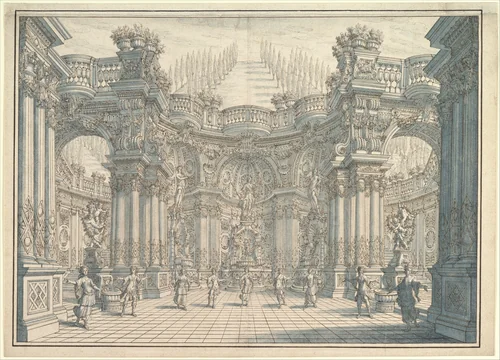
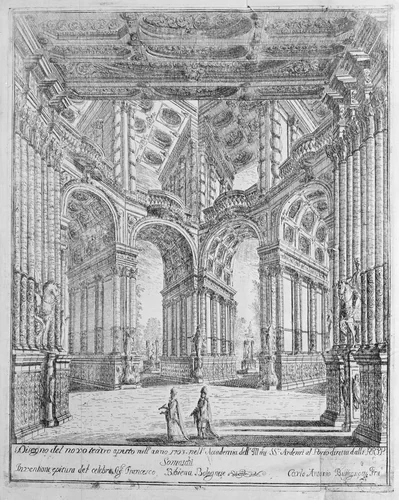
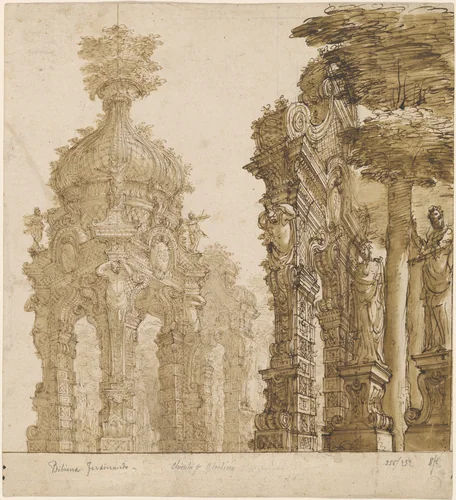
While recognized as an accomplished architect, Bibiena’s profound impact rests on his revolutionary approach to scenography. Before his innovations, stage design relied heavily on the scena centrale, a single-point vanishing perspective that drew the eye linearly toward the back center of the stage. Bibiena challenged this static tradition by popularizing the scena per angolo, or angled perspective. This technique employed two or more vanishing points placed obliquely across the stage flats, creating the illusion of vast, sweeping architectural spaces that extended dynamically beyond the proscenium arch. Works like Design for a Stage Set: A Town Square with a Fountain exemplify this mastery, transforming the stage into a believable yet structurally impossible world.
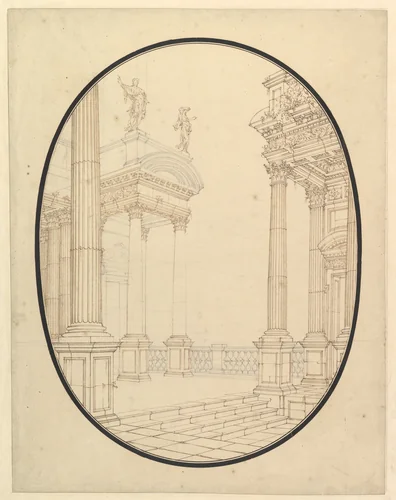
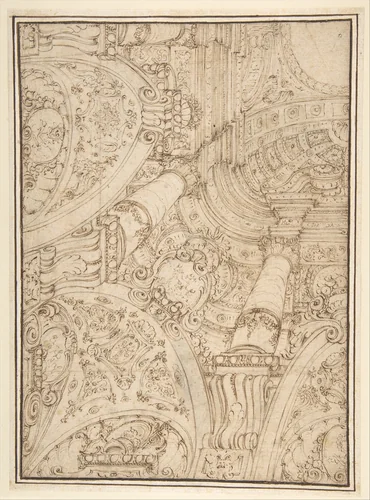
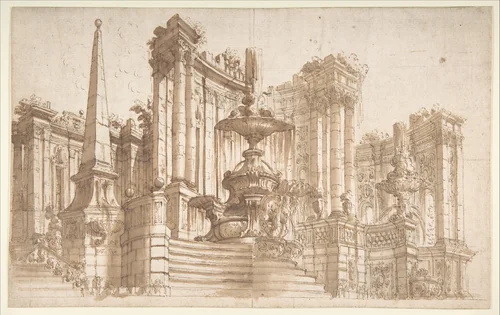
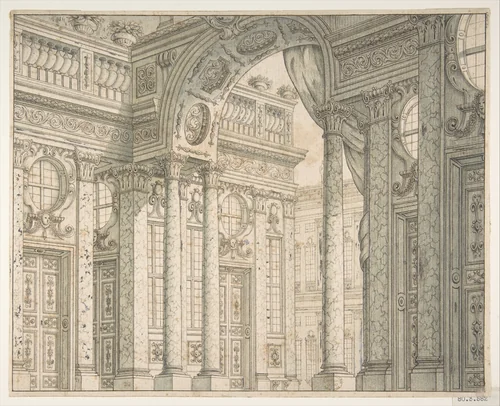
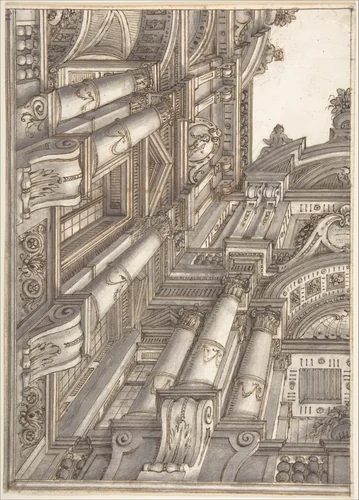
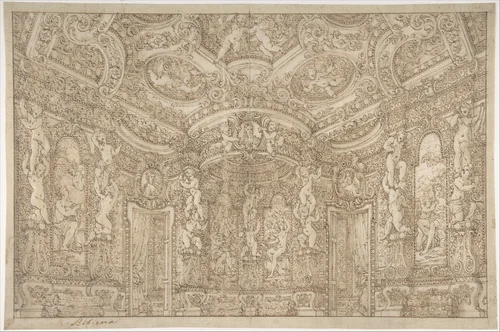
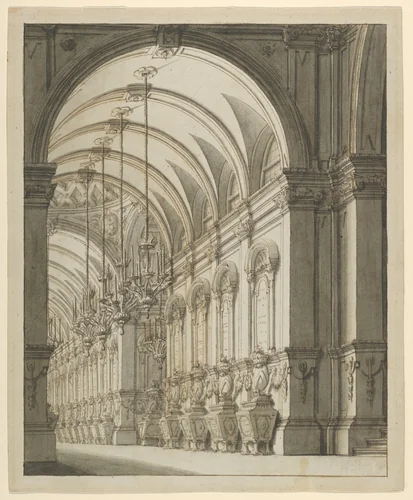
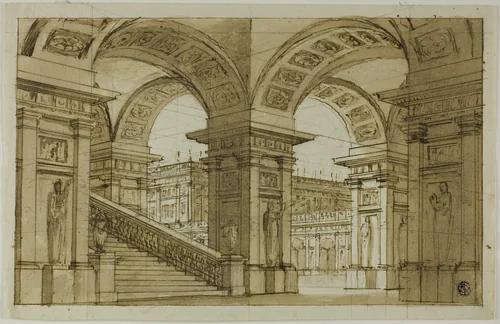
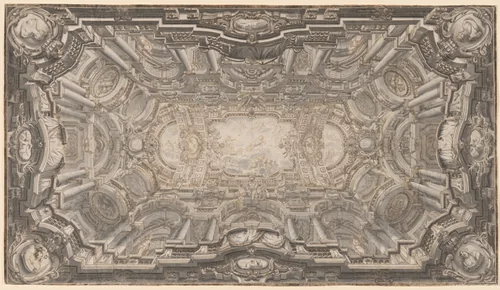
Bibiena’s surviving drawings, often executed in ink and wash, are remarkable demonstrations of quadratura, or architectural trompe l'oeil. These designs reveal a meticulous attention to detail, transforming flat surfaces into complex three-dimensional environments of colonnades, domes, and crumbling classical ruins. Whether depicting an elaborate Design for a Stage Set: Semi-Circular Architectural Ruins, Fountains, and an Obelisk or the contained opulence of Architectural Perspective, in an Oval: Porch of a Palace with Corinthian Columns, his drawings often present structures so monumental and technically overwhelming they seem designed less for human habitation and more for dramatic, theatrical grandeur. This calculated instability is precisely the source of their power.
His extensive body of preparatory studies and his seminal treatise on architectural geometry ensured his influence permeated European design well into the Rococo period. Today, Ferdinando Galli Bibiena prints and drawings reside in major collections worldwide, including the National Gallery of Art and the Metropolitan Museum of Art. These museum-quality works, demonstrating the pinnacle of Baroque illusionism, are frequently found in the public domain, allowing enthusiasts access to his complex design vocabulary through downloadable artwork and high-quality prints.
Source: Wikipedia · CC BY-SA 4.0