Ferdinand Joubert
Jean Ferdinand Joubert de la Ferté was a consequential nineteenth-century French artist, inventor, and engraver whose output deftly spanned the rigorous precision of commercial craft and the dramatic intensity of fine art graphics. While based primarily in London, where he worked for the preeminent printing firm De La Rue, Joubert established a reputation not only as a master of the burin but also as a significant technical innovator. He successfully developed new photographic techniques critical to high-quality reproduction processes of the era, positioning his career elegantly at the intersection of technical progress and traditional graphic art.
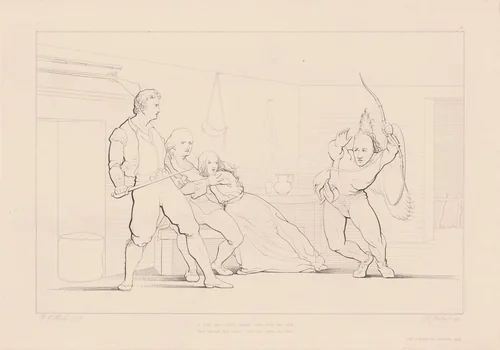
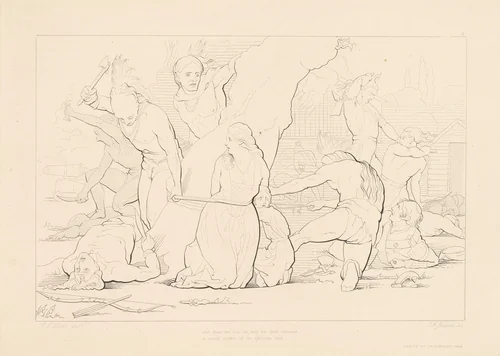
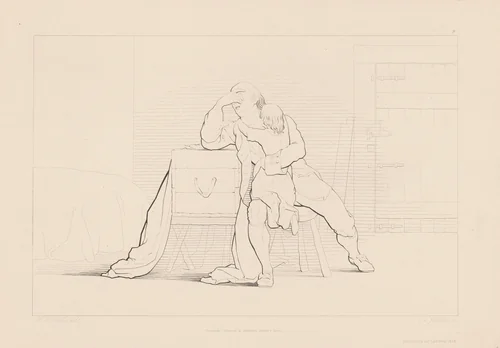
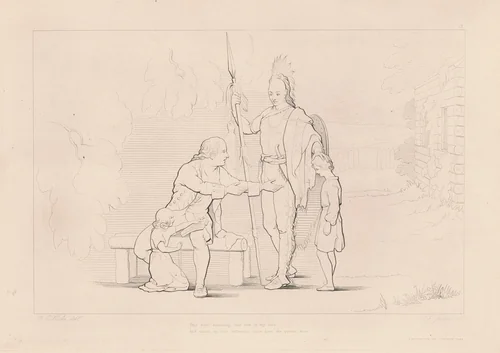
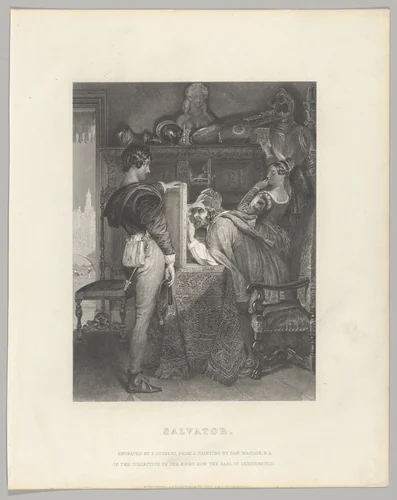
Joubert's output in pure fine art engraving, documented across a concentrated period from 1846 to 1848, is preserved in major institutional holdings, including the Metropolitan Museum of Art and the National Gallery of Art. These works often focused on narrative subjects popular in Victorian illustration, demonstrating a command of light, shadow, and emotional depth. Noteworthy examples from this period, which include The Little Nurseling, Take Him to Thy Love and Gertrude Climbed a Widowed Father's Knee, reveal a refined pictorial sensitivity. His inclusion of a portrait like Salvator, published in The Art Union, confirms his standing within contemporary artistic circles. These detailed works are today increasingly available as downloadable artwork sourced from collections now in the public domain.
Joubert’s technical ingenuity, however, provided his most far-reaching global impact. He specialized in engraving the intricate dies required for postage stamps, translating miniature portraiture into secure, mass-produced currency. His designs were utilized globally, influencing the philatelic landscape of the United Kingdom, the Confederate States of America, Belgium, and Italy. He similarly produced definitive issues for numerous British colonies, including Ceylon, Hong Kong, India, and New South Wales. It is a telling, if subtle, irony that an artist known for such delicate pictorial rendering is perhaps most widely recognized not for his narrative scenes, but for creating some of the world’s most iconic, miniature representations of imperial power, like the enduring profile of Queen Victoria.
His contribution to nineteenth-century printmaking is characterized by exacting detail and technical exploration. The availability of high-quality prints and his essential role in defining the global standards for secure engraved documents ensure that the legacy of Ferdinand Joubert prints remains a fascinating study in the complex relationship between art, invention, and commerce.
Source: Wikipedia · CC BY-SA 4.0