Felix Darley
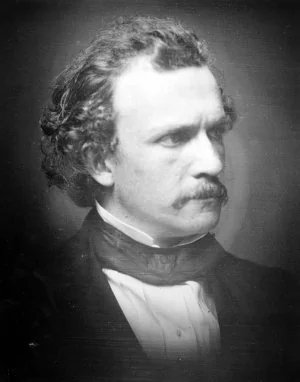
Felix Octavius Carr Darley (1822–1888), often simply credited as F. O. C. Darley, stands as the quintessential visual chronicler of 19th-century American literary life. Active primarily between 1822 and 1851, Darley was the most recognized and influential American illustrator of his era, defining the visual appearance of key characters and pivotal scenes from the nation’s emergent literary canon. His career coincided perfectly with the mid-century boom in illustrated books and magazine serialization, ensuring that his interpretive drawings reached vast audiences.
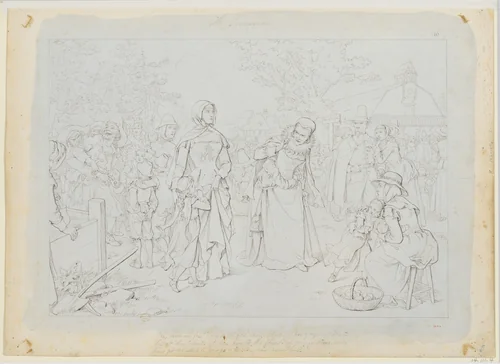
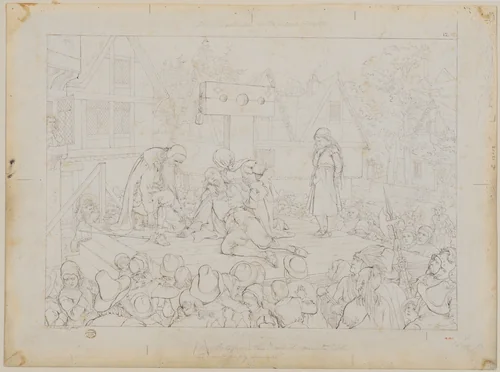
Darley’s prolific output spanned a remarkable range of seminal authors, often working directly with the titans of American and British letters. He provided illustrations for James Fenimore Cooper, Nathaniel Hawthorne, Henry Wadsworth Longfellow, and Harriet Beecher Stowe. His collaborations extended even to Charles Dickens, Washington Irving, and Clement Clarke Moore, cementing his position as the primary artist for visualizing popular narratives. His drawings, frequently executed in detailed pen and ink or wash, provided the definitive visual scaffolding upon which the public constructed its understanding of classics, from Leatherstocking Tales to Francis Parkman’s historical accounts.
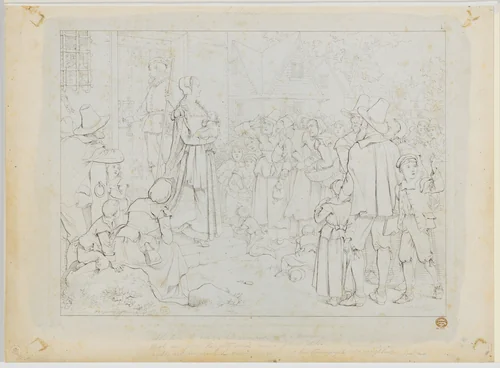
The extant works, held in major institutions like the Metropolitan Museum of Art and the National Gallery of Art, reveal Darley’s skilled hand at depicting complex narrative action. Drawings such as John Eliot Preaching to the Indians and the powerful, cinematic The Scalp-Dance of the Sioux illustrate his ability to convey dramatic tension and cultural specificity, even when addressing controversial historical subjects. It is worth noting that while he is known by his initials, the inclusion of "Octavius Carr" in his full name suggests a certain grand, literary destiny from birth. Reproductions of many Felix Darley prints are widely accessible today, frequently released as high-quality prints that showcase the delicate detail of his compositions.
Darley’s enduring legacy lies not only in his technical proficiency but in his foundational role in shaping American popular visual culture. For decades, the public's mental image of a key literary figure was indelibly shaped by Darley’s rendering. Because much of his highly influential work has since entered the public domain, art historians and enthusiasts alike can access downloadable artwork that preserves this essential chapter of American literary illustration history.
Source: Wikipedia · CC BY-SA 4.0