Felice Giani
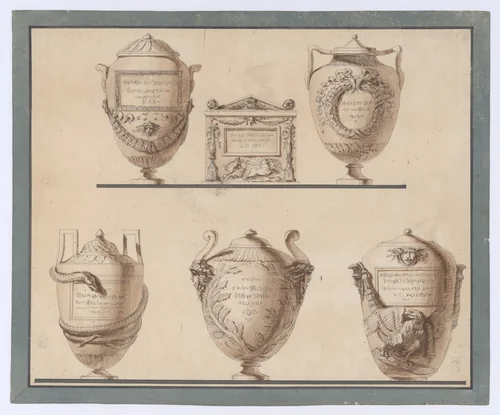
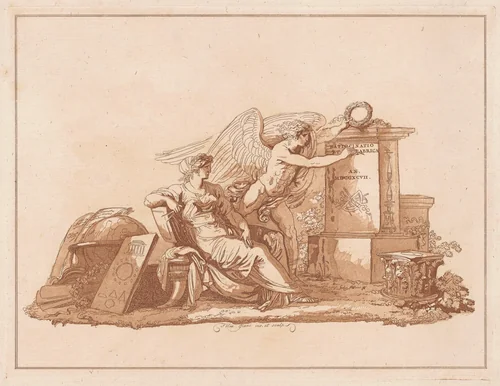
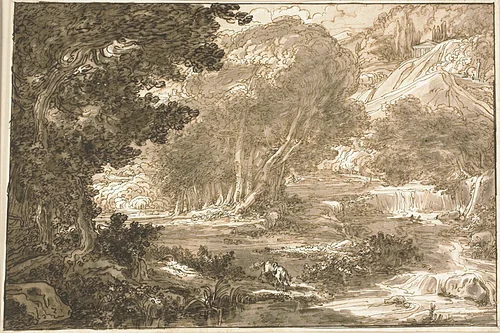
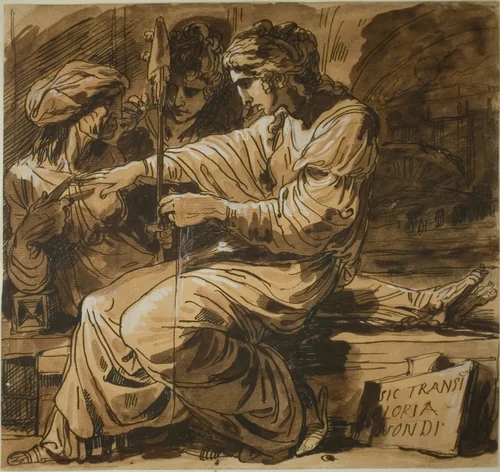
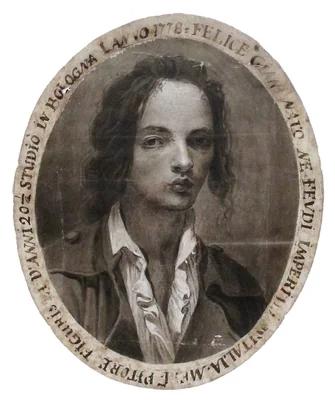
Felice Giani was a pivotal Italian exponent of the Neoclassic style, known for his refined draughtsmanship and his specialization in subjects drawn from Greco-Roman mythology. Active across a period stretching into the late eighteenth century, Giani established a reputation for compositions executed in the ‘grand manner,’ characterized by dramatic scale and intellectual rigor. While celebrated in his time for large-format fresco cycles and paintings, much of Giani’s surviving contribution to art history is encapsulated in his highly detailed preparatory studies and presentation drawings, which offer profound insight into the mechanics of Neoclassical narrative composition.
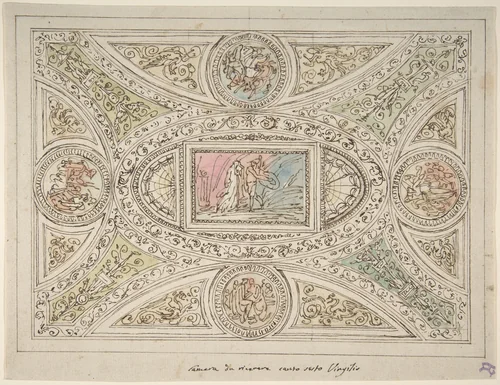
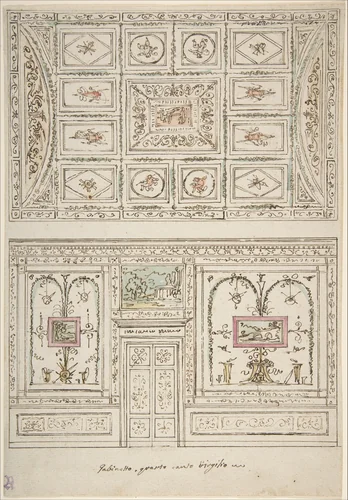
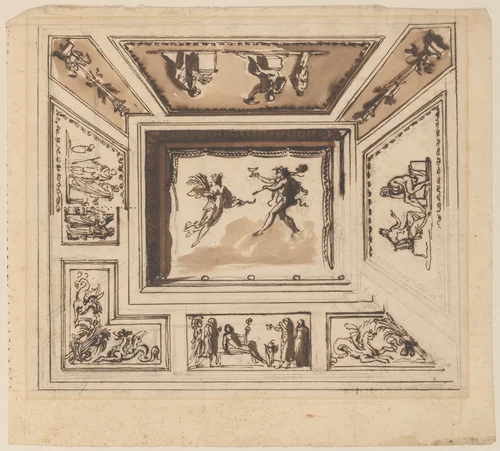
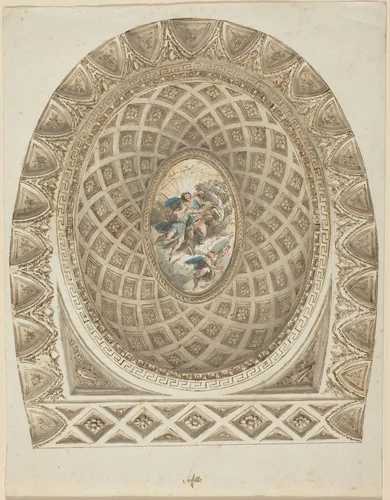
Giani’s work frequently addressed complex literary and allegorical themes. His dedication to classical sources is immediately evident in titles referencing specific texts, such as the Design for a Ceiling with Decoration Related to Virgil's Sixth Canto or the detailed architectural layout in the Design for the Decoration of a Wall and Ceiling of a 'Gabinetto' related to Virgil's Fourth Canto. These comprehensive designs illustrate his dual mastery: the human figure and the integration of disegni into comprehensive architectural schemes.
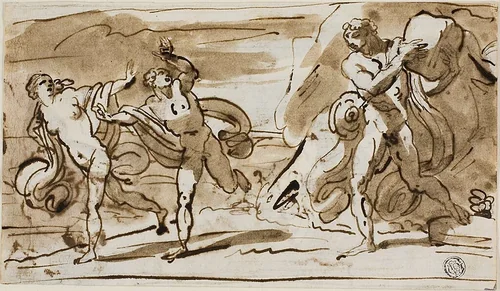
A particularly telling example of Giani's resourceful approach to storytelling is his double-sided sheet, Polyphemus Throwing Boulders at the Fleeing Aeis and Galatea (recto); Polyphemus Playing His Reed Pipes for Galatea (verso). By utilizing both sides of the paper, the artist succinctly explores the tragic juxtaposition inherent in the narrative, moving efficiently from the cyclops’ romantic yearning to his violent despair.
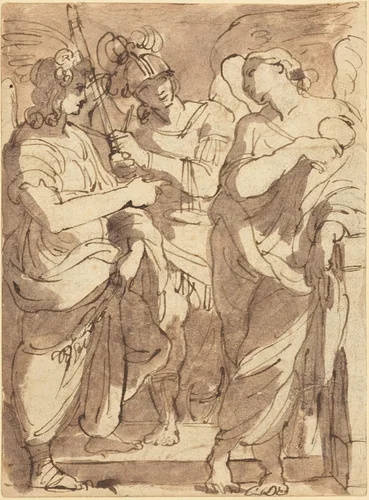
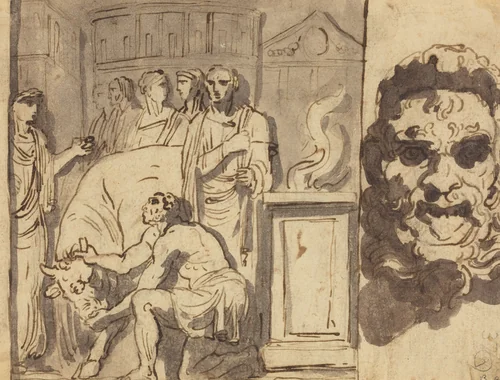
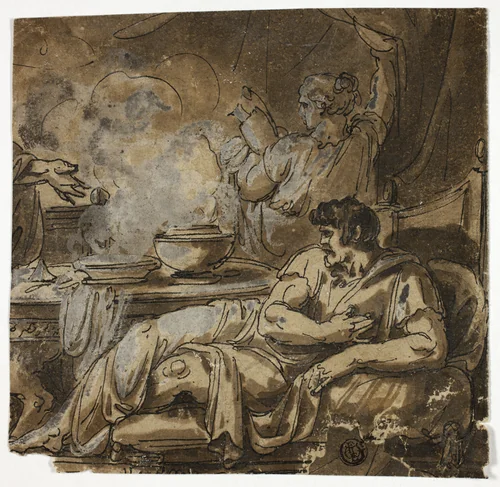
Giani’s works today form important components of international collections, including the Rijksmuseum, the National Gallery of Art, and the Art Institute of Chicago. The lasting aesthetic appeal of his works, particularly those focused on justice, sacrifice, and ancient rites, secures his place within the tradition of sophisticated classicism. Given the age and academic significance of his output, much of Giani’s catalogue now resides in the public domain, offering the opportunity to study museum-quality works, with high-quality prints and downloadable artwork readily accessible for contemporary scholarship.
Source: Wikipedia · CC BY-SA 4.0