F. L. Griggs
Frederick Landseer Maur Griggs (1876-1938) stands as a pivotal figure in the final flourishing of the Etching Revival in Britain, distinguishing himself through technical precision and profound atmospheric draughtsmanship. Deeply associated with the late flowering of the Arts and Crafts movement, Griggs based his practice in the Cotswolds, centering his work and conservation efforts in Chipping Campden. His mastery of the needle and plate elevated the status of the medium within the British establishment; a testament to his expertise, he was among the first etchers specializing purely in the graphic arts to be elected to full membership in the Royal Academy. This recognition solidified his position not merely as a gifted illustrator, but as a major force in early 20th-century graphic arts.
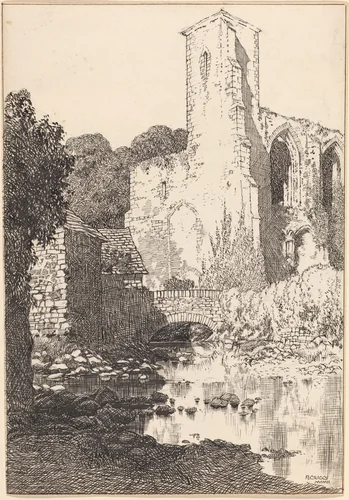
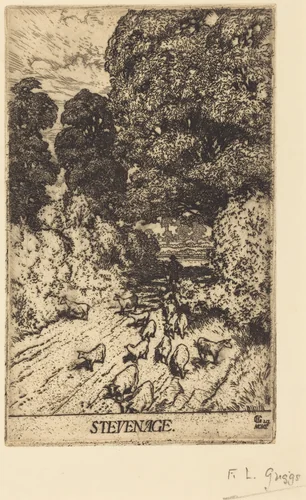
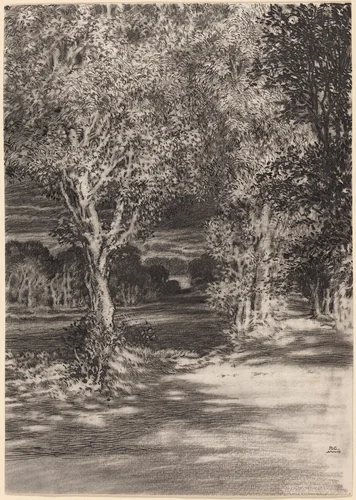
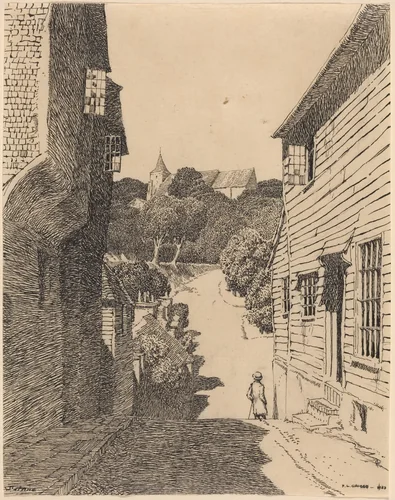
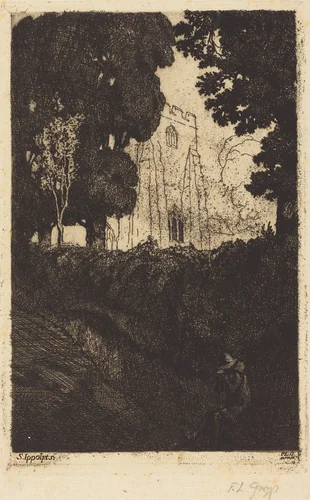
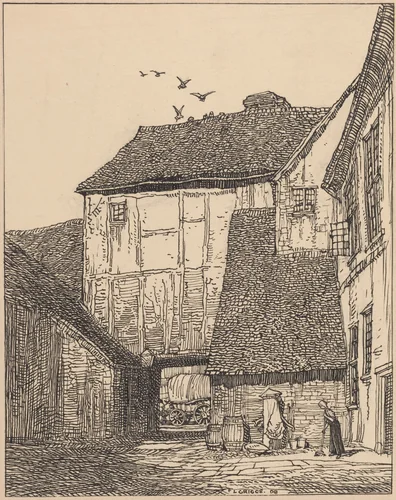
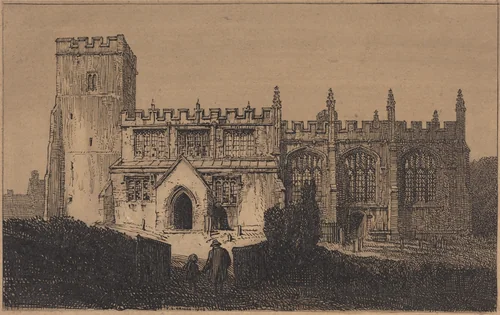
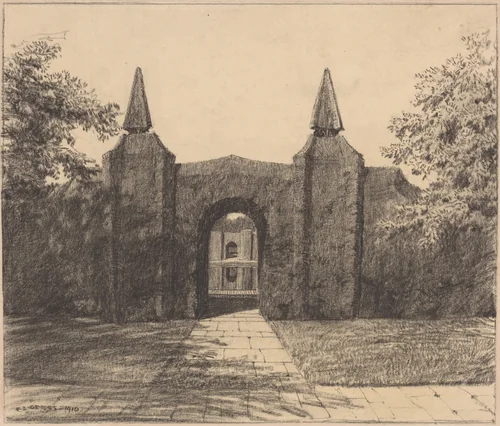
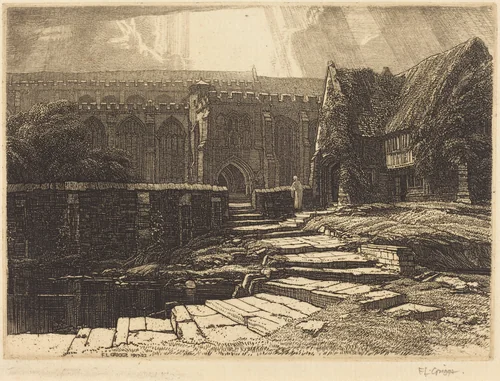
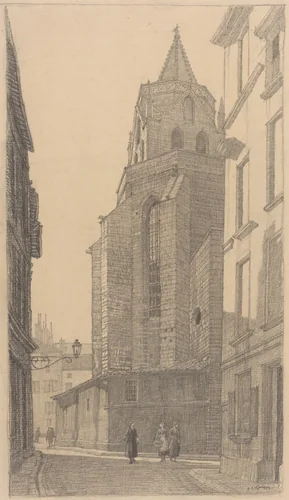
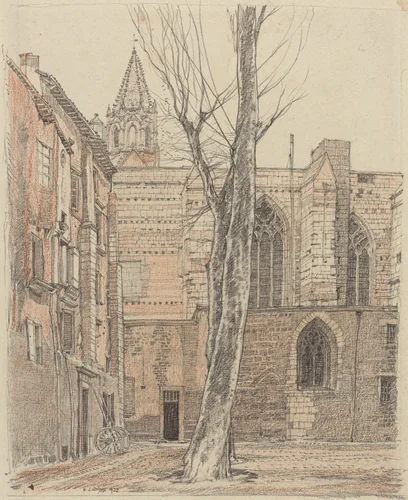
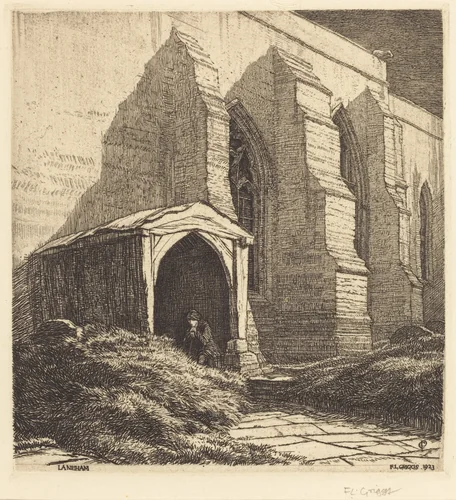
Griggs worked primarily as an etcher and architectural draughtsman, cultivating a precise, focused style that captured the evocative character of Britain’s vanishing architectural past. His primary subjects were topographical views of ancient or threatened structures. Works like St. Anne's Church from Southover and the meticulous rendering found in St. Ippolyts, No. 2 demonstrate his dedicated concern for detail and texture. Yet, his vision extended beyond mere documentation; pieces such as Sunset and Moonrise at Cilian-Aeron reveal a powerful poetic sensibility, blending structural accuracy with emotive light effects reminiscent of the romantic watercolor tradition. His sustained output, particularly the concentrated period of printmaking activity between 1902 and 1923, showcases a remarkable devotion to the aesthetic principles upheld by the Arts and Crafts ideal of meticulous craftsmanship and reverence for the pre-industrial past.
Crucially, Griggs’s artistic production was fundamentally inseparable from his intense dedication to architectural preservation. He was an active and influential early conservationist, often using his detailed drawings and high-quality prints not only to celebrate historic buildings but to actively advocate for their protection against decay or demolition. His art, in this context, was a powerful act of protest, striving to immortalize structures he feared would soon be lost. It is perhaps fitting that a man so devoted to rescuing the past achieved perhaps his greatest official honour late in life, being elected the Master of the Art Workers' Guild in 1934. Today, many of these detailed F. L. Griggs prints are widely available because the original works have entered the public domain, ensuring this museum-quality documentation of historical sites continues to influence contemporary graphic artists.
Source: Wikipedia · CC BY-SA 4.0