Eustache Lesueur
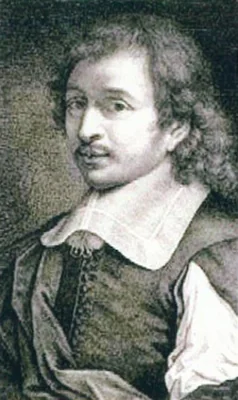
Eustache Lesueur (1617-1655) occupies a crucial, foundational place in the structure of 17th-century French art. He was not merely a celebrated painter of his time; Lesueur was among the instrumental founders of the Académie Royale de Peinture et de Sculpture, an institution that would profoundly shape official French artistic taste and pedagogy for the next two centuries. This early, powerful embrace of institutional structure and hierarchy defined his distinguished, though tragically short, career.
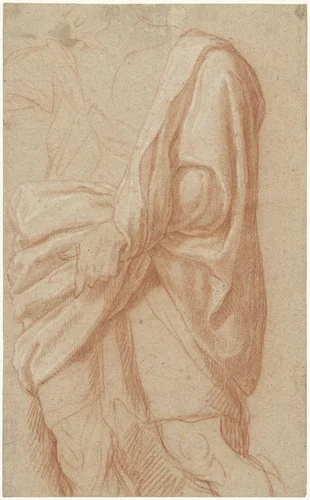
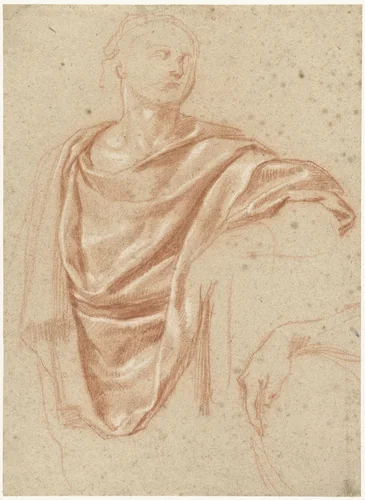
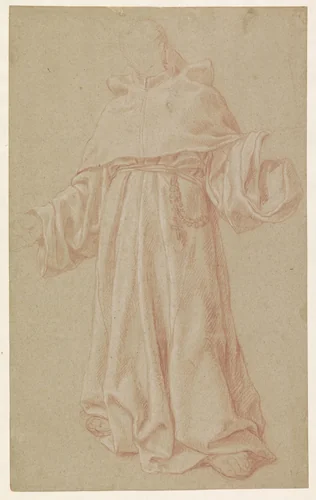
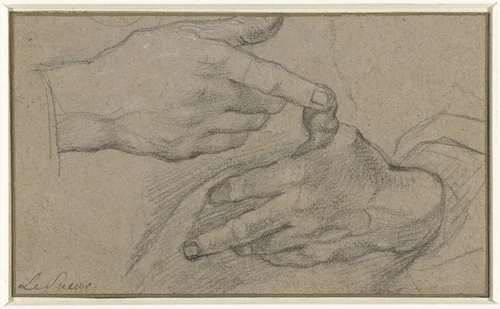
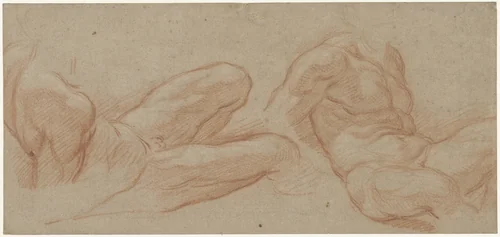
Artistically, Lesueur was a leading exponent of the sophisticated aesthetic movement known as Parisian Atticism. This style, characterized by a refined classicism, favored intellectual clarity, balanced composition, and narrative restraint, standing in studied contrast to the more overtly dramatic Italian Baroque. Lesueur applied these principles primarily to religious subjects, translating complex biblical and hagiographic narratives into compositions of noble elegance. His figures demonstrate an unwavering devotion to classical modeling. Even in his preparatory drawings, such as the focused studies Romein in toga en studie van een hand and the devotional simplicity of Staande monnik, we see the meticulous draftsmanship required for his monumental works.
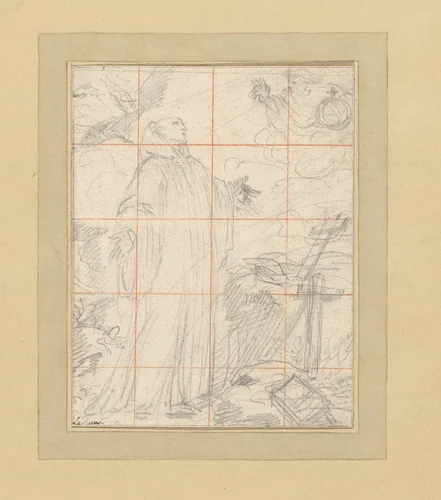
While his reputation rests heavily on large-scale Eustache Lesueur paintings, the precision evident in his documented early activity confirms his immediate mastery of line. For instance, the six drawings dating from the 1626-1627 period, including the striking Visioen van de Heilige Bruno, reveal a command of form achieved before the age of twenty. There is a quiet, diligent focus in these studies that suggests an artist dedicated more to the rigor of classical truth than to public fanfare—a fascinating contrast to his demanding institutional role as an academic founder. He consistently sought formal perfection in every figure and every fold of drapery.
Today, the legacy of Lesueur’s classicizing restraint is preserved across major international collections, including the Rijksmuseum. As the works of French academic masters pass into the public domain, the rigorous quality of his designs remains widely accessible. Institutions are now able to offer downloadable artwork and high-quality prints, allowing modern viewers to study the precise technical demands that defined the early neoclassical style. Lesueur’s contribution ensured that the nascent French school would prioritize formal refinement over dramatic expression, establishing a benchmark of museum-quality execution that continues to inspire.
Source: Wikipedia · CC BY-SA 4.0