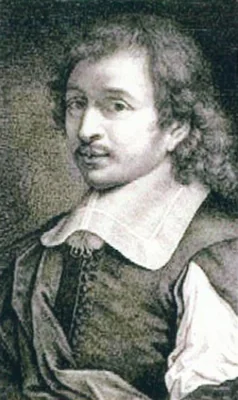
Eustache Le Sueur
Eustache Le Sueur (1617-1655) was a pivotal figure in the establishment of formal artistic pedagogy in France, serving as a co-founder of the Académie Royale de Peinture et de Sculpture. Working primarily in Paris, Le Sueur quickly became a leading exponent of the sophisticated neoclassical movement known as Parisian Atticism, which privileged clarity of composition, psychological nuance, and refined draughtsmanship over the dramatic emotionalism of contemporary Baroque painting. His precise, structural approach provided the intellectual foundation for what would later become the official aesthetic standard of the French establishment.
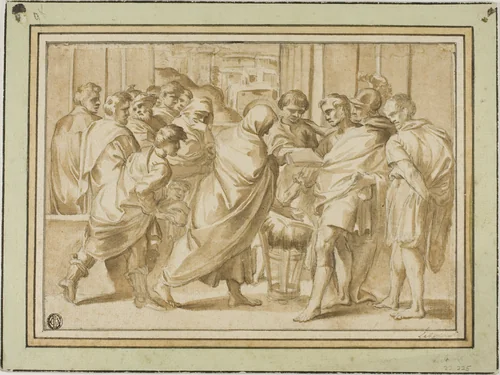
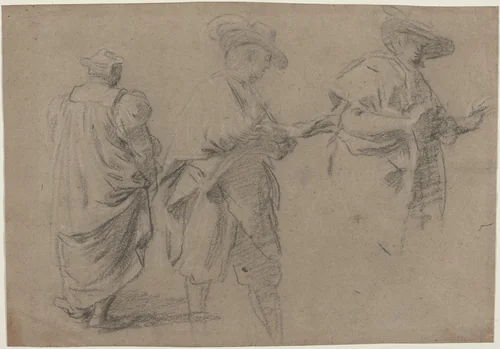
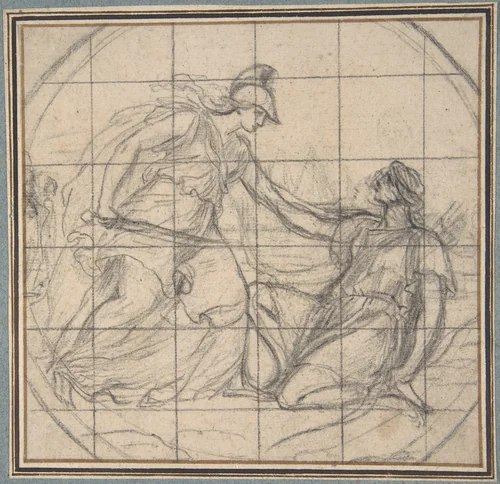
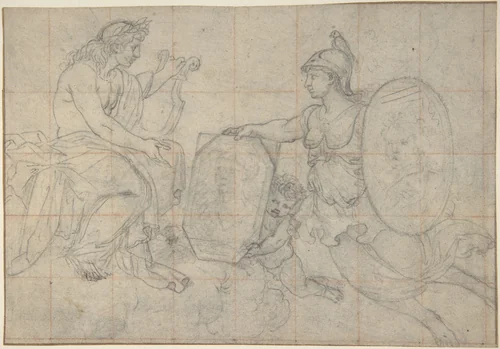
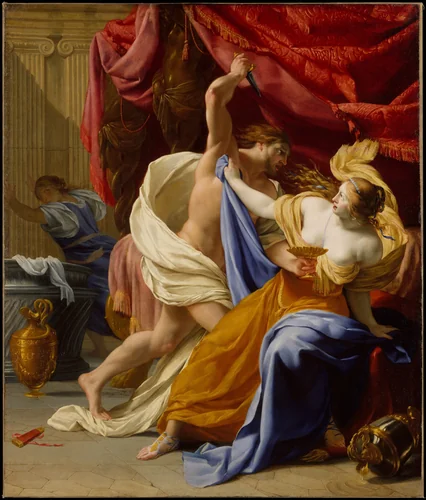
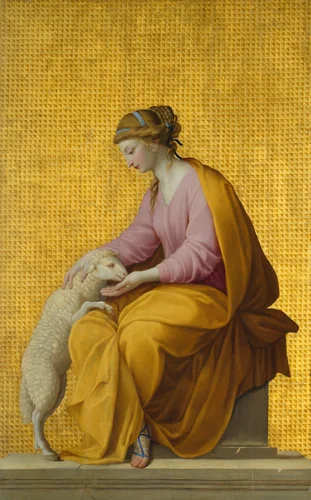
While Le Sueur is primarily celebrated for Eustache Le Sueur paintings dedicated to religious subjects, imbued with profound piety and classical restraint, his artistic range was notably broad. His surviving corpus reveals a dedication to complex historical allegory and mythology, as seen in the cool idealism of works such as Minerva Presenting Two Portraits to Apollo and Design for a Medallion: Huntress Kneeling before an Armed Goddess. These compositions reflect his deep engagement with classical literature and history, often employing controlled, theatrical staging for maximum visual impact. His professional versatility allowed him to explore diverse genres, resulting in precise character studies like A Judge and Two Gentlemen Lawyers.
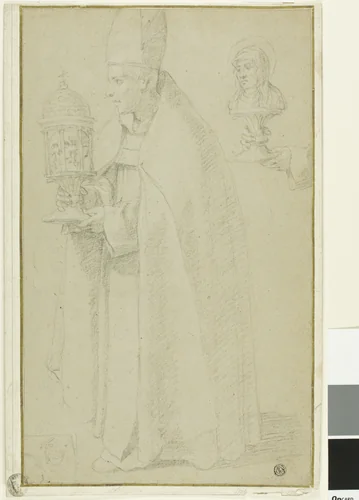
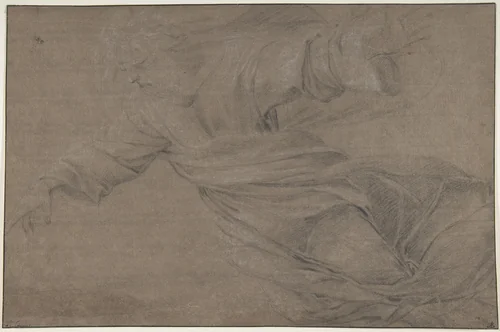
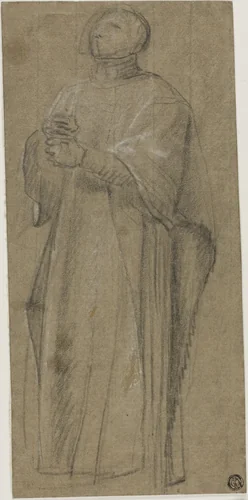
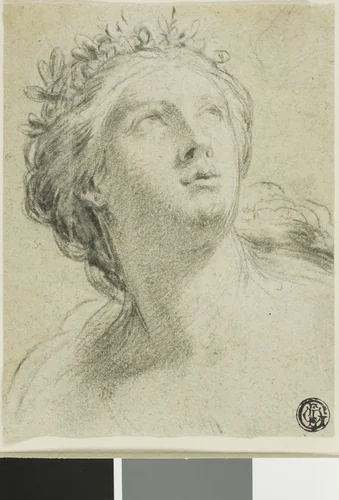
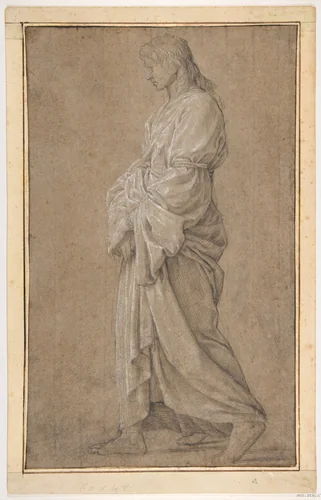
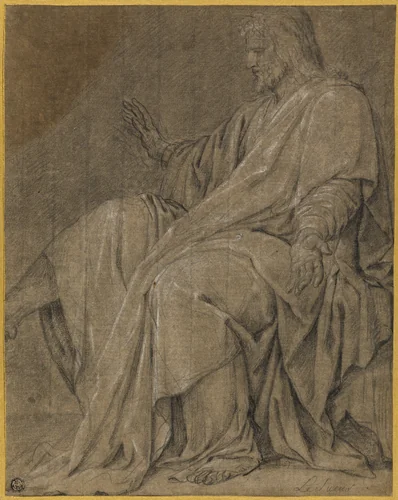
His true mastery often resides in the preparatory phase of his work. Le Sueur’s extensive use of drawing demonstrates the rigorous academic process he helped institutionalize. Consider the drawing A Bishop Carrying a Reliquary with a Skull and Study of Two Hands Holding a Reliquary of a Female Saint. The juxtaposition of the grand religious narrative with the focused, isolated study of hands holding a sacred object reveals a fascinating insight: the 17th-century Parisian master believed that the essence of sanctity resided equally in monumental form and in the subtle, functional gesture.
Le Sueur's legacy is one of measured elegance and enduring academic authority. Today, his significant oeuvre is preserved in major international institutions, including the Art Institute of Chicago, the National Gallery of Art, and the Metropolitan Museum of Art. As his catalogue increasingly resides in the public domain, enthusiasts can easily access high-quality prints of his seminal works, allowing close study of the sophisticated draftsmanship that defined the height of French classicism.
Source: Wikipedia · CC BY-SA 4.0