Eugène Louis Lami
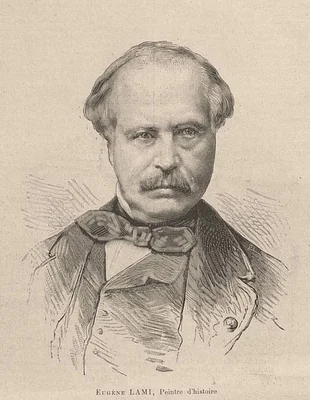
Eugène Louis Lami (1800-1890) was one of the most dedicated and commercially successful French visual chroniclers of his century. Active for over seven decades, Lami bridged the shift from the opulent Romantic era into the detailed realism and documentary approach prized during the later Second Empire. Primarily recognized as a painter and lithographer, his significance lies in his meticulous documentation of European high society, military events, and the sophisticated daily life of the French aristocracy.
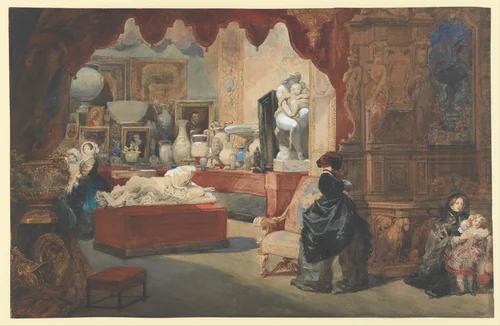
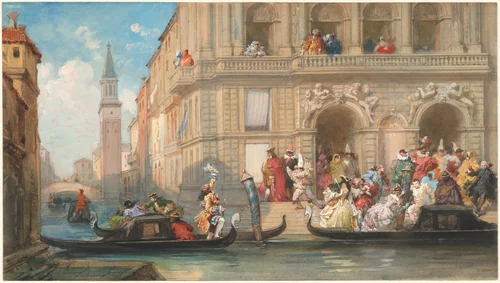
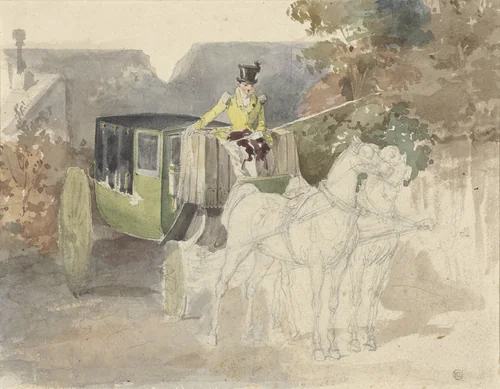
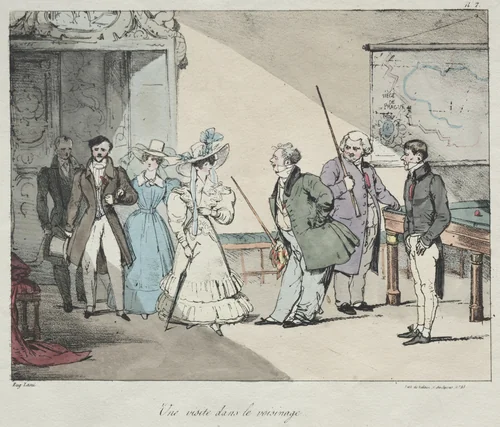
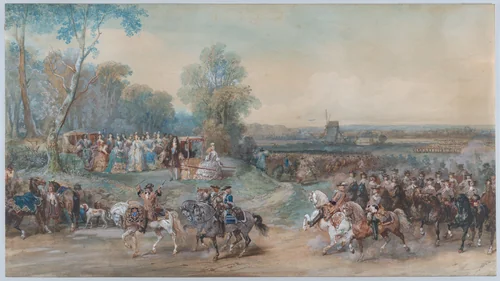
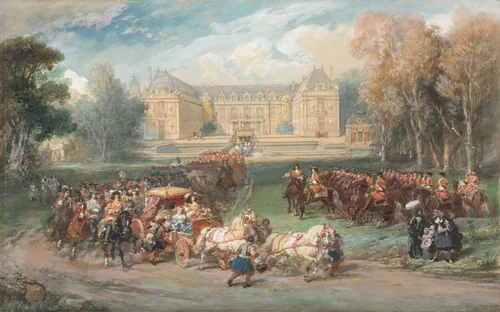
Lami functioned as the designated artist of fashionable Paris, charting the atmosphere of the city across the July Monarchy and the subsequent Second French Empire. He possessed a sharp eye for social ceremony and the intricacies of courtly spectacle, evidenced in vibrant, detailed works such as Masqueraders Boarding Gondolas before a Venetian Palazzo and the compelling genre scene Interior of a Museum. While documenting formal life, Lami also excelled at capturing the speed and leisure of his time, as demonstrated by the detailed carriage studies, including Coupétje met twee paarden, in bosrijke omgeving.
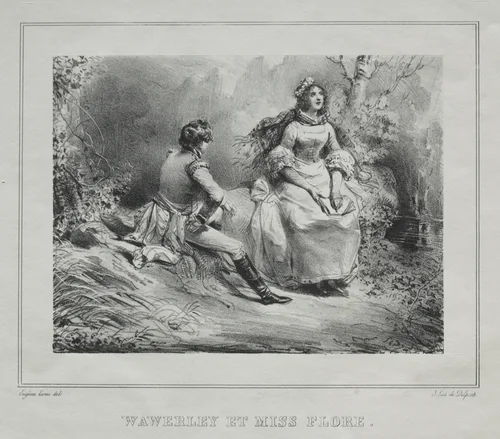
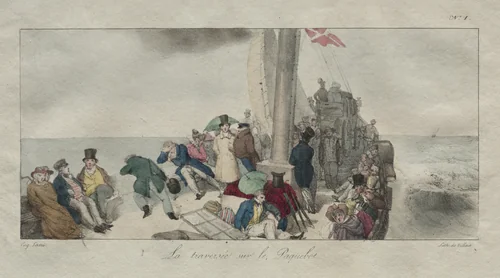
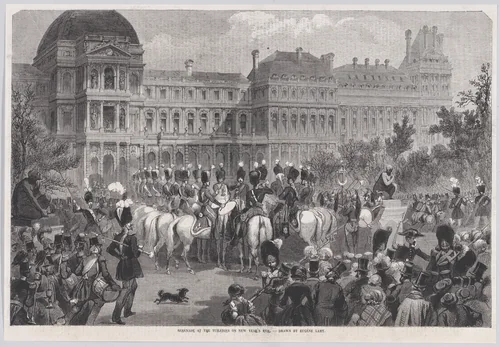
His impressive output was not confined solely to Parisian salons. Lami’s practice included history paintings commissioned to commemorate grand political and military moments, as well as extensive work as an illustrator for popular French literature, including classic volumes like Gil Blas and Manon Lescaut. He was an early proponent of travel documentation, creating detailed series that captured international settings, such as Picturesque Views of Scotland: Waverly and Miss Flora and Souvenirs of London: Crossing on the Packet Boat. Lami was reportedly so adept at capturing political and social drama that he was often commissioned to sketch events as they occurred—functioning as a rapid-response visual journalist of his day.
Lami’s technical skill, particularly in lithography, ensured his longevity and wide circulation, producing numerous high-quality prints that spread his visual reports across Europe. Many of these historical scenes and Eugène Louis Lami paintings are now available for scholarly study, often sourced as downloadable artwork through public domain repositories. Today, major institutions worldwide, including the Rijksmuseum, the Metropolitan Museum of Art, and the National Gallery of Art, maintain significant holdings of Lami’s works, ensuring that his museum-quality depictions of a vanished era remain preserved.
Source: Wikipedia · CC BY-SA 4.0