Eugène Grasset
Eugène Samuel Grasset (1841-1917) was a pivotal figure in the transition of decorative arts from historicism to modernity, establishing himself in Paris during the fertile period of the Belle Époque. Hailing from Switzerland, Grasset became recognized as a pioneering force in the development of the Art Nouveau movement. His work fundamentally bridged the gap between traditional illustration and modern graphic design, influencing generations of architects and designers who sought to integrate nature-based ornamentation into contemporary life.
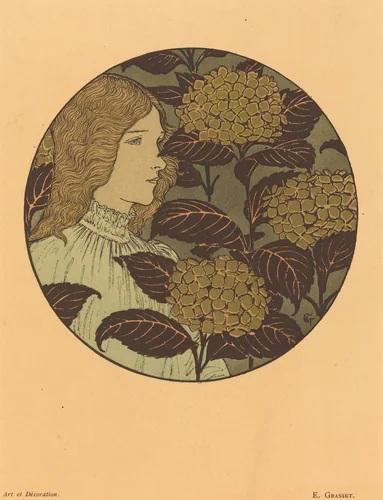
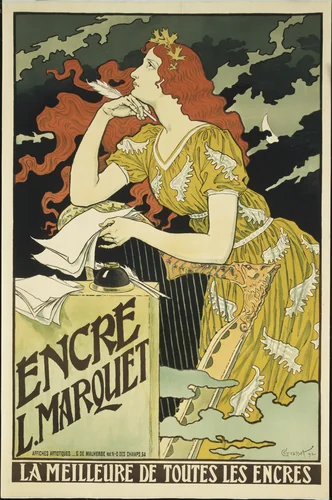
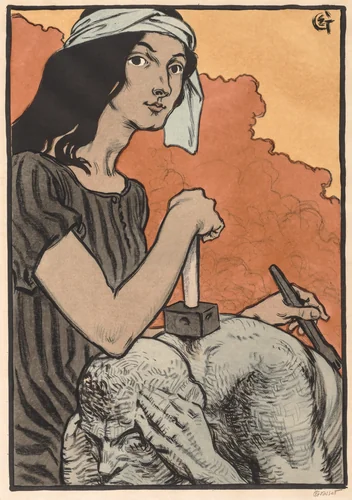
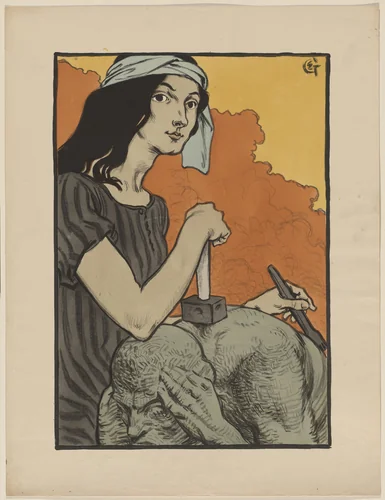
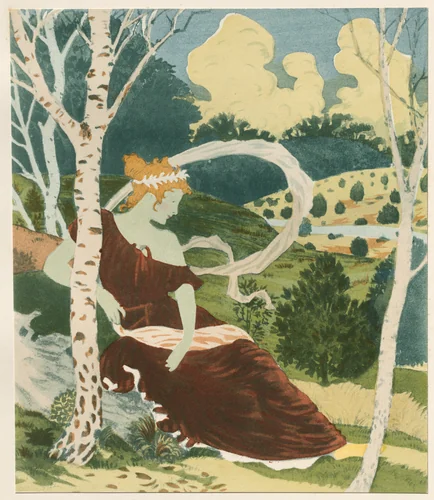
Grasset was remarkably versatile, excelling across numerous creative disciplines, including illustration, stained glass, textiles, and particularly, poster design. Unlike many of his contemporaries who focused narrowly on painting or sculpture, Grasset embraced the concept of the total work of art, ensuring the new aesthetic permeated applied and commercial environments. His technical mastery of chromolithography is evident in celebrated promotional works, such as the vibrant advertisement Encre L. Marquet, La Meilleure de Toutes les Encres. The careful use of line, color, and symbolic motif, as demonstrated in his design Roundel Portrait of a Girl, showcases the intricate craftsmanship that elevated decorative work to the level of fine art.
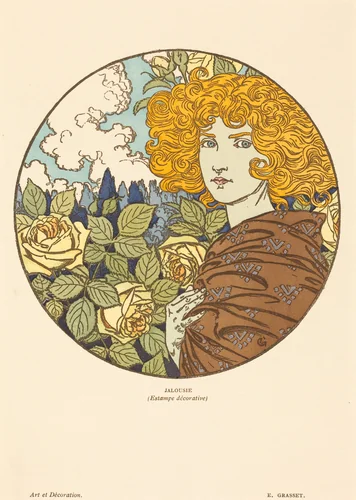
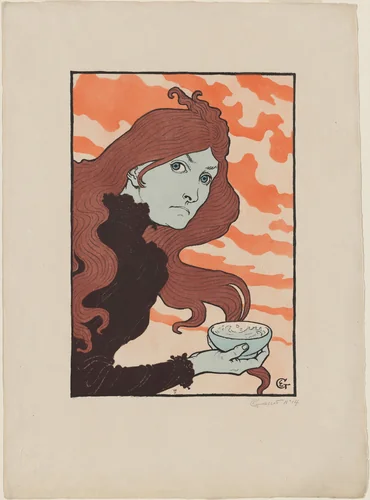
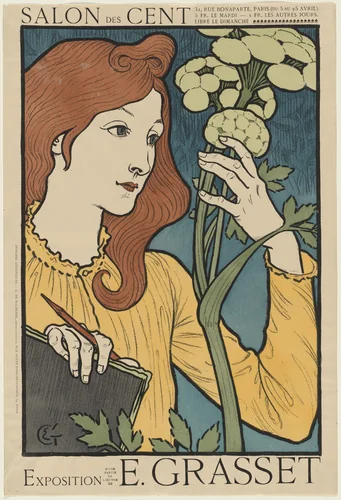
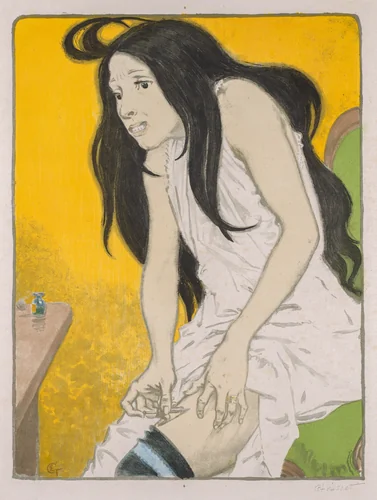
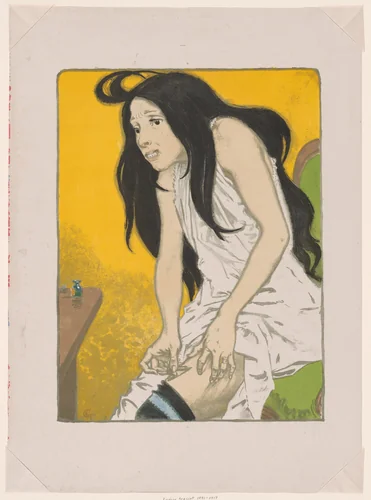
His lithographic output often balanced decorative serenity with moments of profound psychological tension. Grasset did not shy away from incorporating darker narratives into his elegant visual language, sometimes venturing into the macabre. This is particularly noticeable in the dramatic illustration La Vitrioleuse (The Acid Thrower), and the striking depiction Jalousie (Jealousy), a willingness to blend high design with scenes of sinister drama. His broad influence was cemented when he was honored with a dedicated solo exhibition, the Salon des Cent, Exoposition E. Grasset.
Grasset’s impact on the evolution of modern graphics is enduring. Today, his original works and high-quality prints are preserved in major international institutions, including the Art Institute of Chicago, the National Gallery of Art, and the Museum of Modern Art. As much of his extensive graphic catalogue is now in the public domain, the enduring appeal of Eugène Grasset prints continues to affirm his essential status as a cornerstone of early modern decorative arts.
Source: Wikipedia · CC BY-SA 4.0