Eugène-Emmanuel Viollet-le-Duc
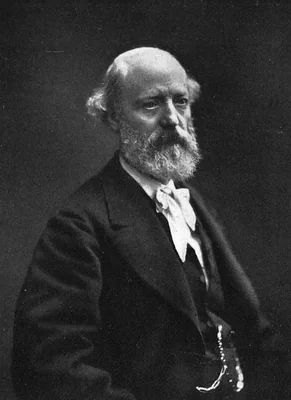
Eugène-Emmanuel Viollet-le-Duc (1814-1879) stands as one of the nineteenth century’s most pivotal figures in the history of historic preservation, defining the modern understanding of medieval French architecture. As both a prolific architect and influential author, he fundamentally reshaped the perception and physical reality of France’s most treasured Gothic structures. His philosophy centered on "restoration in the integrated sense," an ambitious pursuit to return buildings not merely to a current stable state, but to a state of architectural completeness they might never have achieved in the Middle Ages. This rigorous, yet historically interpretive, approach was guided by an intense academic scrutiny of original forms and regional styles, establishing a new standard for conservation efforts across Europe.
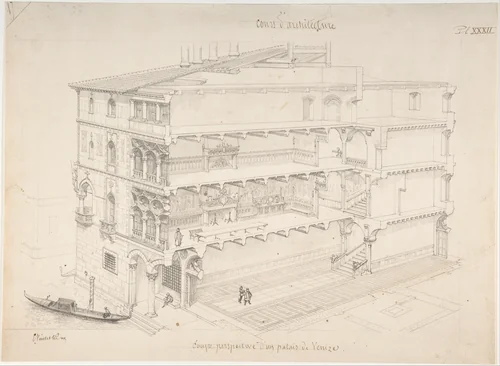
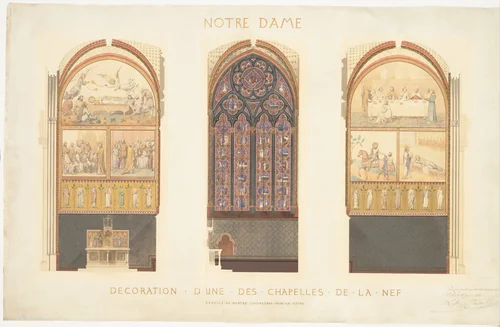
Viollet-le-Duc’s legacy is physically inscribed across the French landscape. His extensive restoration commissions included the comprehensive overhauls of seminal sites such as Notre-Dame de Paris, the Basilica of Saint Denis, Mont Saint-Michel, and the massive undertaking at the fortified city walls of Carcassonne. These intensive projects generated thousands of precise architectural studies and technical drawings, demonstrating a profound structural imagination. His technical mastery is particularly evident in compositions such as the Perspectival Cross-Section of a Venetian Palace, a work exhibiting both historical sensitivity and draftsmanship of museum-quality. Further insight into his systematic methodology is provided by the meticulous Plan for the Renovation of a Chapel in the Nave of the Cathedral of Notre Dame, Paris.
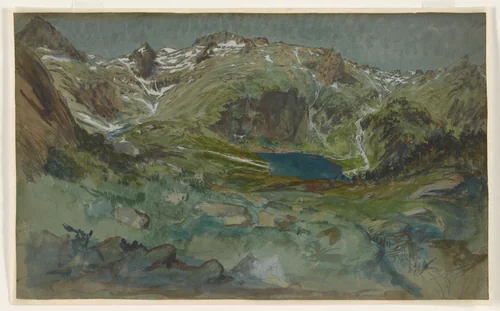
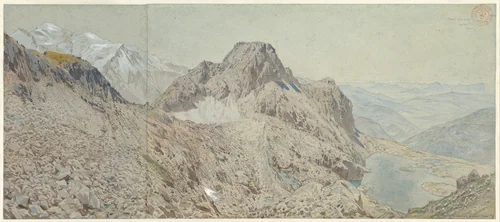
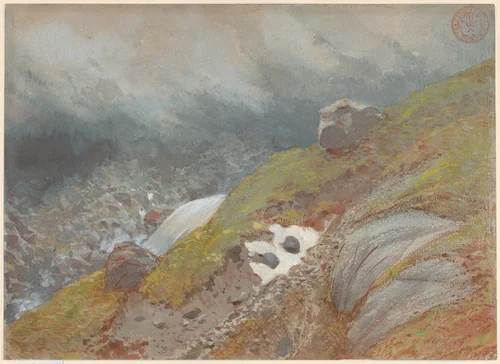
Beyond his monumental architectural practice, Viollet-le-Duc maintained an active personal output, recording his travels and observations. His early years were marked by extensive journeys throughout the Pyrenees and the Alps, resulting in compelling visual records such as the evocative Mont Blanc Seen from the Massif, Les Aiguilles Rouges. Curiously for a figure so devoted to the structural logic of Gothic engineering, these landscape studies often show a Romantic’s appreciation for the sublime, reminding us that even the most rigorous classicist appreciated a scenic vista. Today, these detailed renderings and early Eugène-Emmanuel Viollet-le-Duc prints are preserved in international collections, including the Metropolitan Museum of Art and the Art Institute of Chicago, making much of his detailed drawing output widely accessible through the public domain.
Source: Wikipedia · CC BY-SA 4.0