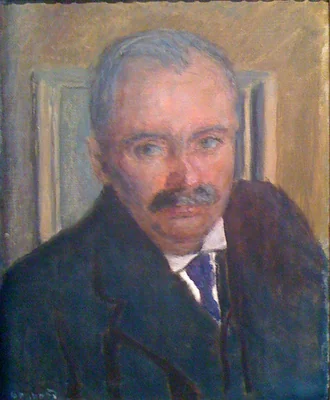
Eugène Druet
Eugène Druet (1867-1916) occupied a highly specialized, influential position within the Parisian art establishment during the two decades preceding the First World War. He functioned simultaneously as a respected art dealer and a technically rigorous photographer, roles that made him a critical conduit for the development and dissemination of early modern art between 1890 and 1915.
Druet’s primary photographic achievement was his masterful interpretation of three-dimensional form. Moving beyond simple documentation, his photographs emphasize light, shadow, and the tactile texture of materials, providing a definitive visual record of the era’s most challenging sculptural works. He became the principal photographic interpreter for Auguste Rodin, utilizing dramatic cropping and acute sensitivity to surface detail. Works such as The Clenched Hand, Age of Bronze, and the monumental L'Homme Qui Marche are preserved through Druet’s lens, which imbued the bronze and marble with a striking psychological presence.
His expertise extended beyond the static medium; Druet also captured the ephemeral world of performance. His striking image of Vaslav Nijinsky in Danse siamoise from the "Orientales" captures the movement and exoticism of the Ballets Russes, demonstrating his technical agility across genres. These precise, high-quality prints provided essential reference material for scholars and collectors alike.
As a dealer operating from his gallery, Druet championed a progressive roster of artists, effectively shaping taste in the competitive art market. His dual career ensured that the artists he promoted received not only exposure but also the highest standard of visual representation for their work. He was known for his discerning eye but also for his demanding standards, often collaborating intensely with artists to ensure their vision was perfectly captured and presented.
Today, Druet’s historical importance is underscored by the inclusion of his photographic studies in major international collections, notably the Museum of Modern Art and the Metropolitan Museum of Art. His enduring legacy rests on these museum-quality documents, ensuring that key transitional works of early modernism remain accurately accessible. Eugène Druet prints continue to serve as vital reference points for the study of sculpture and dance from the fin de siècle.
Source: Wikipedia · CC BY-SA 4.0
![[Auguste Rodin's The Clenched Hand] by Eugène Druet, photograph, 1890-1898](https://img.artbee.org/a2e8c2e3-665b-40ad-94b7-3836f42a63ec/small.webp)
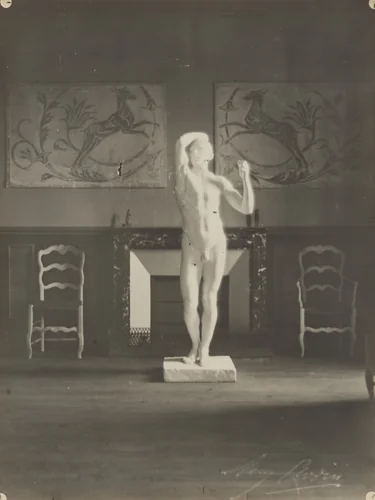
![[Study of a Sculpture] by Eugène Druet, photograph, 1898-1902](https://img.artbee.org/e550ece0-603d-4f5e-8233-de07bc397db1/small.webp)
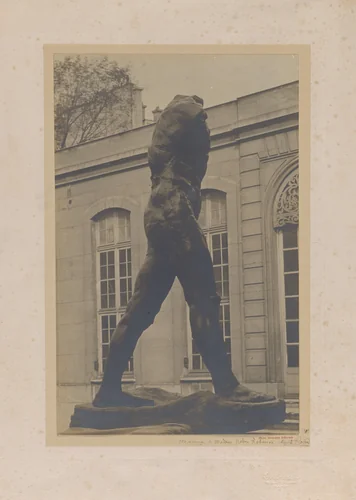
![[Nijinsky in "Danse siamoise" from the "Orientales"] by Eugène Druet, photograph, 1910](https://img.artbee.org/1a7c6676-0fec-48be-b82a-70834bd8a0ae/small.webp)
![[Madame Bardey, Rodin and Henriette, 31 Rue Campagne-Premiere, Paris] by Eugène Druet, photograph, 1915-1916](https://img.artbee.org/57d75668-b664-4436-9626-3901c5de6e62/small.webp)