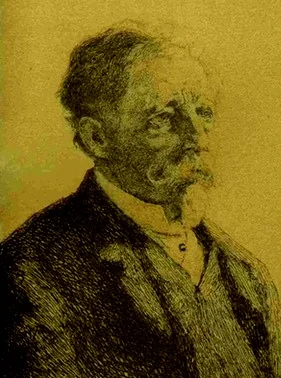
Eugène Cicéri
Eugène Cicéri, also known as Étienne Eugène Cicéri, was a highly adaptable French artist whose career spanned the critical transition from neoclassical refinement to the drama of early Romanticism. Active primarily in the first quarter of the nineteenth century, Cicéri successfully navigated multiple disciplines: painter, illustrator, engraver, and, perhaps most uniquely, a prominent theatrical designer. This professional versatility ensured his prolific output and guaranteed his placement in significant institutional holdings, with works held today in collections such as the Metropolitan Museum of Art and the Cleveland Museum of Art.
Cicéri’s lasting contribution to art history is largely secured through his graphic work, specifically his involvement in the production of Voyages pittoresques et romantiques dans l'ancienne France. This monumental collaborative enterprise documented the historical, architectural, and geographic splendors of France, fueling the burgeoning Romantic obsession with medieval ruins and localized history. His depictions of the remote regions of Brittany—including the evocative renderings of the Abbaye de Relec, the weathered Chateau de Clisson, and the distinctive Eglise de Roscoff—showcase a profound facility with line and shadow, capturing the picturesque decay that defined the era's aesthetic criteria. These detailed architectural studies remain definitive examples of early 19th-century rendering techniques, frequently sought after as high-quality prints.
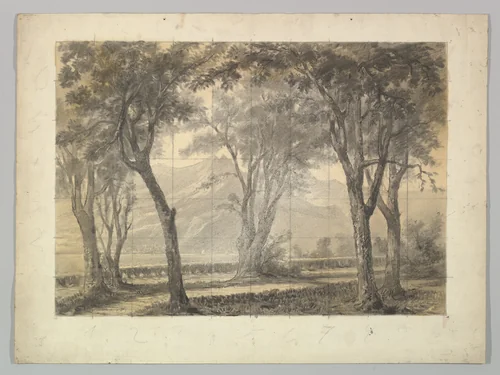
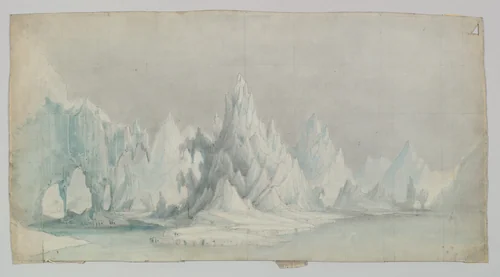
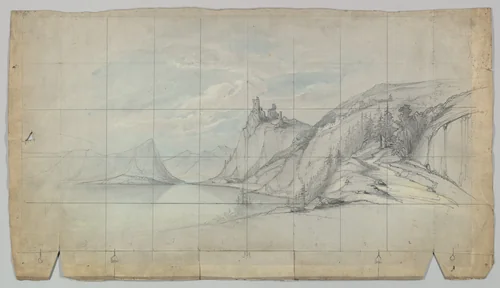
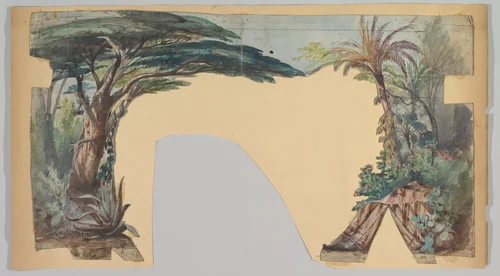
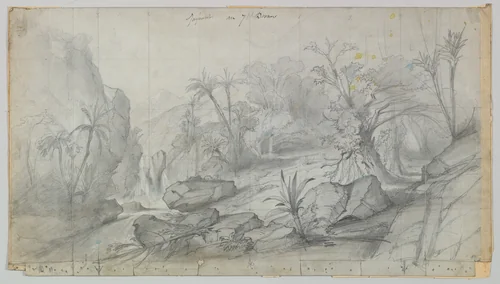
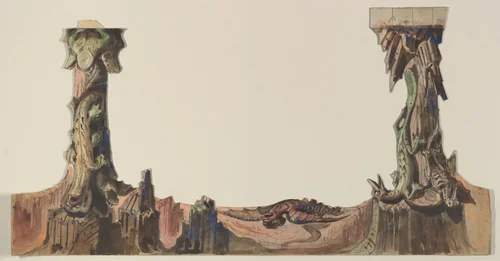
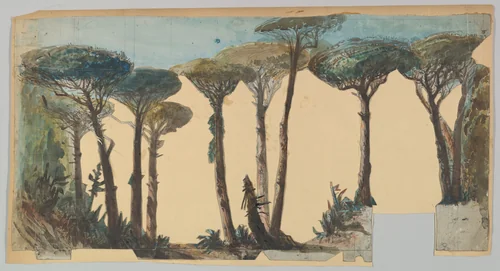
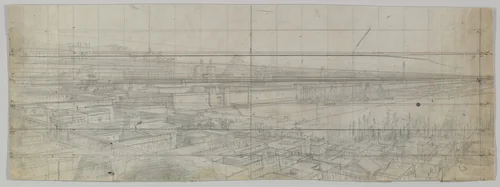
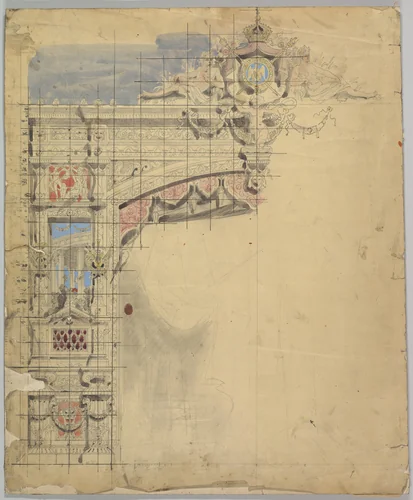
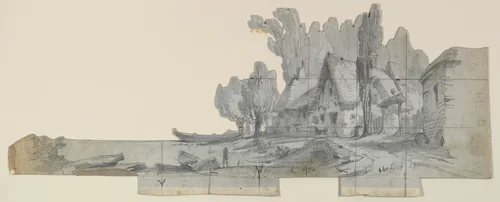
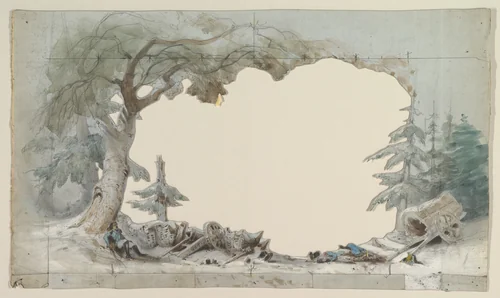
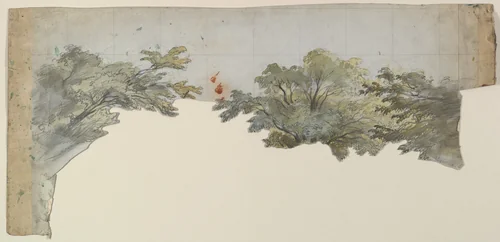
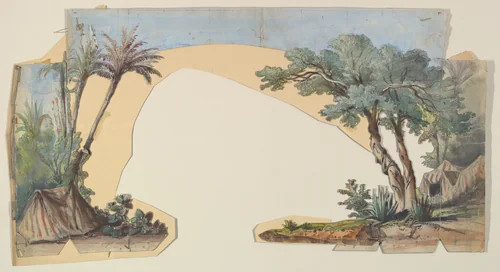
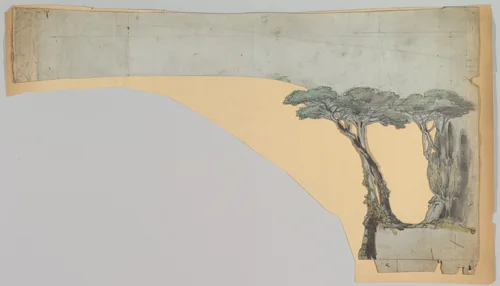
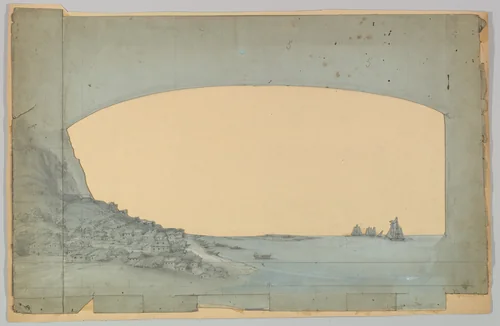
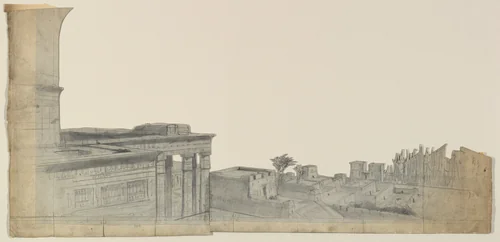
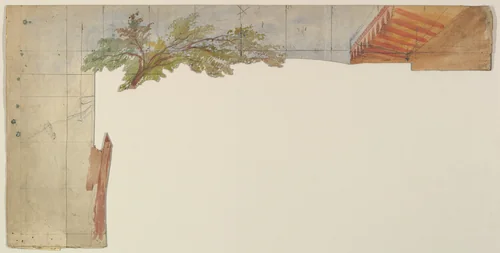
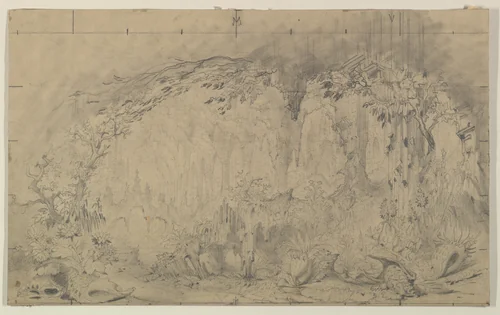
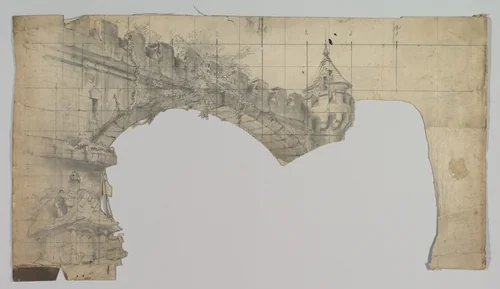
The dual nature of Cicéri's career is particularly illuminating. While his illustrations required painstaking precision for engraving and publishing, his responsibilities as a theatrical designer demanded speed, scale, and immediate visual impact. The sheer practical difference between producing a meticulous copperplate for wide circulation and executing a grand, temporary set design, such as the Design for a Stage Set at the Opéra, Paris, speaks to a technical mastery rarely found in a single practitioner.
Cicéri’s commitment to reproducible media means that a significant portion of his output, comprising compelling architectural and topographical studies, is now in the public domain. His detailed Eugène Cicéri prints continue to offer a crucial visual record of France at the dawn of the Romantic age, demonstrating a disciplined eye for structure combined with a sensitive understanding of atmosphere.
Source: Wikipedia · CC BY-SA 4.0