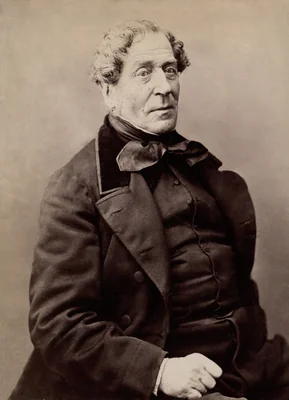
Eugène Bléry
Eugène Stanislas Alexandre Bléry (1805-c. 1887) was a prominent French engraver whose compact yet highly influential career flourished primarily in the decisive period between 1832 and 1840. A highly skilled practitioner of the etching technique, Bléry’s output, encompassing five documented prints, one drawing, and nine distinct portfolios, secured his lasting placement within the permanent collections of the National Gallery of Art and the Metropolitan Museum of Art. His work is critical to understanding the stylistic shift in nineteenth-century printmaking towards intimate, atmospheric nature studies.
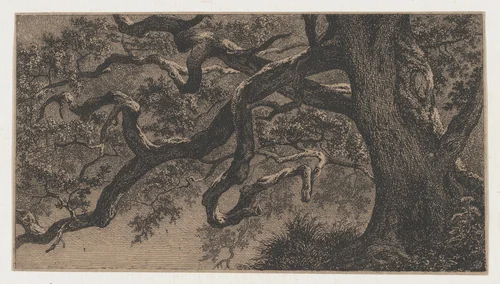
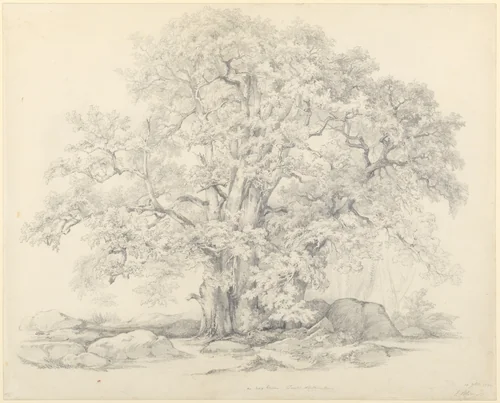
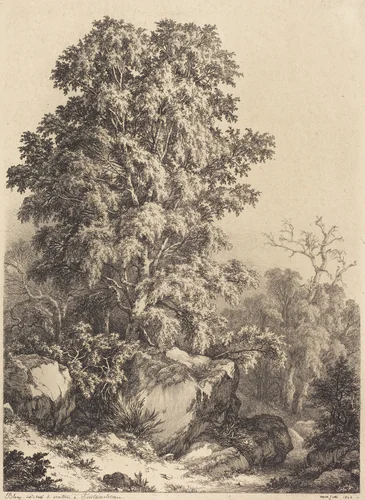
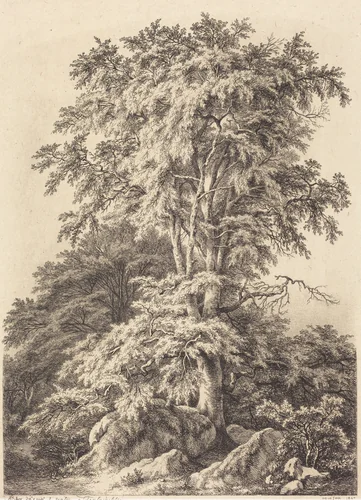
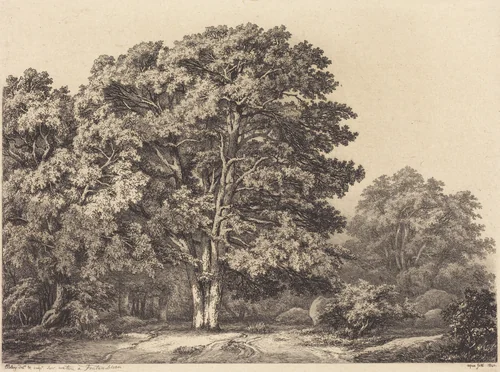
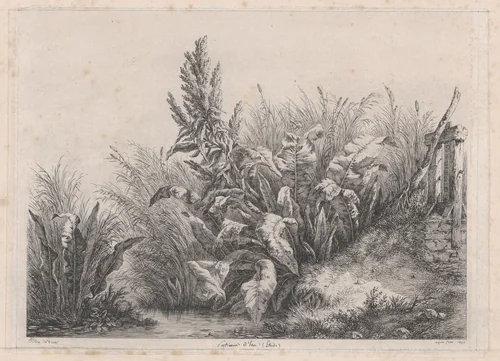
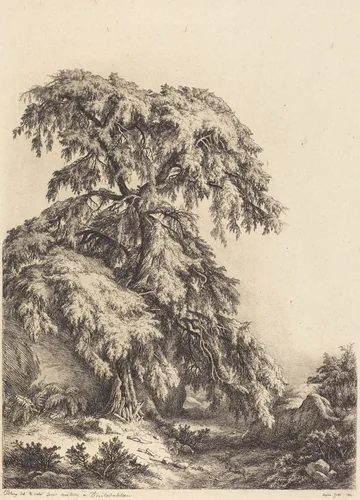
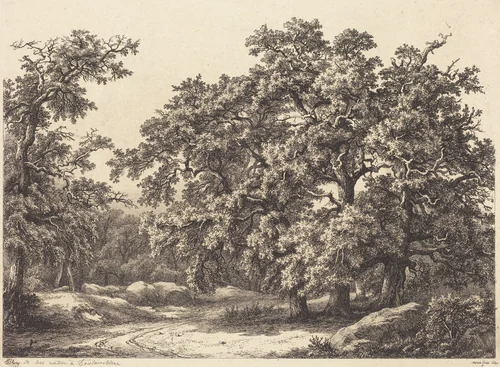
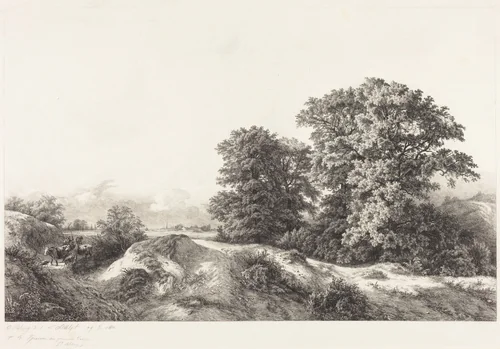
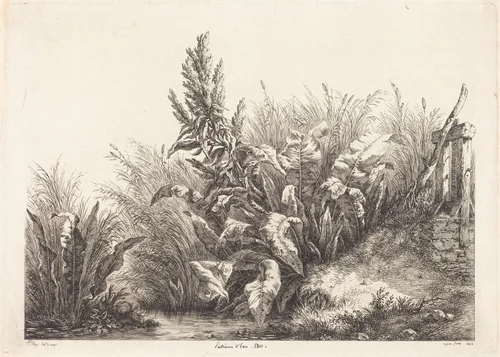
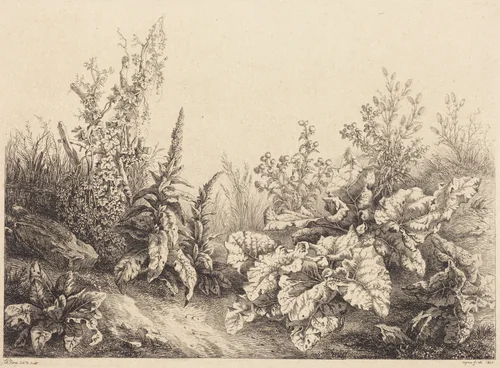
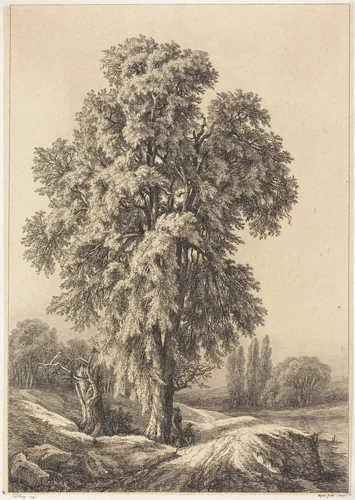
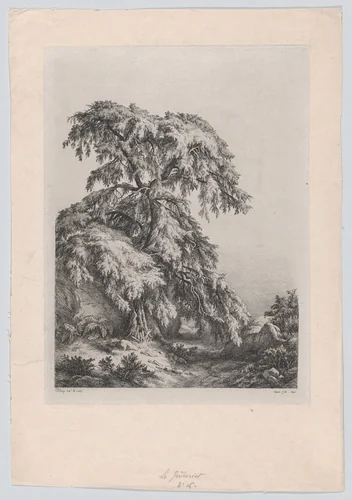
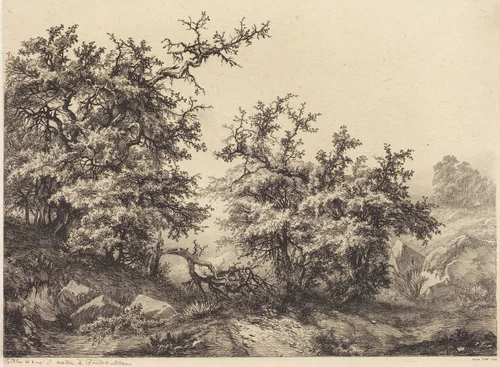
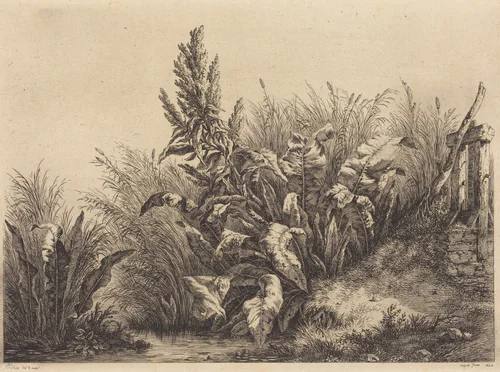
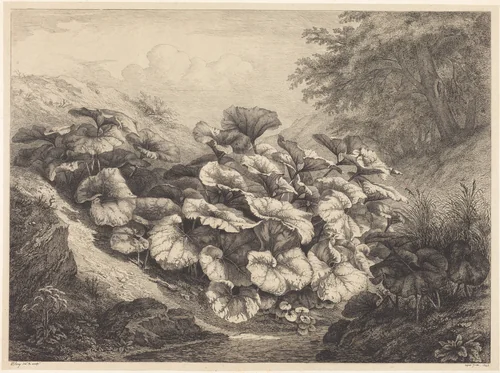
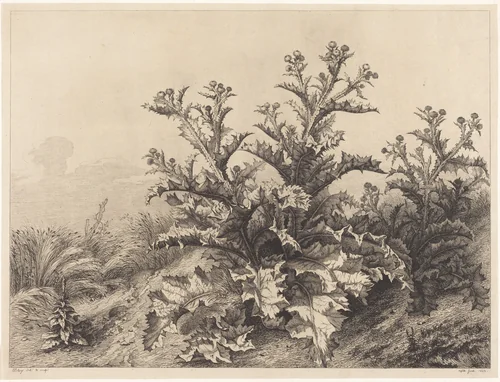
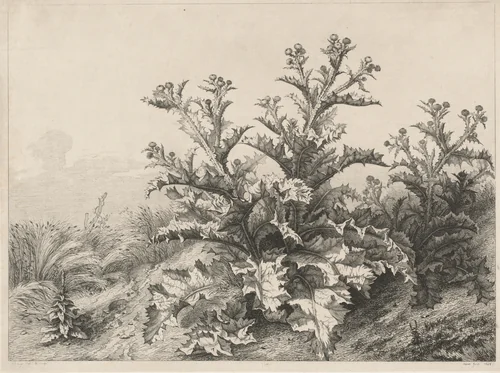
Bléry distinguished himself through his almost exclusive focus on detailed natural studies, capturing the intimate character of the French landscape, particularly the Forest of Fontainebleau and the venerable woods near Barbizon. Rather than using etching simply for reproductive purposes, he treated the copper plate as a primary artistic medium. He utilized varied line weight, cross-hatching, and density to precisely simulate the organic textures of wood, stone, and specific seasonal atmospheres.
Major works, including The Branches of an Oak Tree and Tree and Rocks in the Forest of Fontainebleau, demonstrate a meticulous observation of structural decay and the intricate effects of light penetrating heavy foliage. His specialized approach, concentrating on the quiet drama found in specific natural settings, anticipated the intense realism that would soon define the Barbizon School. He focused not on romantic generalization but on verifiable reality, seeking truth in the texture of bark and the composition of undergrowth. It is perhaps fitting for an artist so dedicated to recording minute environmental details that he left comparatively little documentation regarding his personal biography after his peak period.
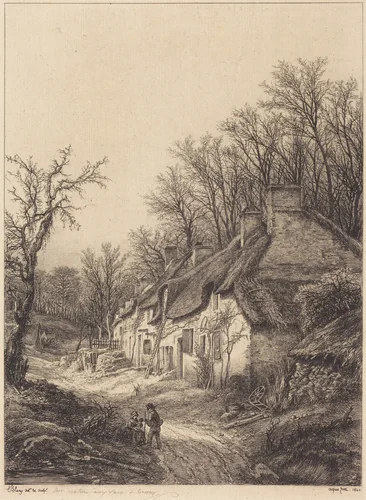
Bléry’s mastery of light and shadow, visible across his series of Beech Grove prints and his detailed study Cottages in Winter, cemented his reputation as a formidable technician. His oeuvre provides valuable insight into the evolving aesthetics of nineteenth-century printmaking, moving away from grand subject matter toward pure landscape captured with rigorous accuracy. Because his body of work falls firmly within the public domain, the legacy of Bléry remains increasingly accessible. Institutions worldwide offer high-quality prints and downloadable artwork derived from his original plates, ensuring that contemporary audiences can continue to study the fine technical skill of this specialized master.
Source: Wikipedia · CC BY-SA 4.0