Eugène Blery
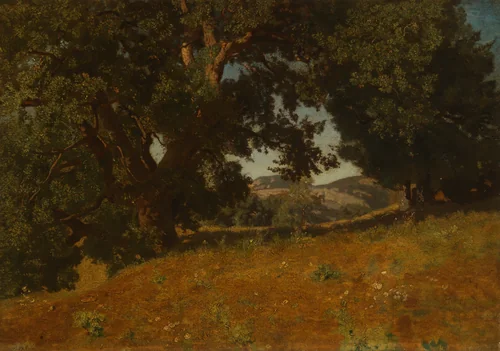
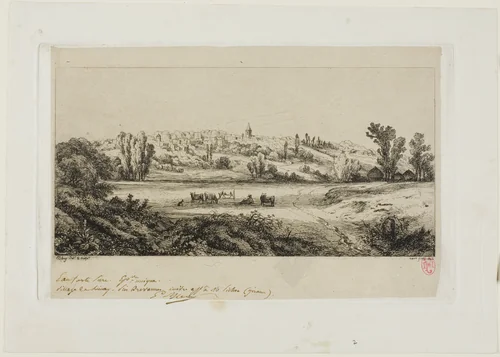
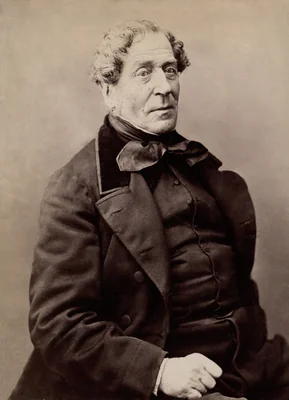
Eugène Stanislas Alexandre Bléry (1800-1861) was a French engraver whose refined technical mastery secured his position among the foremost graphic artists specializing in naturalism during the mid-nineteenth century. Active predominantly across the 1830s through the 1850s, Bléry’s work provides an intimate, precise record of the French landscape, executed with a singular focus that elevates the humble subject matter. While the entirety of his documented output is relatively compact, including seven prints, one drawing, and one Eugène Blery painting, his enduring legacy rests on the exceptional quality and detail embedded within his graphic work.
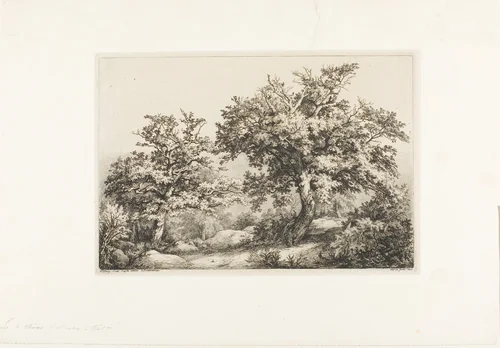
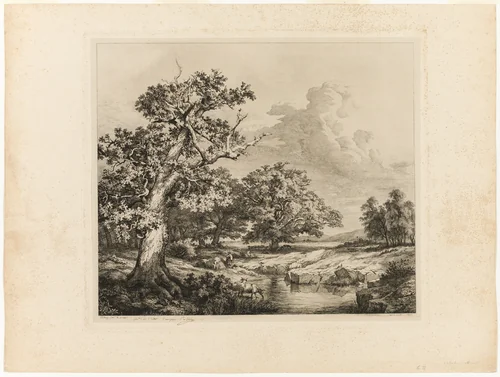
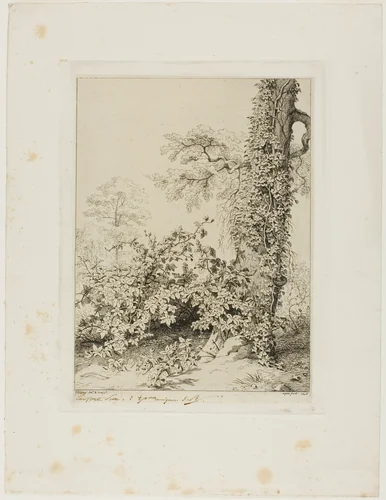
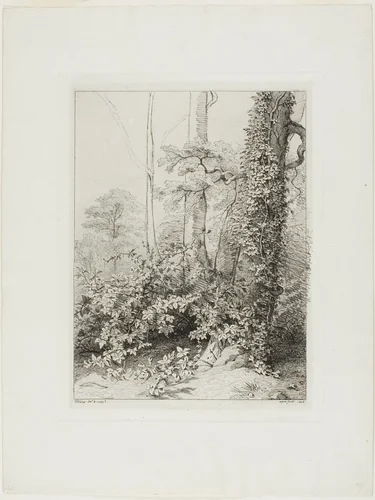
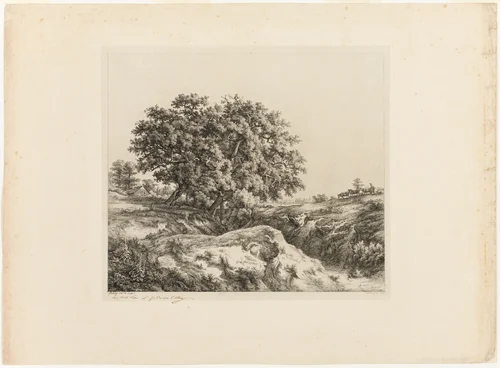
Bléry primarily employed etching and engraving techniques to render the rugged environment of the French countryside, particularly the iconic forest of Fontainebleau, a region that proved foundational for the emerging naturalistic art movements. His studies of trees are particularly strong, demonstrating a profound understanding of texture, structure, and the effects of light. Noteworthy examples include the expansive view captured in The Two Oaks, Fontainebleau and the contemplative close-up of The Old Oak by the Pools at Bellecroix. These compositions transcend simple documentation, portraying the natural subject with monumental dignity.
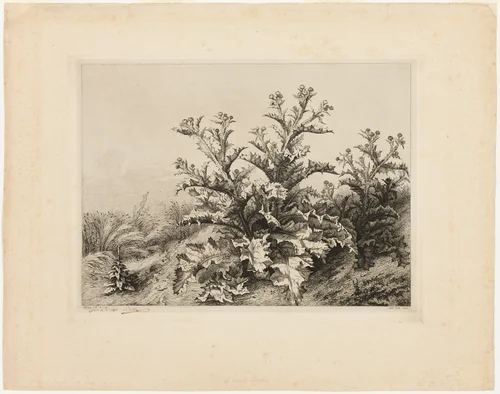
His observational rigor extended beyond grand landscape vistas into the minute world of flora. The series Les quatres grandes plantes highlights this dedication, exemplified by The Large Thistle, plate three. In this work, the common thistle is afforded the meticulous attention usually reserved for grand history paintings, showcasing a fascinating blend of botanical precision and dramatic artistic framing. This commitment to finding profound drama in typically overlooked forms constitutes one of Bléry’s most engaging contributions.
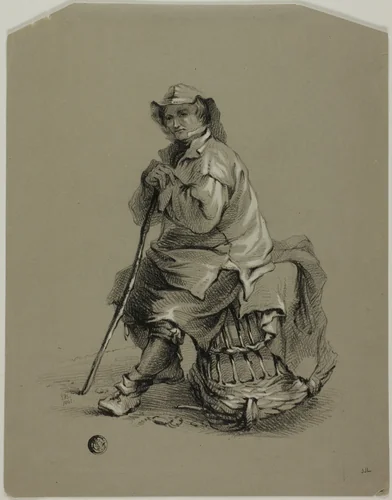
Bléry’s technical clarity ensures that his works remain exemplary museum-quality pieces sought after by collectors and institutions, including the Art Institute of Chicago. While he occasionally turned his attention to figure studies, such as the quiet contemplation depicted in Fisherman Seated on Lobster Pot, his true innovation lay in his sensitive depiction of the environment. Today, the enduring power of these high-quality prints means that much of his work, accessible now as downloadable artwork, continues to be appreciated globally, allowing new audiences to engage with this master of the quiet line.
Source: Wikipedia · CC BY-SA 4.0