Etienne Delaune
Étienne Delaune, also recorded as Delaulne or De Laune, was a paramount figure in 16th-century French artistic production. Operating across several highly specialized disciplines, he established a formidable reputation as a goldsmith and medallist before achieving widespread renown as a draughtsman and engraver. His active period, marked by precision and refinement, yielded detailed works ranging from royal portraits to complex mythological scenes, a selection of which are held in major institutions today, including the Metropolitan Museum of Art and the National Gallery of Art.
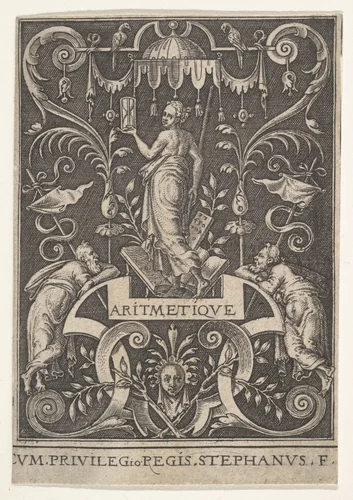
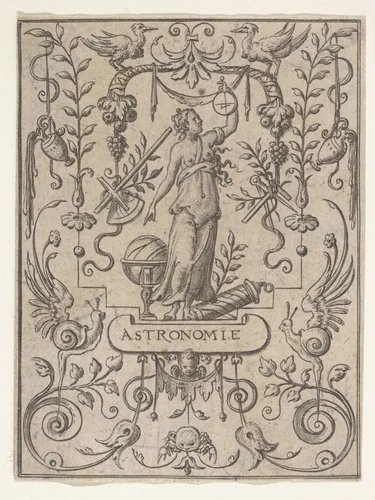
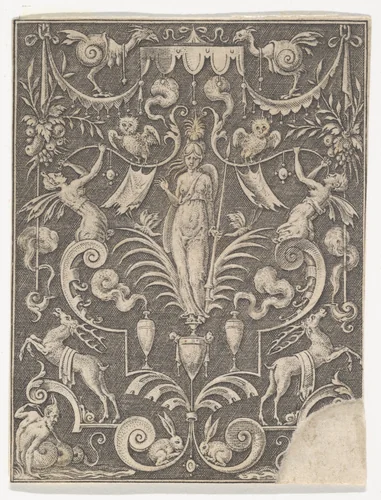
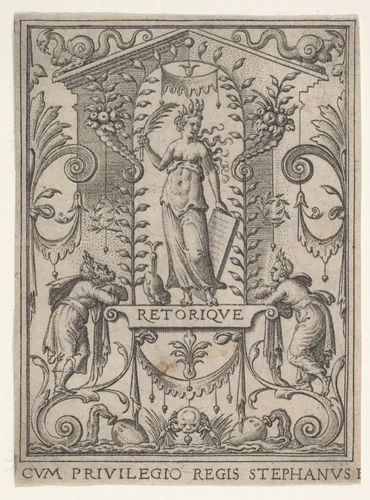
While the sophisticated metalwork associated with his early career defined quality craftsmanship, it is Delaune’s extensive body of etched and engraved work that cemented his lasting influence. His ability to translate the complex ornamental language of the Renaissance into minute detail made his graphic output highly valued across Europe. Designs like the intricate Arabesque Designs exemplify his mastery of decorative schema, intended for immediate dissemination among other craftsmen seeking standardized patterns for jewelry, architecture, or textiles. He managed the rare feat of being both a fine artist and a crucial resource for applied decorative arts.
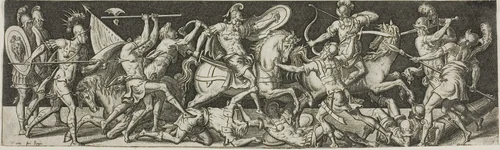
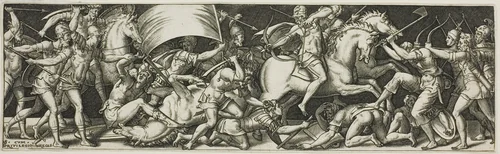
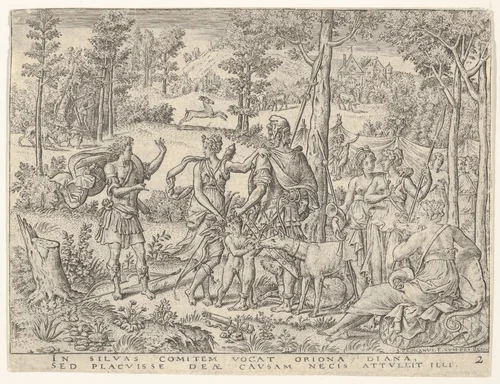
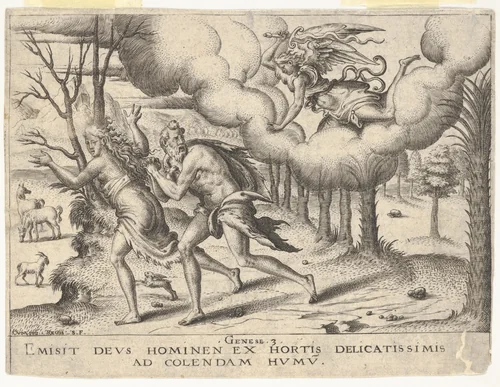
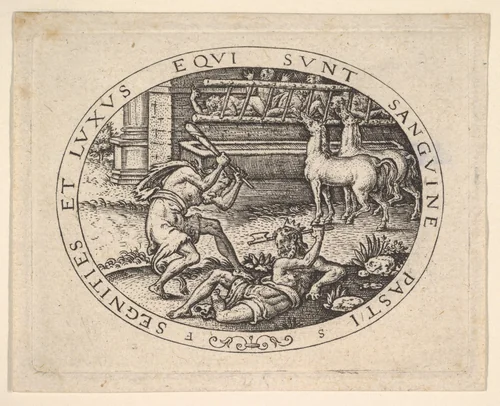
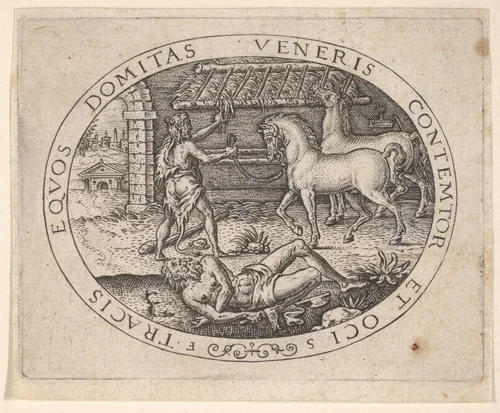
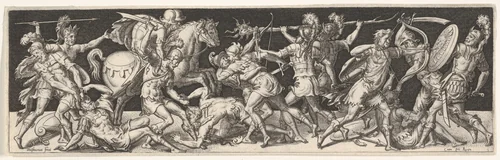
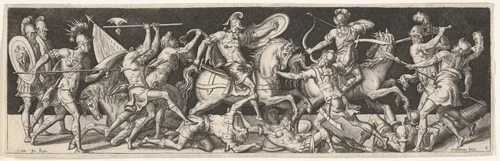
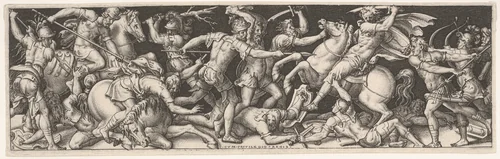
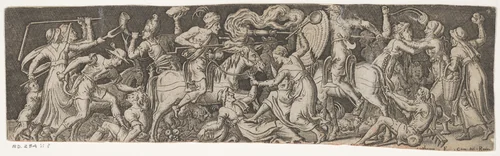
Delaune’s subject matter was varied, catering to humanist tastes for classical antiquity, as seen in the dynamic rendering of Apollo Killing Python or the dramatic action of Britomartis Jumps into the Sea. He also produced significant historical portraiture, notably the depiction of Henry II 1519-59, King of France 1547-59. Though his prints often featured violent clashes, such as the detailed Battle of Horsemen and Foot Soldiers, the true conflict in his career lay perhaps in negotiating the differing demands of royal patrons and the burgeoning mass-market print buyers.
These sophisticated works, demonstrating a museum-quality level of execution, became foundational examples for later French engraving schools. Today, much of Delaune’s artistic legacy is available in the public domain, allowing enthusiasts access to high-quality prints and downloadable artwork derived from his original plates, ensuring the continued study of his remarkable technical skill.
Source: Wikipedia · CC BY-SA 4.0