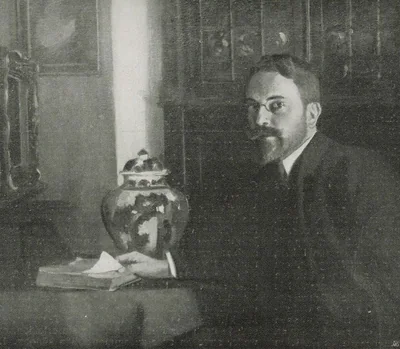
Ernst Oppler
Ernst Oppler (1862-1929) holds a significant position within the development of German Impressionism, distinguishing himself both as a highly proficient painter and an exceptionally skilled etcher. Born in Hanover, Oppler successfully synthesized the techniques of French observation and light with a distinctly Central European sensibility. His consistent inclusion in major institutional holdings, notably the Metropolitan Museum of Art, underscores his lasting historical importance and the high esteem afforded to his draughtsmanship.
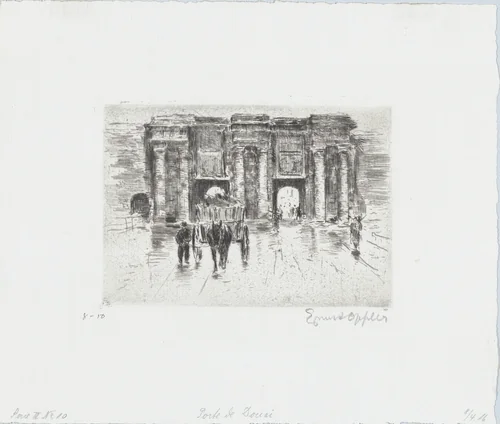
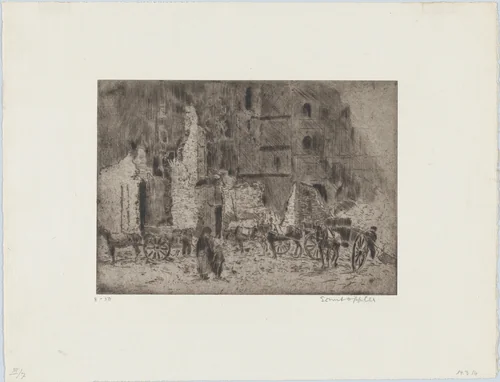
Oppler’s active career spanned the late nineteenth and early twentieth centuries, a dynamic period marked by rapid social and cultural shifts in Germany. He developed a highly sophisticated technical command of the etching needle, favoring compositional dynamism and high contrast to capture the immediacy of modern life. Unlike some contemporaries who focused exclusively on natural settings, Oppler was deeply engaged with the spaces and rituals of the contemporary city. His visual output explores a range of modern subjects, from intimate, bustling street scenes to the formal dramas of the theater.
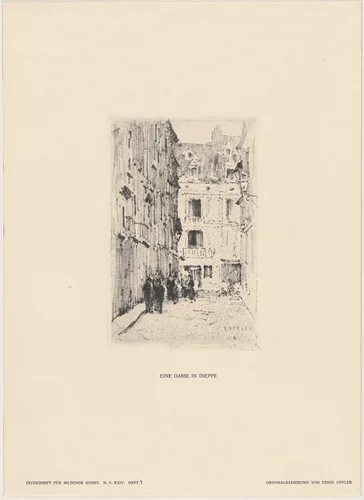
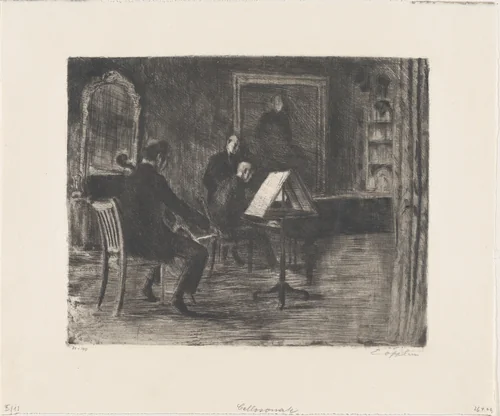
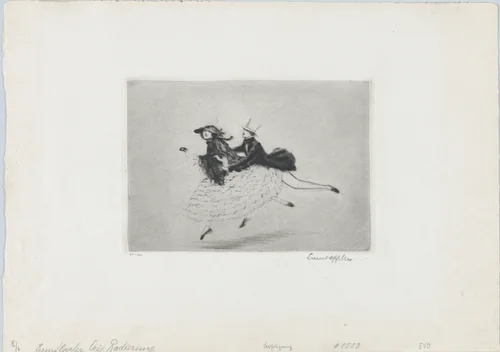
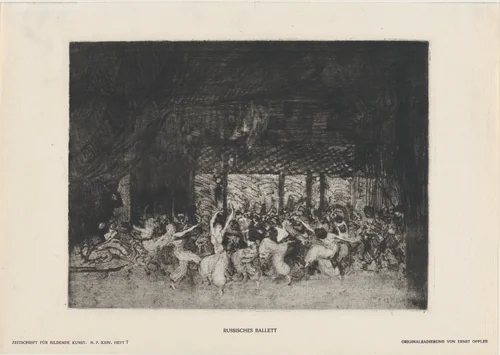
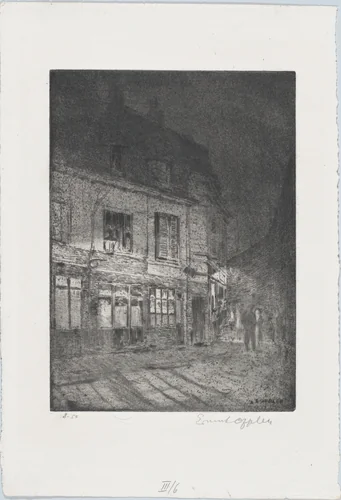
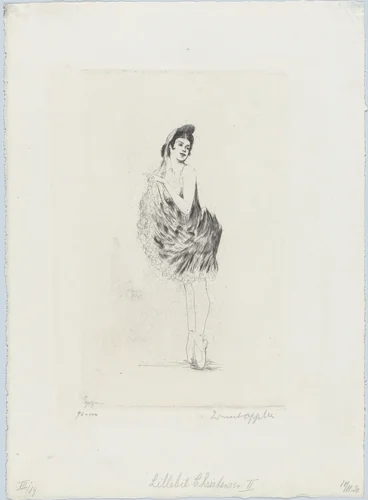
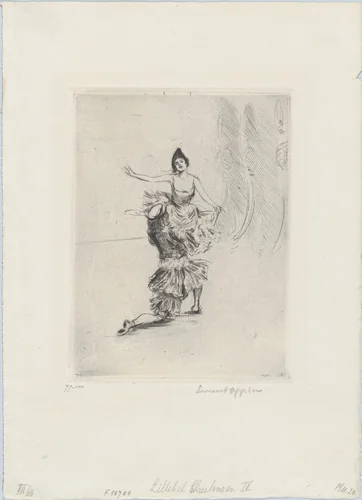
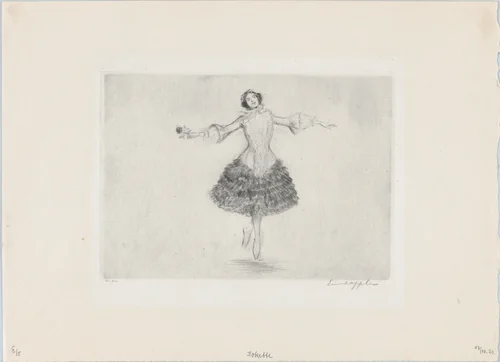
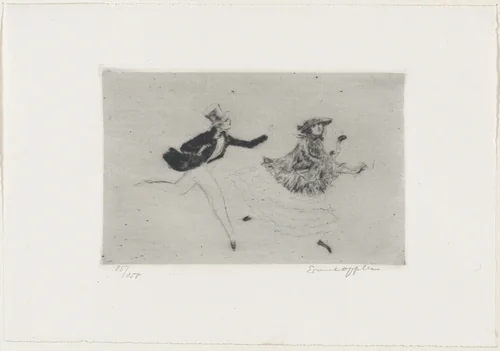
His work provides crucial insights into fin-de-siècle performance culture. Prints such as Russian Ballet and the subtle, interior concentration displayed in Cello Sonata demonstrate a remarkable ability to capture movement and mood, transforming transient motion into permanent visual form. Oppler’s exploration of urban atmosphere is equally compelling, whether depicting the architectural moodiness of A Street in Dieppe or the delicate romanticism suggested by Lille: Liebesgässchen.
It is perhaps a minor but telling irony that an artist so concerned with capturing the fleeting visual experiences of dancers and musicians achieved permanence primarily through the painstaking, deliberate medium of the print. Today, the continued interest in Ernst Oppler prints ensures that his contribution remains accessible. Many of his meticulously crafted etchings and drawings, now residing in the public domain, are sought after by historians and collectors. The availability of this body of museum-quality work ensures that Oppler’s unique position in the transition from academic realism to modern art is continuously appreciated.
Source: Wikipedia · CC BY-SA 4.0