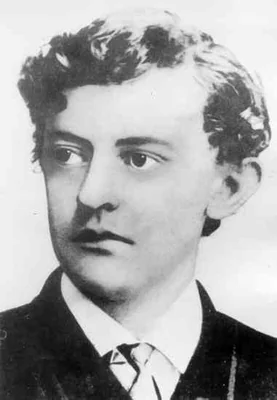
Ernst Barlach
Ernst Heinrich Barlach (1870-1938) stands as a foundational figure in German modernism, practicing prolifically across sculpture, graphic arts, and literature. Defined stylistically by his powerful synthesis of twentieth-century Realism and Expressionism, his work examines fundamental human concerns: grief, isolation, and spiritual seeking.
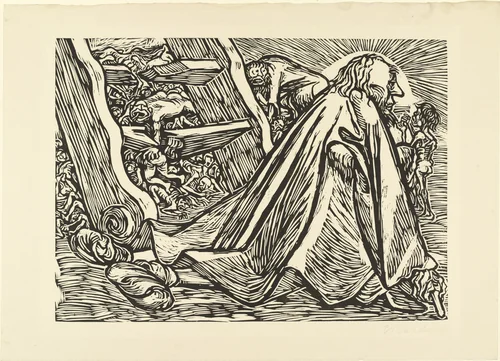
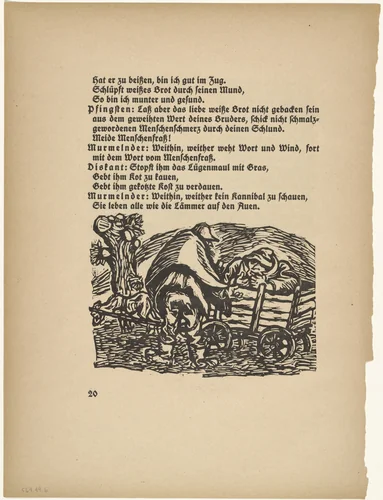
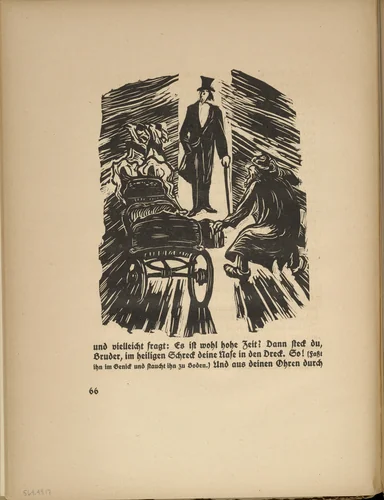
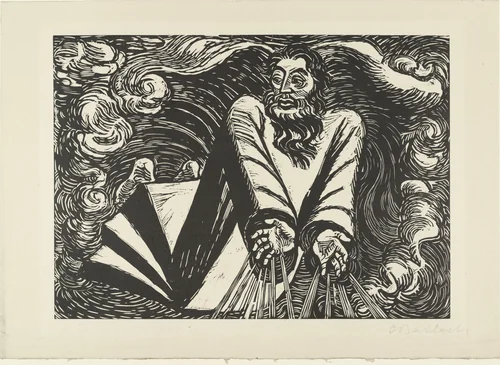
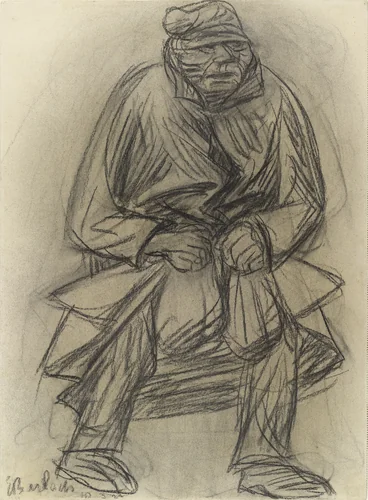
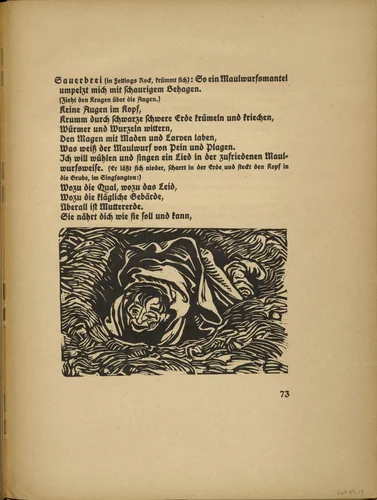
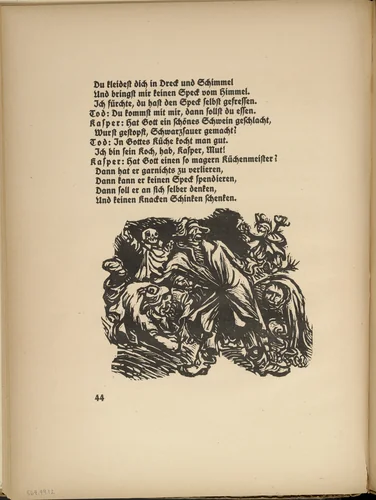
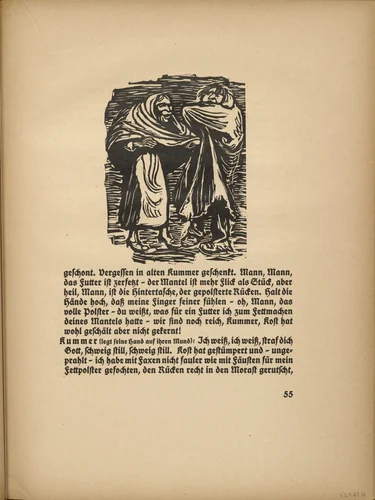
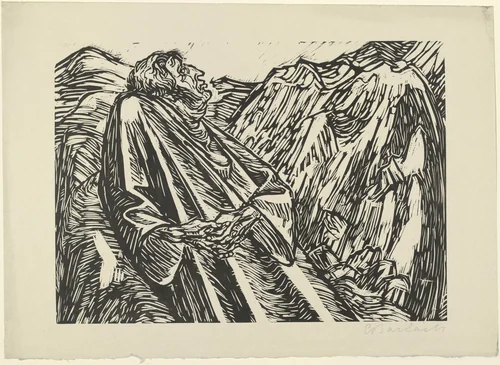
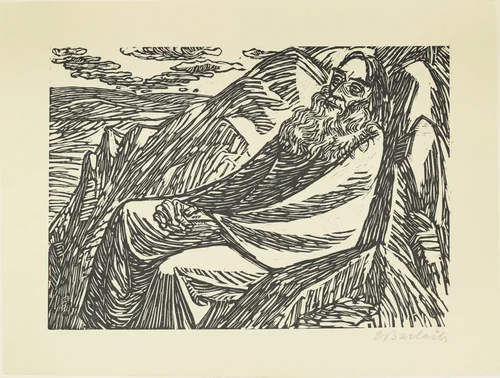
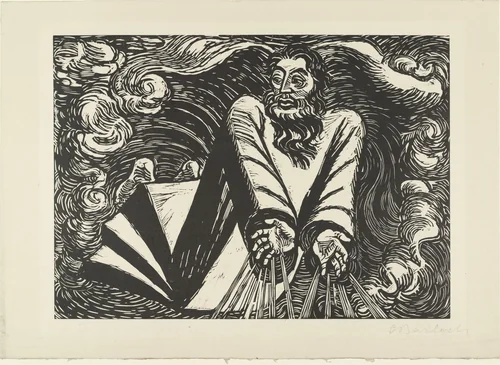
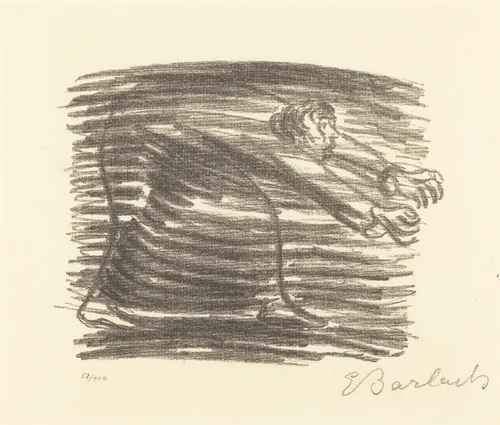
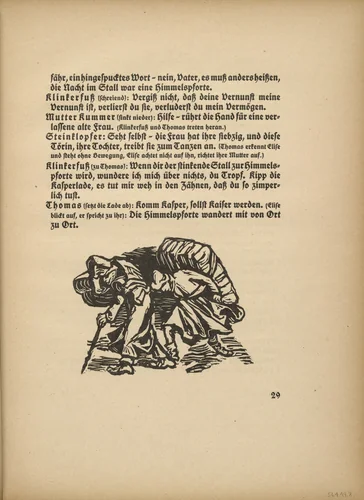
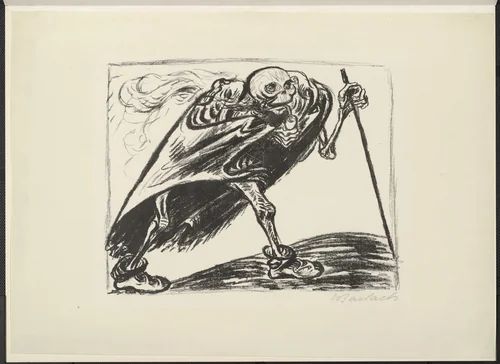
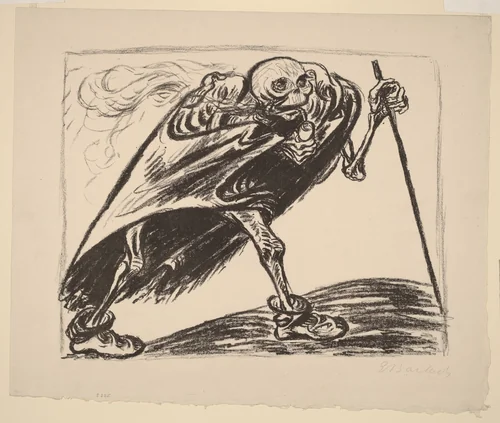
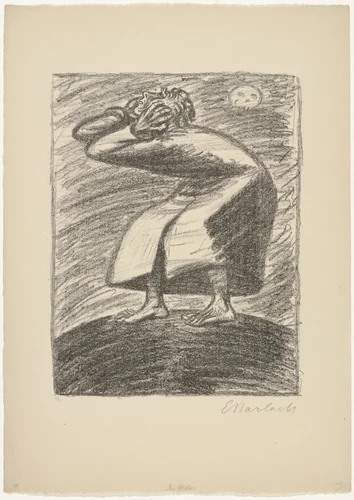
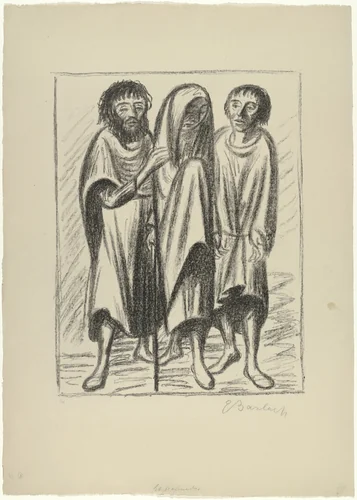
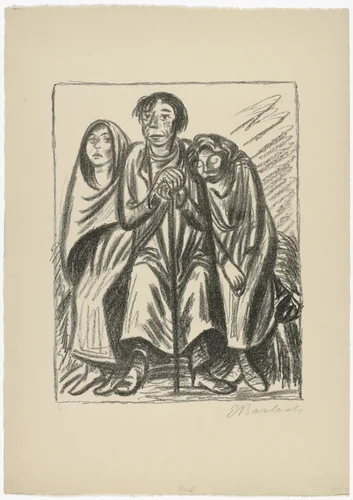
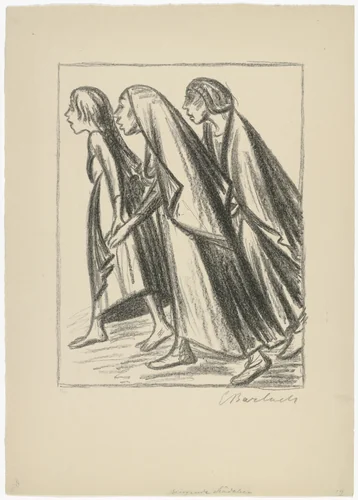
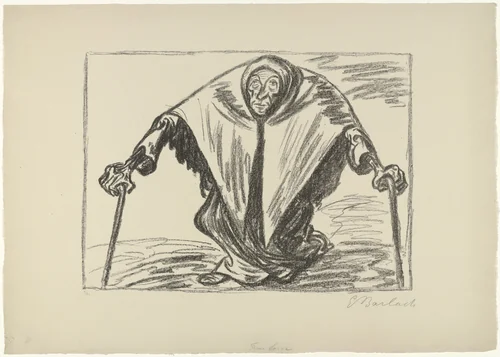
Barlach established his versatility early on. While he is best recognized for the heavy, earthbound emotionality of his carved wood and bronze sculptures, his output in printmaking was substantial, particularly during his active graphic period spanning 1906 to 1910. This phase includes early, powerful examinations of social class and vulnerability, documented in works such as Child's Funeral in Russia, High-Class, and the focused character study, Man of Heights. His keen engagement with drama is further evident in his literary illustrations, including Broomleg Astride the Dead Steed Hearthorn from the play The Dead Day. These prints offer essential insight into the development of his signature style, characterized by monumental simplicity and deep psychological resonance.
A defining characteristic of Barlach’s artistic trajectory was a profound ideological shift resulting from military service. Initially a supporter of the political climate leading up to World War I, his direct participation in the conflict caused an absolute reversal. Following the war, he became primarily known for powerful, deeply moving sculptures that protested militarism and memorialized the suffering of the common man.
This committed anti-war stance placed Barlach in direct conflict with the rising German government in the 1930s. His work, classified as Entartete Kunst (degenerate art), was systematically condemned and confiscated, yet the authority and sincerity of his vision ensured his historical significance. Though he famously avoided traditional portraiture, finding the mask-like quality of faces distracting, his figures offer unparalleled psychological depth through posture and drapery alone.
Today, Barlach's substantial contribution to the German avant-garde is housed in global institutions, including the Museum of Modern Art and the National Gallery of Art. Researchers and collectors frequently seek out Ernst Barlach prints for their historical and expressive value, recognizing the artist’s unique capacity to convey internal turmoil through external form. Many of his works, including high-quality prints and drawings, remain important resources for the study of Expressionism.
Source: Wikipedia · CC BY-SA 4.0