Ernest Benecke
Ernest Benecke was an early and highly active photographer whose known body of work was produced during a concentrated period between 1850 and 1852. Working primarily in the Middle East, Benecke specialized in early travel photography, capturing significant archaeological sites, ethnographic portraits, and documentation of daily life across the Levant and Upper Egypt.
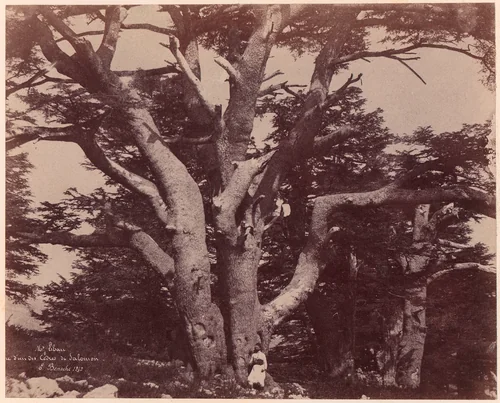
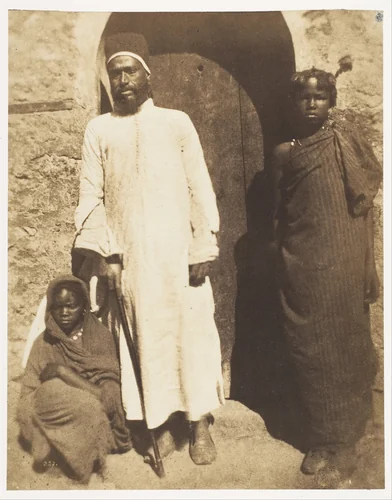
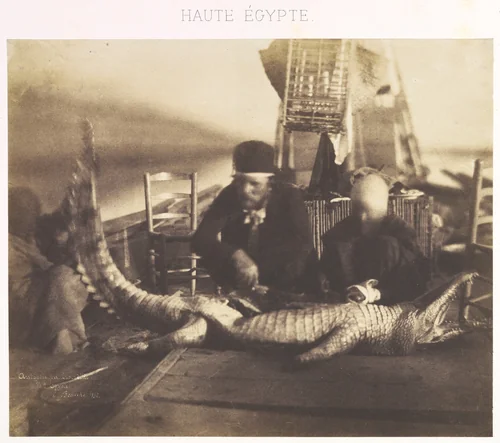
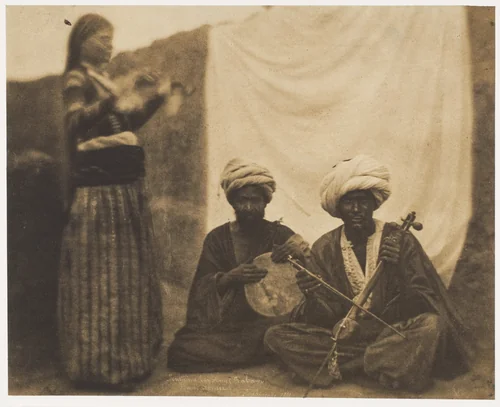
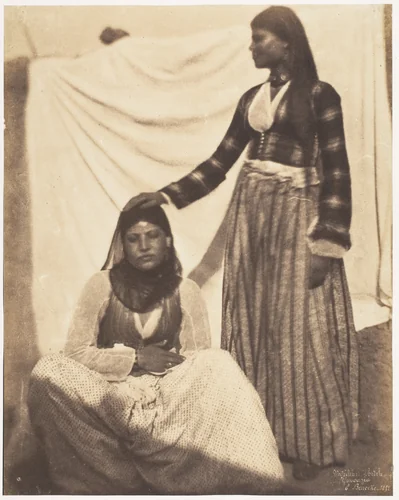
His surviving photographs reflect the diverse objectives of mid-century exploratory expeditions. Subjects range from natural monuments, such as the focused study Mt. Liban. Tronc d'un des Cèdres de Salomon, to urban portraits like Abu Nabut and Negro Slaves in Cairo. Benecke also documented social scenes, including Egyptian Musicians (Rabawí) and Almée, and provided descriptive records of travel and scientific observation, exemplified by Autopsy of the First Crocodile Onboard, Upper Egypt.
The historical and artistic importance of Benecke’s documentation is reflected in the fact that eight of his photographs are represented in major institutional collections, including the Metropolitan Museum of Art and the National Gallery of Art. The age and museum-quality preservation of these early works mean that many are now considered public domain resources, allowing for the study and dissemination of high-quality prints of his pioneering photographic output.
![[Children from the Village of Kalabshah, Nubia] by Ernest Benecke, photograph, 1852](https://img.artbee.org/c5b370cf-177e-453a-95b3-a05337de0da6/small.webp)
![[Two Women] by Ernest Benecke, photograph, 1852](https://img.artbee.org/27334d21-abcd-471b-90fc-ceb282eeb2f3/small.webp)