Erik Gunnar Asplund
Erik Gunnar Asplund (1885-1940) stands as one of the pivotal figures in twentieth-century Scandinavian architecture, bridging the refined tradition of Nordic Classicism with the functional imperatives of nascent Modernism. While his formal career spanned fourteen architectures and numerous detailed studies, his influence is best measured by his role in transforming the Swedish architectural identity during the last decade of his life.
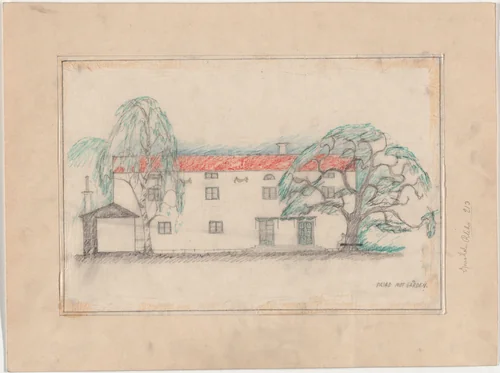
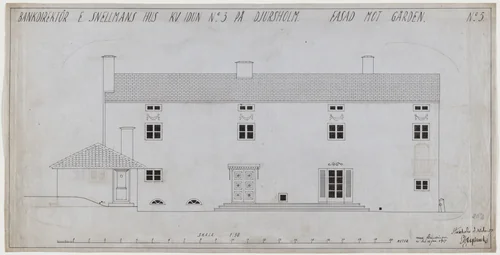
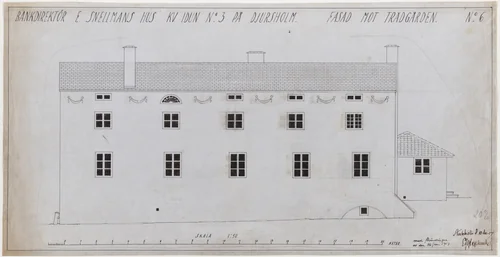
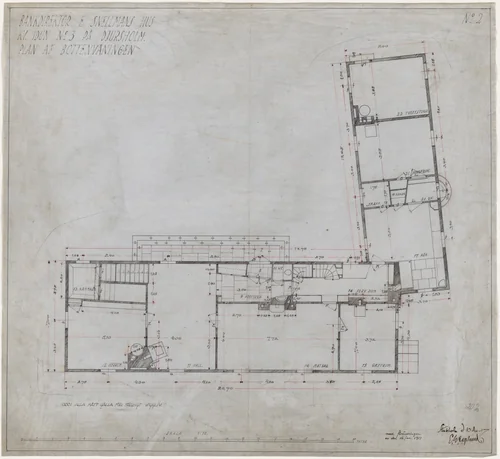
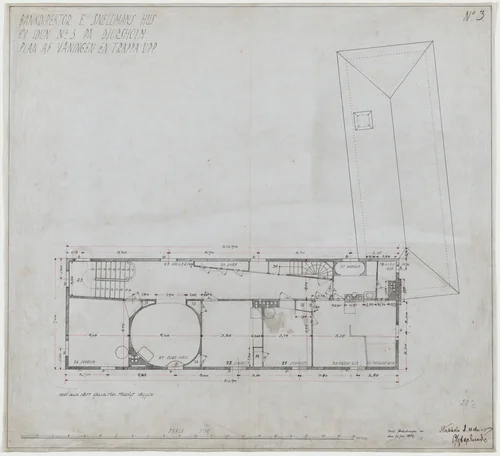
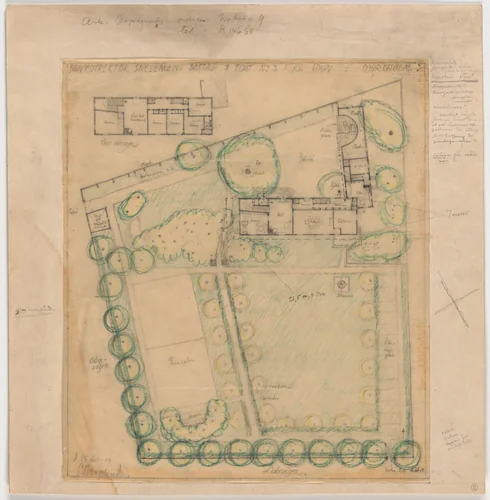
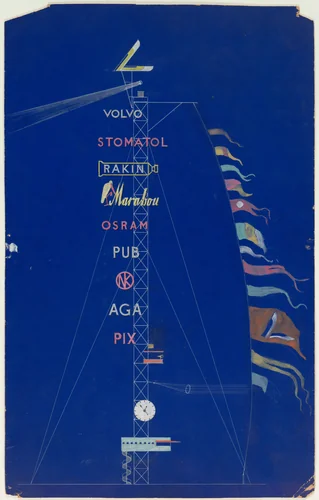
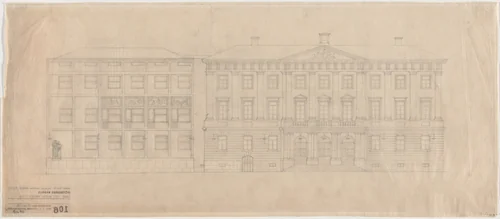
Initially celebrated as a leading voice of Nordic Classicism throughout the 1920s, Asplund's early work demonstrated a masterful command of proportion and detail. Examples such as the detailed Exterior elevation and Ground-floor plan for Villa Snellman illustrate this essential classical grounding. This meticulous discipline provided a powerful foundation for his swift and decisive pivot toward modern ideals, which became publicly evident when he spearheaded the influential Stockholm International Exhibition of 1930. This event marked the aesthetic and ideological breakthrough of the international style in Sweden, cementing Asplund’s position as a major national proponent of the movement.
Beyond his physical constructions, Asplund was a formidable intellectual force. In 1931, he accepted the prestigious professorship of architecture at the Royal Institute of Technology. His inaugural lecture, "Our architectonic concept of space," published shortly thereafter, remains a lucid, if slightly dry, treatise on the necessity of adapting architectural thought to the emerging machine age.
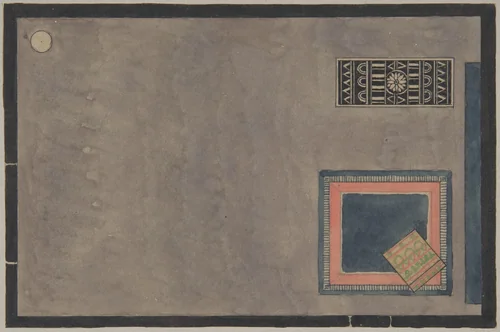
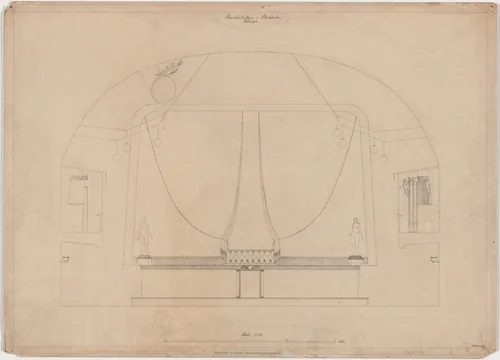
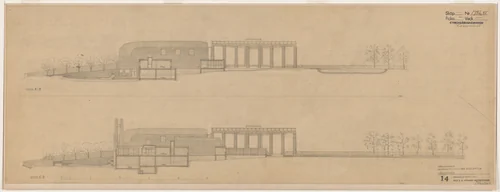
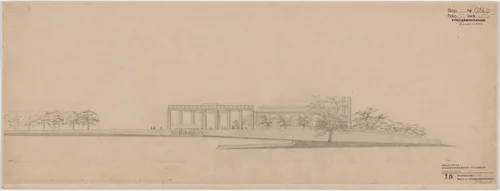
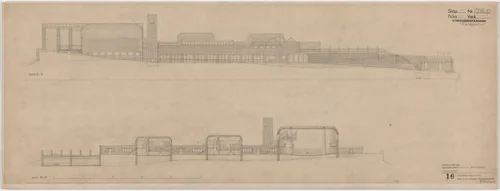
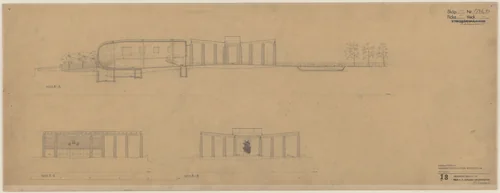
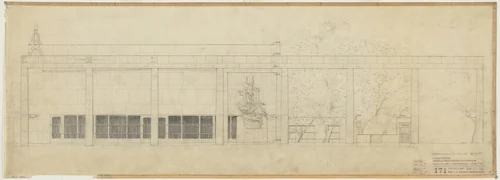
Asplund’s final major commission, the Woodland Crematorium at Stockholm South Cemetery (completed posthumously 1940), is universally acknowledged as his magnum opus and a high-water mark of modern architecture. It synthesizes his earlier lyrical classicism with minimalist functionality, creating a landscape of profound emotional depth. Though renowned for his built structures, his architectural drawings and sketches, like the View of Interior for Paris Exhibition 1925, with Rugs, are highly valued. These important works are now held in major institutions including the Museum of Modern Art and the Metropolitan Museum of Art, ensuring that high-quality prints and downloadable artwork remain available for scholarly study.
Source: Wikipedia · CC BY-SA 4.0