Ercole Setti
Ercole Setti (c.1530–1618) was a highly significant Italian artist, recognized as both an engraver and a painter, active during the sophisticated later phase of the Renaissance. His career centered on bridging the rich tradition of devotional painting with the growing accessibility of printmaking, a medium designed for broader distribution. Although the exact extent of his painted output is difficult to quantify, the sustained quality of his surviving drawings and prints confirms his mastery of narrative complexity and figure composition. Setti’s importance is underscored by the fact that examples of his work reside in key global repositories, including the National Gallery of Art, the Metropolitan Museum of Art, and the Art Institute of Chicago.
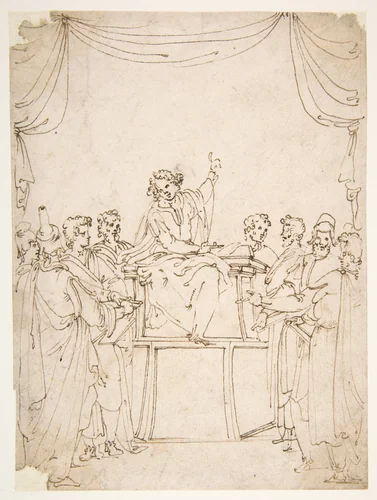
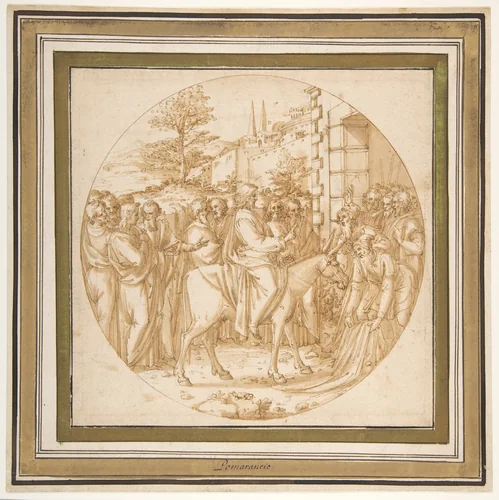
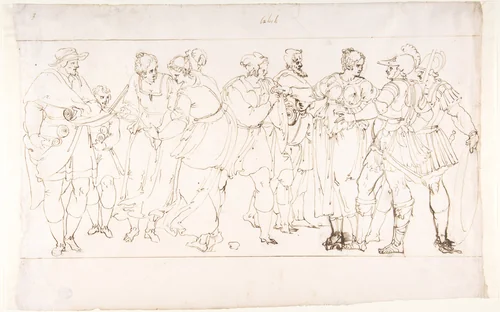
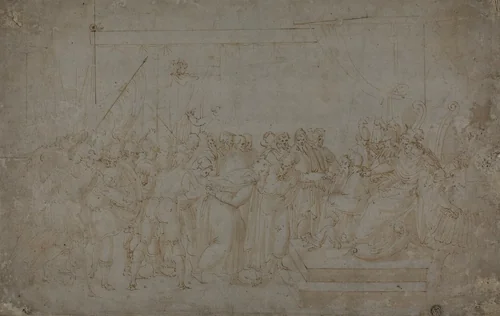
Setti specialized in creating large-scale compositions centered on dramatic biblical and historical events, often requiring intricate preparatory drawings before transfer to the copper plate. These works reveal his careful attention to the relationship between figures and architectural space, positioning the viewer directly within the unfolding narrative. This is evident in the dynamic handling of complex scenes such as The Entrance of Christ into Jerusalem and the focused theological exchange depicted in Jesus Disputing with the Doctors in the Temple (Luke 2:46-47). He also ventured into monumental Christian history, documenting the trial of the apostle in Saint Peter Brought before Nero, a politically charged moment rendered with intense gravity.
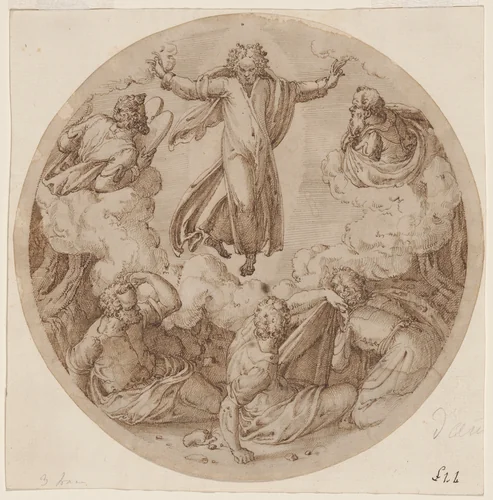
While adept at the sublime spiritualism required for subjects like The Transfiguration, Setti’s observational eye extended successfully to contemporary subjects. His sheet titled Vendor of Horoscopes offers a subtle, intriguing departure from sacred history, documenting the presence of quackery and earthly folly within the period. This quiet, astute portrayal of street commerce, contrasting sharply with his grand spiritual compositions, hints at an artist fully engaged with the varied texture of sixteenth-century life.
As an engraver, Setti’s legacy was secured by the inherent permanence and reproducibility of his medium. Unlike isolated Ercole Setti paintings, the prints allowed his masterful technique and narrative vision to circulate widely. Today, his enduring technical excellence ensures that his drawings are considered museum-quality historical documents. Furthermore, the accessibility of his finest sheets means many of these high-quality prints have entered the public domain, offering worldwide access to his masterful contributions to Renaissance graphic art.
Source: Wikipedia · CC BY-SA 4.0