Erastus Salisbury Field
Erastus Salisbury Field (1805-1901) stands as a foundational figure in nineteenth-century American folk art. Active primarily between 1827 and 1865, he maintained a prolific practice spanning portraiture, landscape, and ambitious history pictures. Though often operating outside the academic centers of the East Coast, Field's keen observational skill secured his status as one of the era’s most recognizable itinerant painters. His enduring reputation is underscored by the presence of his key works in major American institutions, including the National Gallery of Art, the Metropolitan Museum of Art, and the Art Institute of Chicago.
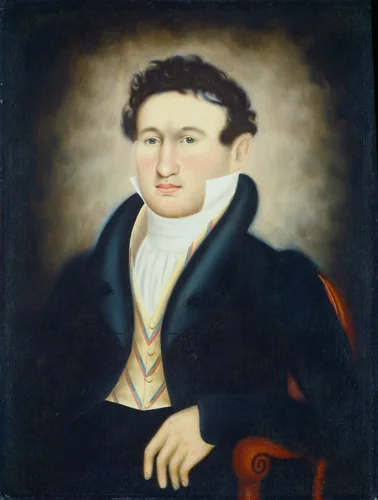
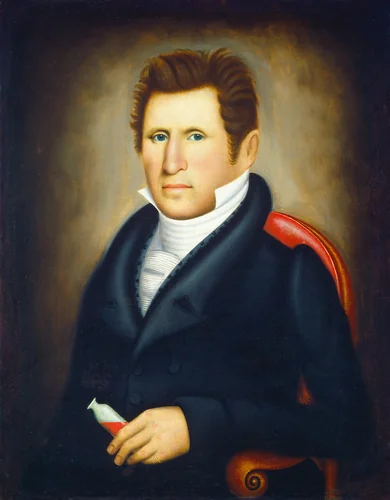
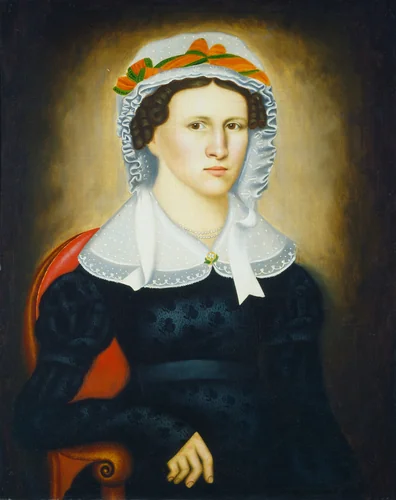
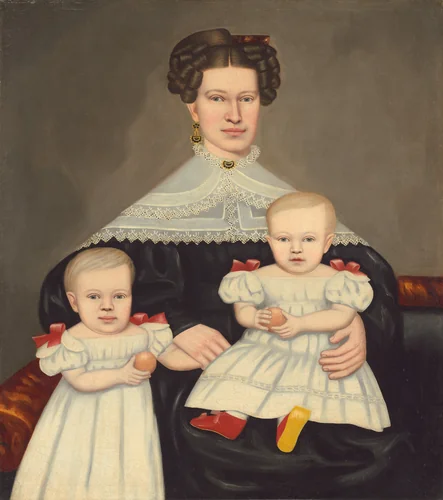
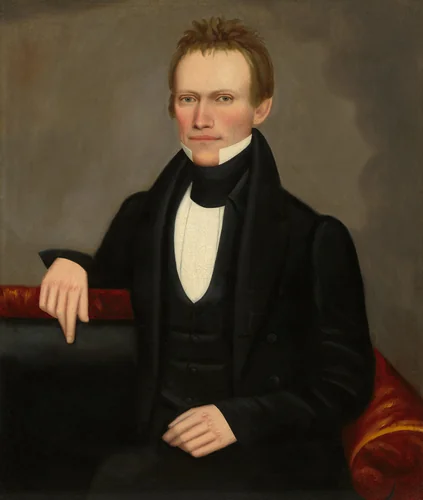
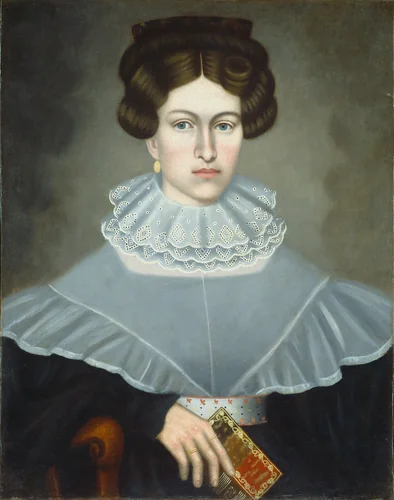
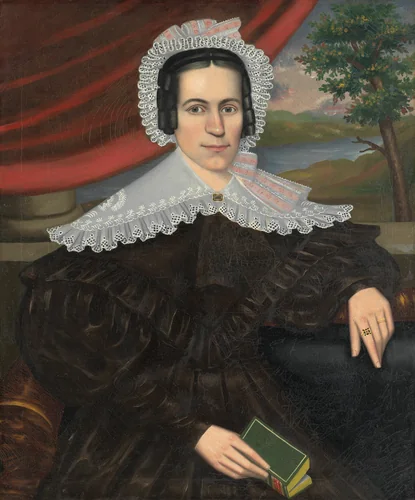
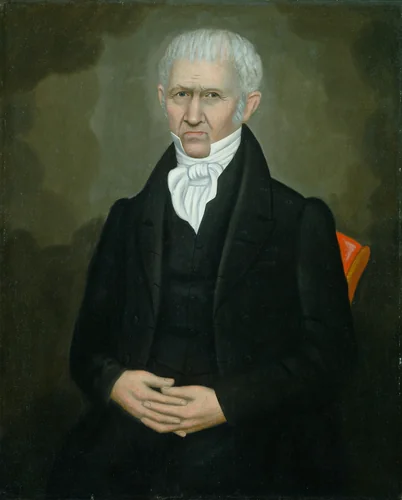
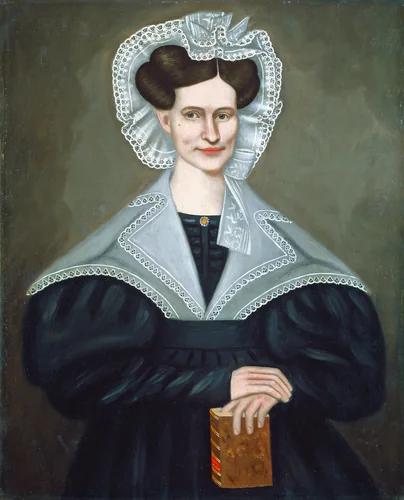
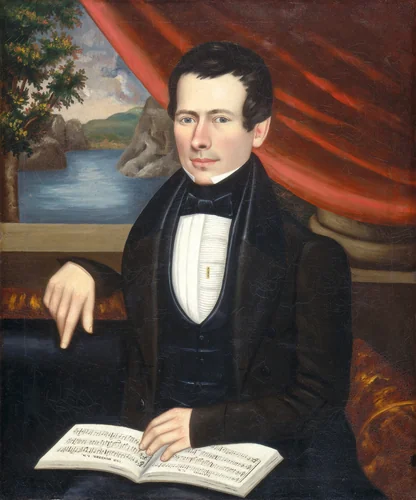
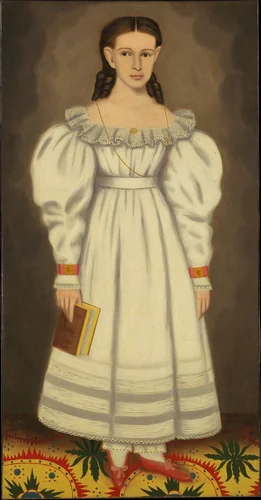
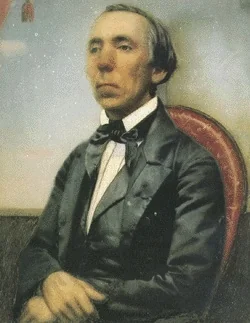
Field specialized in individualized depictions of middle-class New England subjects, capturing both the dignity and the sometimes-startling earnestness of his sitters. Unlike academic artists who might soften features or adhere strictly to classical proportions, Field imbued his portraits with a powerful, direct visual sincerity. This is evident in companion pieces such as Man with Vial and Wife of Man with Vial, where the subjects appear fixed in time, offering the viewer an intimate, unvarnished encounter. Perhaps his most charming contribution is the group portrait Mrs. Paul Smith Palmer and Her Twins, a composition that balances formal stiffness with an undeniable familial warmth. His sitters often convey an air of enduring patience, suggesting that a long, silent sitting session was a prerequisite for commissioning an Erastus Salisbury Field painting.
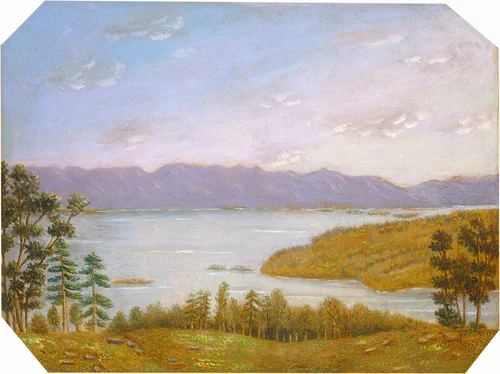
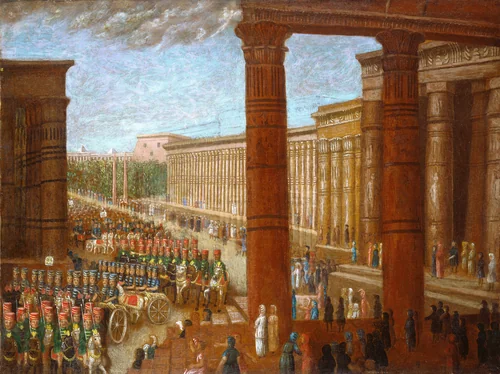
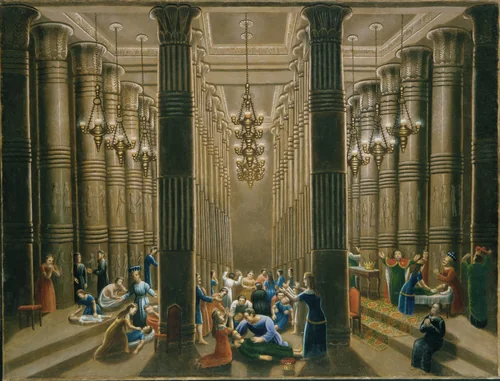
While portrait commissions formed the financial backbone of his career, Field’s interests broadened significantly over time, encompassing large-scale historical and biblical narratives. This diversification, alongside his steady output, confirms his position as an artist dedicated to chronicling not only individuals but also grander cultural themes of the period. His sustained engagement with diverse subject matter ensures that scholarship remains active, and public access to his works is wide. Many important examples of Erastus Salisbury Field paintings, including preliminary studies, are now digitized and available for study.
Field’s legacy rests upon his ability to synthesize provincial American styles with sophisticated composition, resulting in fourteen documented museum-quality works that retain their narrative power today. As historical artworks enter the public domain, a new generation is discovering the clear, compelling vision of this master portraitist. High-quality prints of many of his most significant works are readily available, further cementing his stature within the canon of American visual culture.
Source: Wikipedia · CC BY-SA 4.0