Ennemond Alexandre Petitot
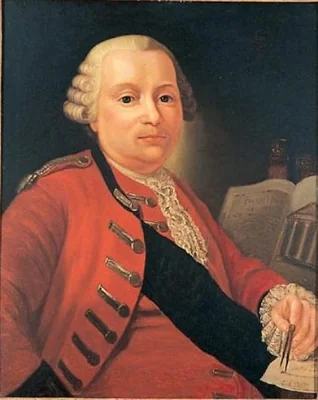
Ennemond Alexandre Petitot (1727-1771) was a pivotal French-born architect and designer whose career was almost entirely dedicated to transforming the aesthetic identity of the Duchy of Parma. Active during the transitional period preceding the full flowering of Neoclassicism, Petitot became the central figure responsible for introducing modern French taste and architectural rigor to the Italian court.
His historical significance rests in his determined effort to update the Duchy along sophisticated lines, shifting focus away from existing Baroque and Rococo sensibilities toward the idealized symmetry and clarity of classical antiquity. Petitot functioned not just as an architect of structures, but as a comprehensive designer, influencing civic planning, festival decorations, and decorative arts. His surviving drawings demonstrate an exacting draftsmanship and a profound commitment to idealized, intellectualized space, a defining characteristic of Enlightenment-era design.
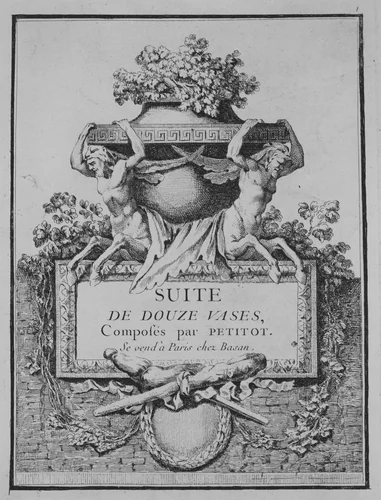
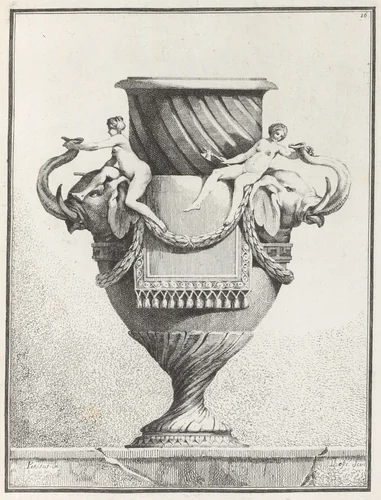
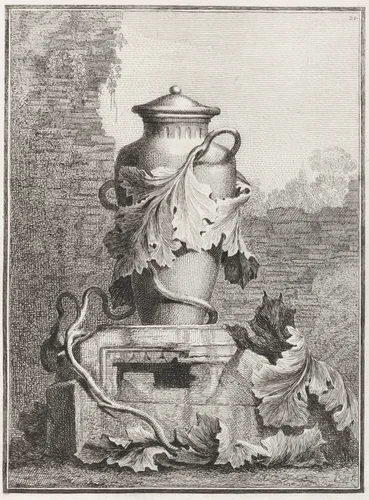
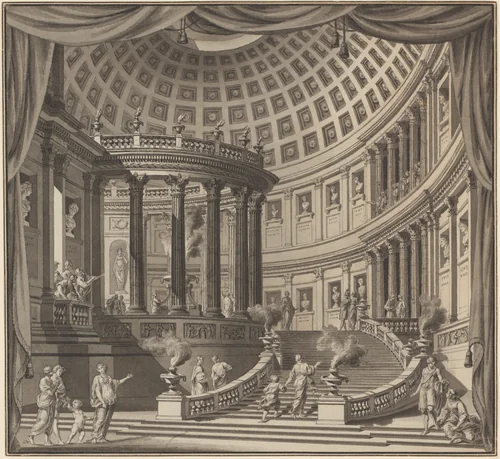
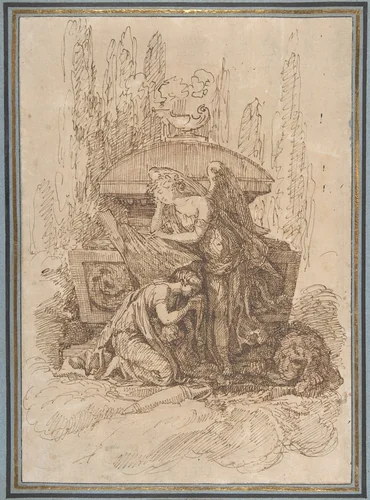
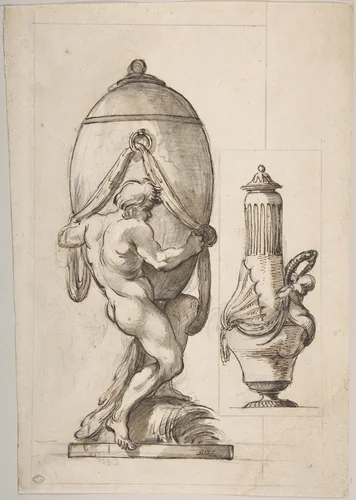
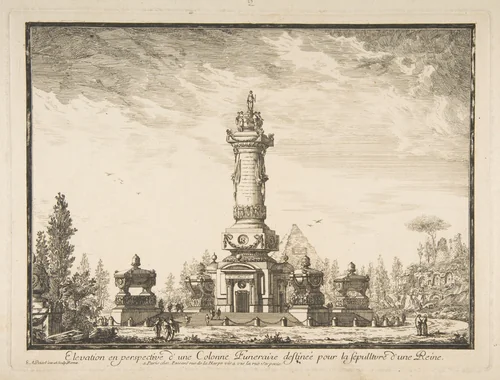
Petitot’s ambitious projects, often preserved only through meticulously rendered drawings, illustrate a range extending from monumental architecture to intimate interior details. Works such as Design for a Stage Curtain: The Interior of an Elaborate Temple Dedicated to Illustrious Men reveal his mastery of theatrical perspective and grand scale, intending to imbue public space with moral instruction and historical significance. Similarly, his funerary designs, including the striking Elevation en perspective d'une colonne destinée pour la Sépultre d'une Reine, demonstrate how he merged austere classical forms with emotional monumentality suitable for the period’s increasingly restrained tastes. His skill extended even to utilitarian objects, evident in refined renderings like the Two Designs for Vases.
His ability to apply the new academic style across disciplines cemented his role as a chief advocate for architectural innovation in northern Italy. It is perhaps a minor historical irony that this fervent proponent of modern French taste spent the bulk of his career in Parma, far removed from the artistic circles he sought to emulate. Today, examples of his exacting work reside in esteemed collections like the Metropolitan Museum of Art and the National Gallery of Art. Much of this detailed documentation is available as downloadable artwork, ensuring that the precision of Ennemond Alexandre Petitot prints remains accessible for scholarly study and general appreciation long after the structures themselves have aged or been modified.
Source: Wikipedia · CC BY-SA 4.0
![Mascarade à la Grecque; Suite des Vases; and [Cheminées] by Ennemond Alexandre Petitot, book, 1764-1771](https://img.artbee.org/2474e8bd-c53e-4d0f-9b30-f10841df9811/small.webp)