English
The attribution "English" refers not to a single maker but rather to a sophisticated network of anonymous workshops and master craftspeople whose collective output fundamentally defined the material culture of the nation across nearly four centuries. Spanning the late Middle Ages (1345) to the dawn of the Georgian era (1701), these artisans excelled in media ranging from illumination and metalwork to panel painting and complex embroidery. This broad categorization encompasses a decisive cross-section of artistic production, bridging the devotional needs of the pre-Reformation era with the secular demands of the Tudor and Stuart courts.
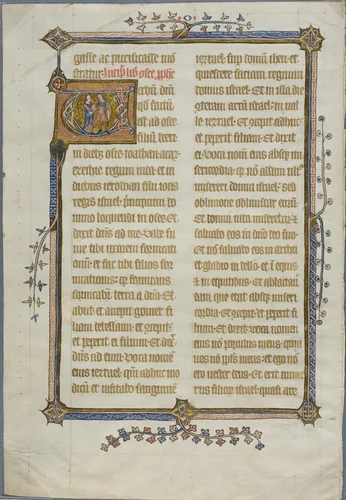
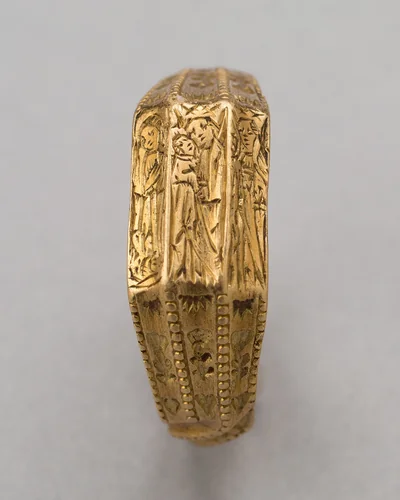
The earliest documented works reflect profound theological concerns. The detail captured in the miniature The Marriage of Hosea and Gomer in a Historiated Initial "V" from a Bible showcases the superb draftsmanship required for manuscript illumination. Juxtaposing this refined craft is the three-dimensional artistry evident in metalwork, such as the museum-quality Ring with the Virgin and Child and Saints Margaret and Catherine. The sheer longevity of this attribution category, encapsulating three hundred and fifty years of production, suggests that while the names of the individual creators have been lost to time, their standard of execution was remarkably consistent.
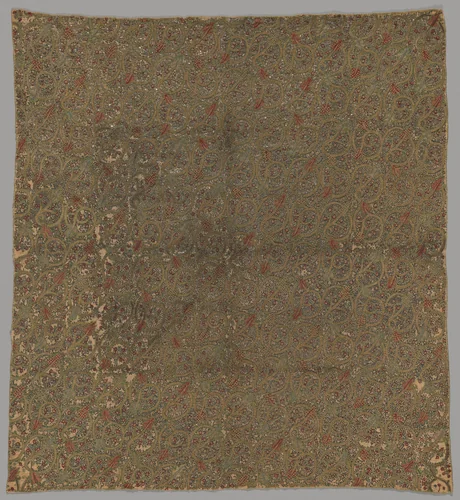
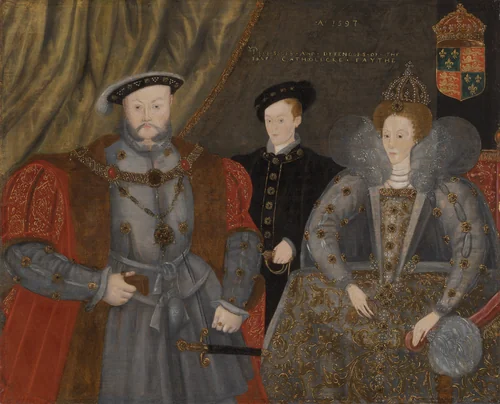
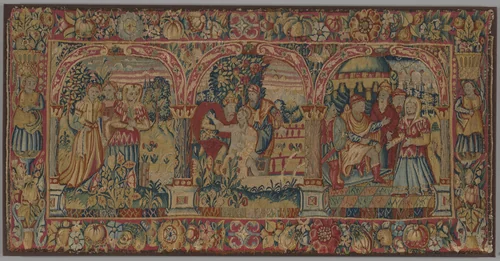
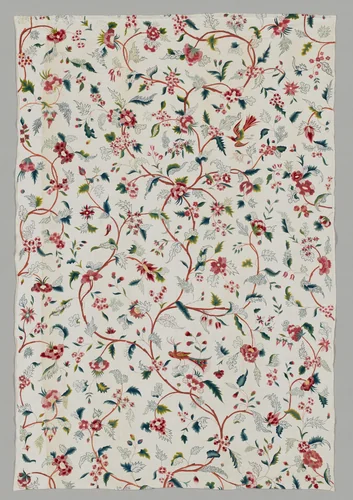
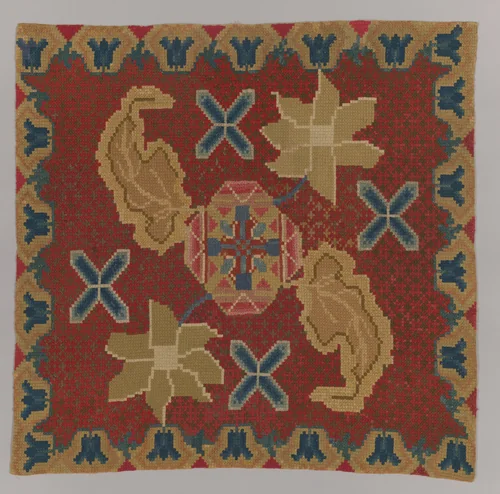
By the 16th and 17th centuries, the artistic focus shifted markedly toward the assertion of dynastic power and domestic display. The two attributed English paintings, including the portrayal of Henry VIII, Elizabeth I, and Edward VI, offer invaluable insight into Tudor court aesthetics and political iconography. Simultaneously, textiles became a crucial medium for demonstrating wealth and social status, exemplified by pieces like the Panel of English Elizabethan Embroidery. These complex stitched works often transposed monumental compositions into intimate, decorative objects, sometimes featuring detailed biblical narrative scenes like Susanna and the Elders. Many of these significant historical objects are now available as downloadable artwork for scholars globally.
Although the identities behind this catalogue remain broadly defined as "English," their works trace a compelling evolution in technique, material use, and subject matter, from spiritual devotion to secular statecraft. Their importance is underscored by their presence in major international institutions, including the Art Institute of Chicago. While the originals are preserved under exacting conditions, reproductions of these historical artifacts are increasingly in the public domain, allowing for unprecedented study and appreciation of these enduring examples of English craftsmanship.
Source: Wikipedia · CC BY-SA 4.0