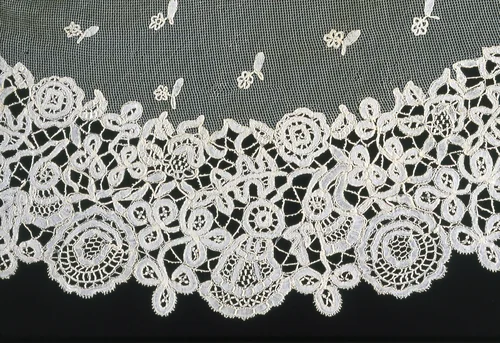
England, Honiton
Honiton, England, represents a historical center of textile artistry recognized globally for its distinctive lace production. Active particularly between 1850 and 1875, the documented output from this region reflects the intricate, fine-needlework style highly prized during the mid-Victorian era. The surviving works associated with England, Honiton are established as museum-quality examples of 19th-century European textile craft.
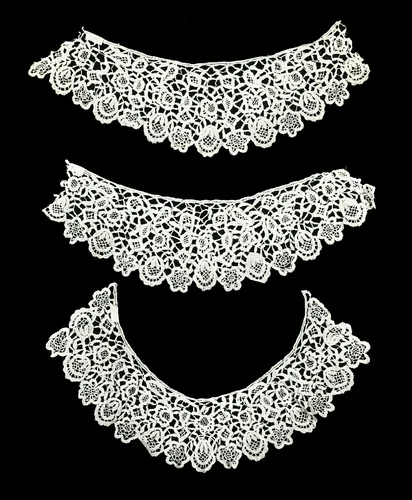
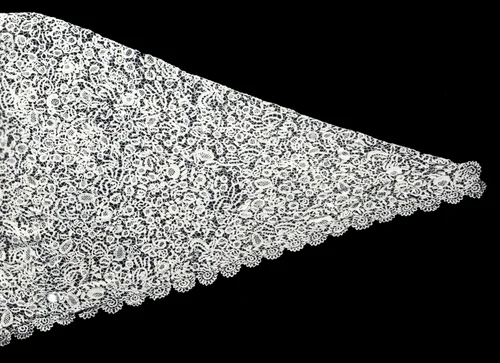
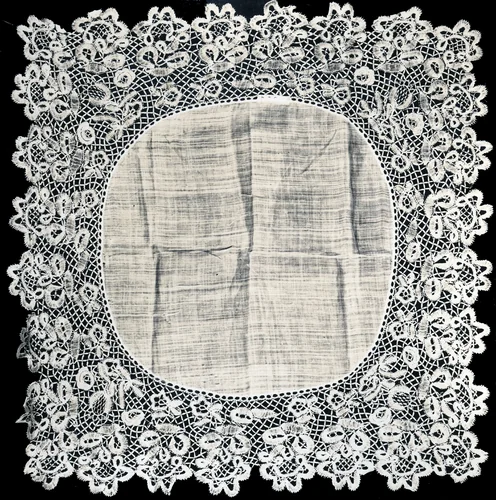
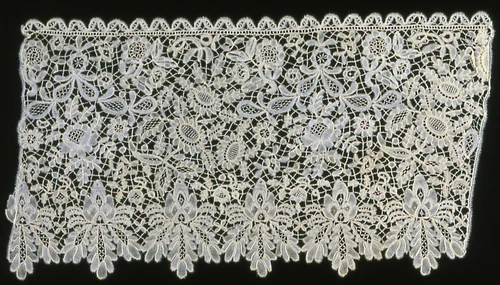
Six such pieces are represented in museum collections, notably at the Art Institute of Chicago. These preserved items illuminate the variety of functional and decorative applications of the textile art form, ranging from fashion accessories to domestic décor. Key textiles held in Chicago include the Collar and Two Cuffs, a Half Shawl, and a detailed Handkerchief. Further works in the collection are a separate Collar and the instructive, partially completed piece, Valance (Incomplete). Documentation and imagery of these historical textiles are frequently preserved as high-quality prints, allowing scholars to study the complex techniques. Items from this period are often considered within the public domain, offering broad access to examples of England, Honiton’s enduring textile legacy.