Emperor Lizong
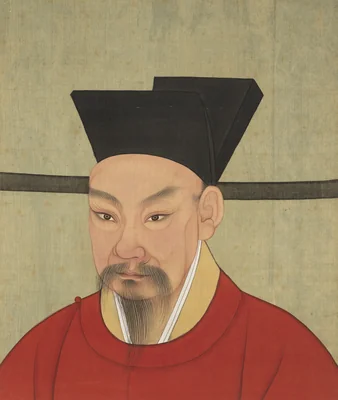
Emperor Lizong of Song, known personally as Zhao Yun, occupied the imperial throne as the 14th emperor of the Song dynasty and the fifth ruler of the Southern Song period, reigning from 1224 until 1264. While the final years of his tenure were marked by escalating military pressures, his significance within art history lies in his steadfast continuation of the Song tradition where imperial governance and refined artistic practice were intrinsically linked.
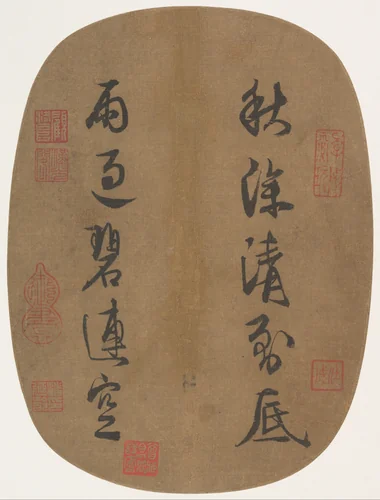
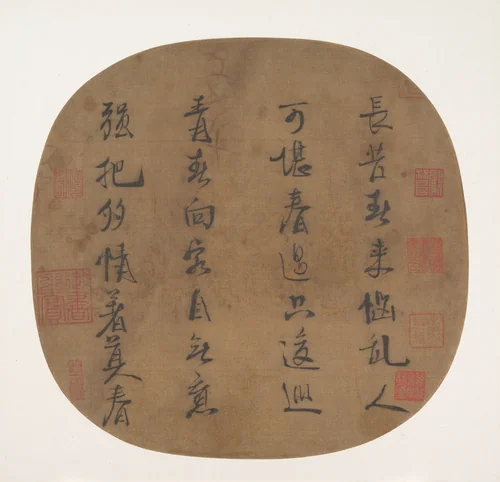
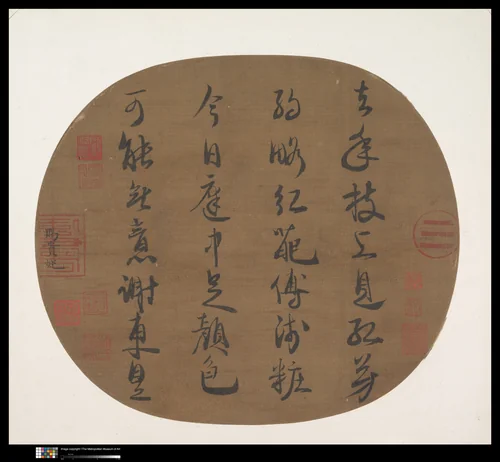
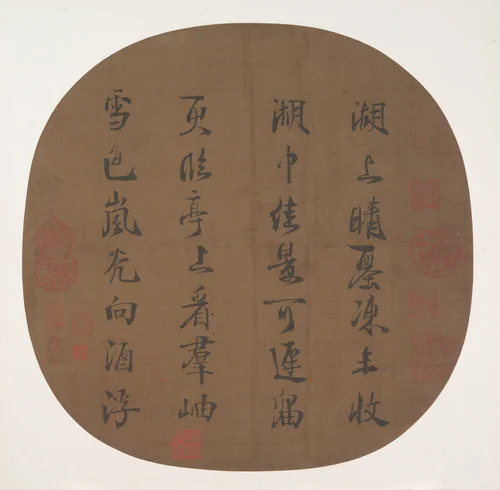
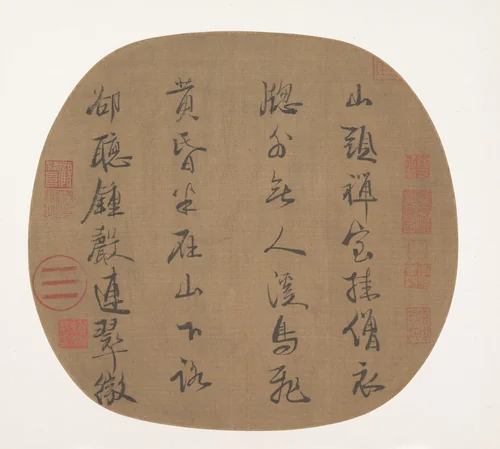
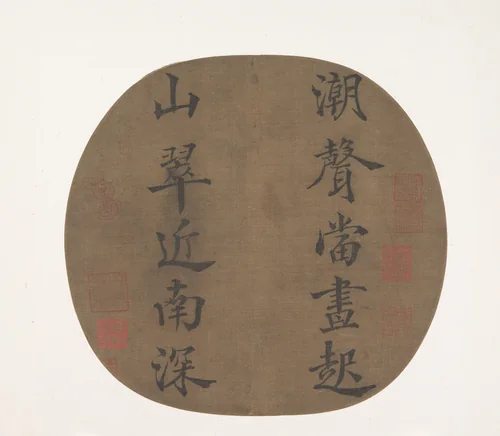
Lizong’s artistic contribution is primarily concentrated in calligraphy and poetry, an essential pairing in the literati tradition. His extant oeuvre, preserved in prestigious collections including the Metropolitan Museum of Art, offers elegant examples of the small-scale album leaf, a format highly favored by the Southern Song court. Works such as Quatrain on Late Spring and the classically referencing Quatrain by Meng Haoran exemplify a highly controlled, refined brushwork. This style eschewed dramatic flourish in favor of an understated precision that communicated intellectual depth and scholarly discipline. The meticulous execution of pieces like Couplet on an Autumn Sky confirms his mastery of the imperial hand.
The practice of calligraphy by the emperor was simultaneously a political statement and a cultural endeavor. It validated his role not merely as a military leader, but as the ultimate arbiter of taste and tradition. It is perhaps a subtle observation that while historians may debate the efficacy of his political administration during a time of immense external threat, his aesthetic judgment remained broadly unquestioned.
The preservation of the emperor's subtle yet sophisticated output provides crucial documentation for the cultural standards of the 13th-century court. Today, the study of these delicate works is highly accessible. Scholars frequently examine high-quality prints derived from the original album leaves to appreciate the nuanced variations in Song dynasty brushwork. Furthermore, as key documents of Chinese imperial art, select Emperor Lizong prints are increasingly available in the public domain, making this museum-quality material accessible for global research and appreciation as downloadable artwork.
Source: Wikipedia · CC BY-SA 4.0