Emily Sargent
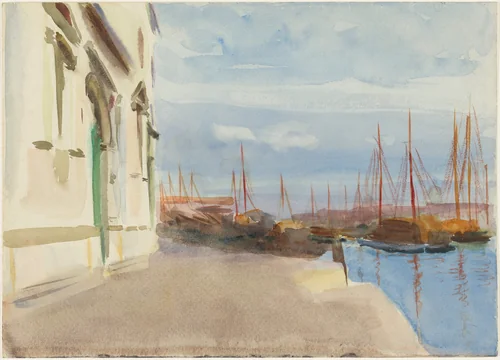
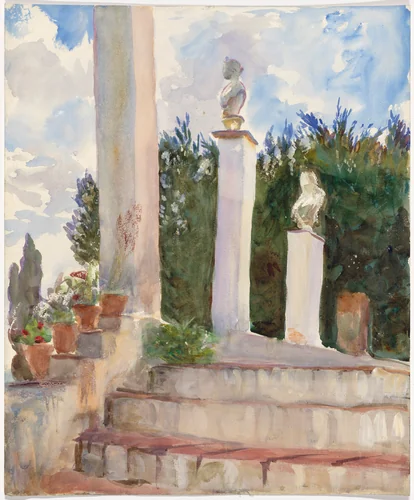
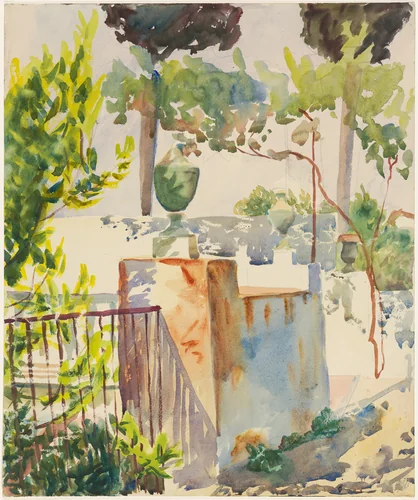
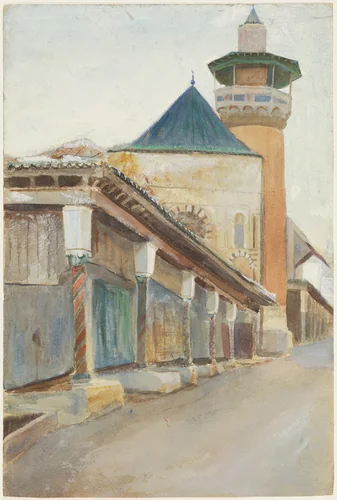
Emily Sargent (1857-1936) was a profoundly skilled watercolor artist whose prolific output spanned decades, tracing an international itinerary alongside her celebrated sibling, John Singer Sargent. While often relegated to a footnote in discussions of nineteenth-century American expatriate art, Sargent maintained an intensely focused and technically astute practice, specializing in the rapid, evocative capture of landscape, architecture, and interior studies fundamental to the period's travel sketches.
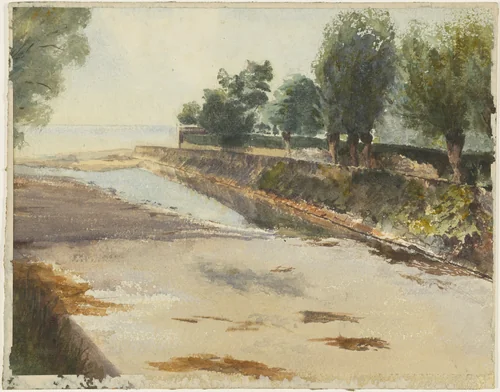
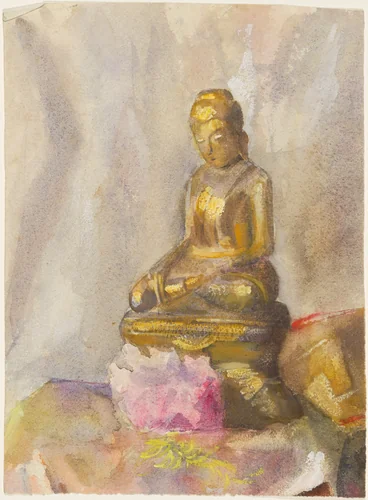
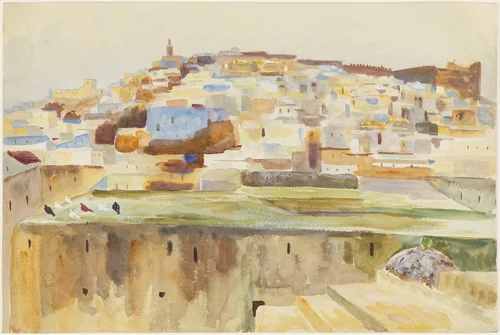
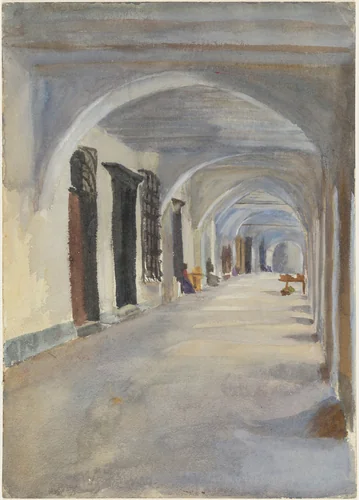
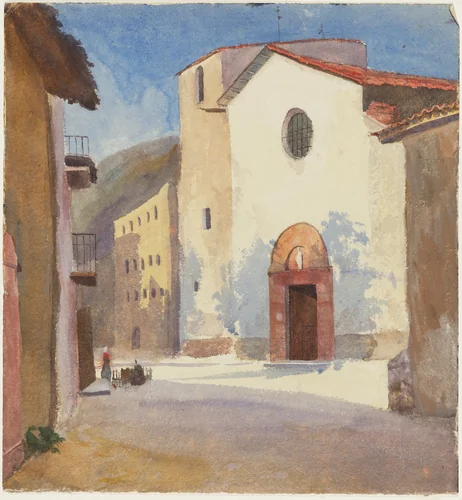
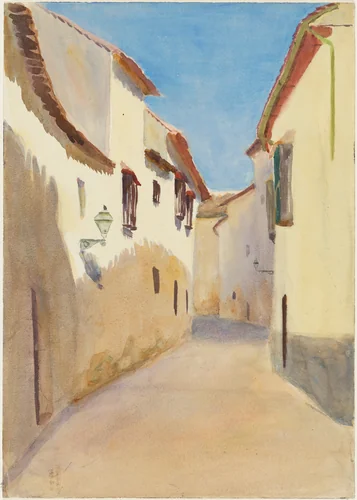
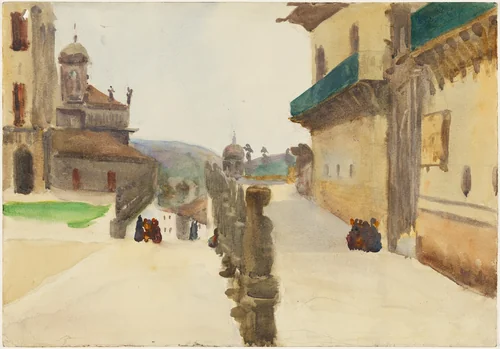
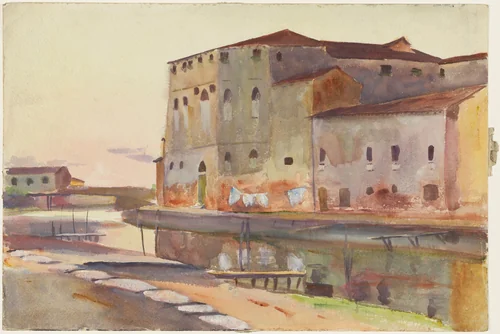
Sargent’s chosen medium was watercolor, deployed with a fluid precision visible across her known works. Her active period, roughly 1884 to 1912, charts extensive European and North African travel. Her database entries, including subjects like Vevey, Tangier, and the highly detailed architectural renderings A Loggia and Church and Street, Camprodon, testify to a sustained interest in complex light and shadow conditions achieved through meticulous washes. The inclusion of figure studies, such as the watercolor of a Statuette of a Buddha, demonstrates a versatility beyond mere travelogue, suggesting an artist who used her private practice to master diverse compositional challenges.
The historical trajectory of Sargent's recognition is unusual. Despite painting steadily throughout her life, she exhibited her work publicly only once. This profound professional reticence meant her considerable technical abilities remained almost entirely unknown to the broader public. The great body of her work served instead as an intimate, masterfully recorded travel diary, rarely intended for the demanding marketplace.
This obscurity began to lift significantly following her death, when her family initiated a series of crucial donations, placing examples of her output in major international institutions, most notably the National Gallery of Art. The stewardship of these museum-quality collections has led to a growing re-evaluation of her abilities. Today, the increasing recognition of Emily Sargent paintings means that works once reserved for the private sphere are becoming accessible to wider audiences, often through public domain archives offering high-quality prints for study and appreciation. Her eventual emergence into the public consciousness confirms that artistic brilliance is not always predicated on immediate public fanfare.