Emile Bernard
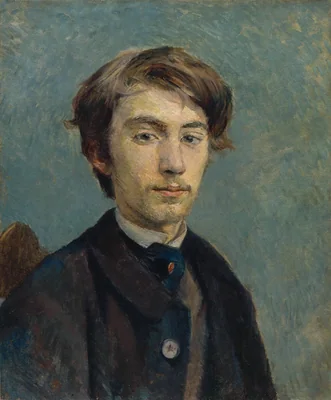
Émile Henri Bernard (1868-1941) occupies a crucial, though often debated, position in the transition from Impressionism to the expressive schools of the late nineteenth century. A French Post-Impressionist painter and writer, Bernard is essential viewing for understanding the foundations of modernist color theory. Though his career spanned decades, his most profound and stylistically radical contributions were concentrated early, between 1886 and 1897. During this intense period of innovation, Bernard became inextricably linked to the development of Cloisonnism and Synthetism. These movements rejected naturalistic depiction in favor of flat planes of color defined by dark, heavy outlines, echoing medieval stained glass and Japanese woodcuts.
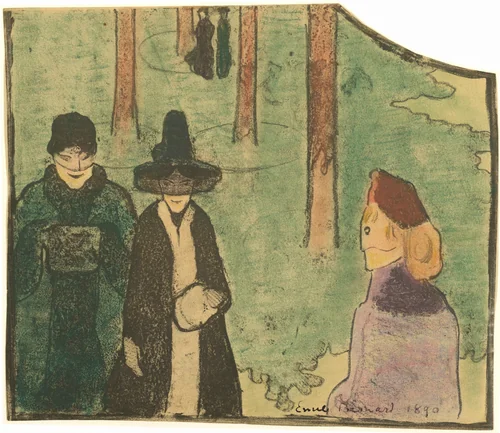
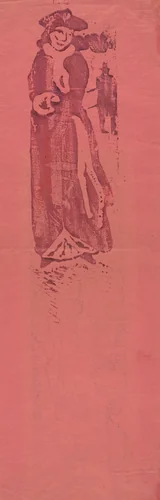
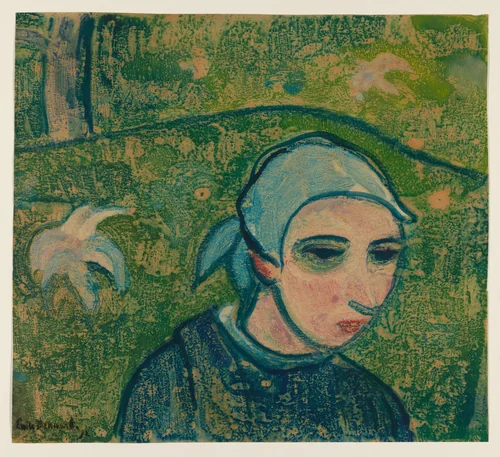
Bernard’s role as an artistic catalyst was defined by his highly influential friendships. He maintained close creative exchanges with Vincent van Gogh, Eugène Boch, and, most significantly, Paul Gauguin, with whom he spent crucial periods in Brittany. It was during these pivotal years that the tenets of Synthetism, focusing on the emotional and symbolic synthesis of appearance and feeling, were formalized. Bernard was a key figure in this circle, generating works like the dynamic study in movement La Promenade and the compelling figural piece Woman with a Muff (La Dame au Manchon). It is perhaps one of modern art's more amusing ironies that the revolutionary artistic language Bernard helped pioneer quickly became the adopted style of his older, more famous contemporaries.
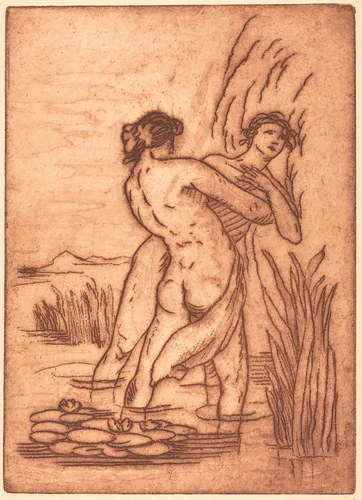
Beyond the easel, Bernard was a prolific, if often overlooked, man of letters. His literary contributions, which included poetry, plays, and rigorous art criticism, provide indispensable first-hand accounts concerning the formative years of modern art, a perspective few of his peers could match. His art historical statements offer invaluable context regarding the developments in Pont-Aven and subsequent modernist movements. Today, while many original Emile Bernard paintings reside in major institutions, including the Metropolitan Museum of Art and the National Gallery of Art, his graphic works, such as the quiet contemplation of Laundry (La Lessive), are increasingly accessible. These high-quality prints and downloadable artwork ensure that Bernard's innovative influence on color and form remains available to a contemporary audience, often through resources found in the public domain.
Source: Wikipedia · CC BY-SA 4.0