Emanuel de Witte
Emanuel de Witte (1617–1692) was one of the defining figures of architectural painting during the Dutch Golden Age. Active from the mid-17th century, De Witte pioneered a visual approach that prioritized sensory experience and dramatic illumination over strict architectural transcription. His legacy rests on his transformative views of Protestant church interiors, particularly those in Amsterdam and Delft.
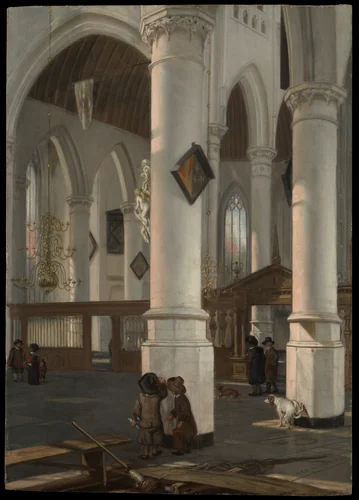
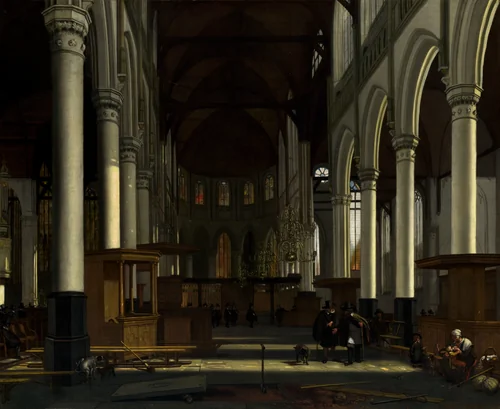
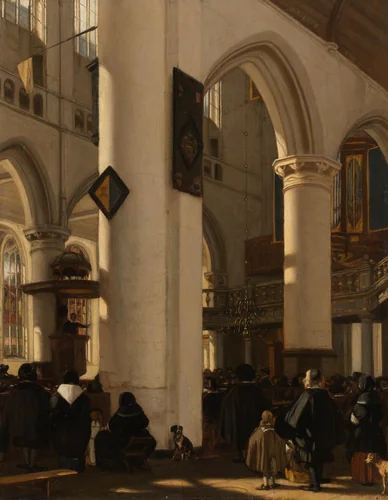
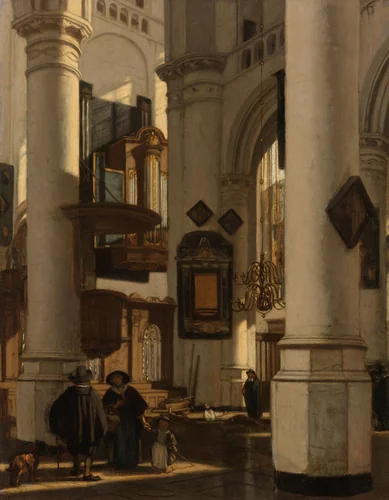
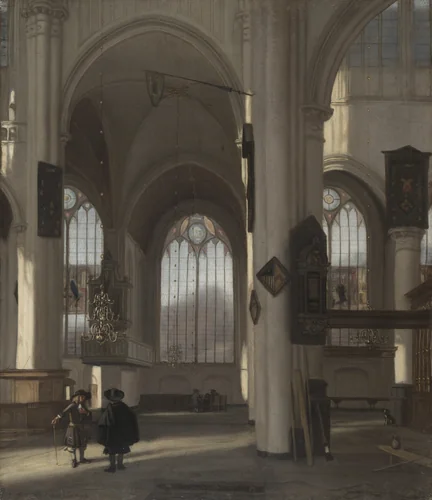
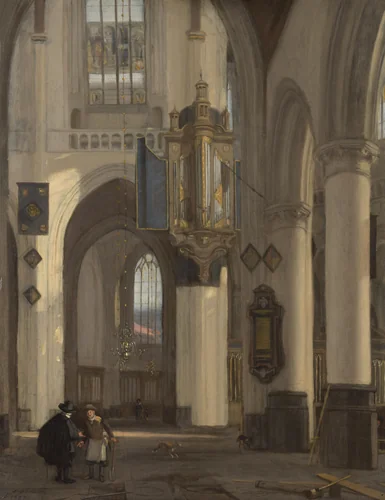
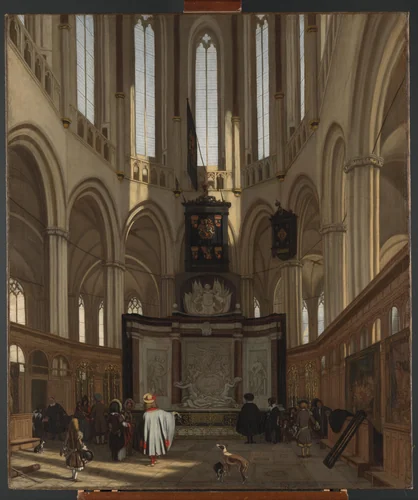
While his contemporary Pieter Jansz Saenredam meticulously charted the geometry of these spaces, De Witte was fundamentally concerned with atmosphere. Works like Interior of the Oude Kerk, Delft and The Interior of the Oude Kerk, Amsterdam illustrate his method of employing light as a dynamic compositional element. He frequently depicted sunlight streaming through high, clear windows, raking across massive stone pillars and illuminating the tiled floors, transforming the cool, rigid structures into theaters of light and shadow.
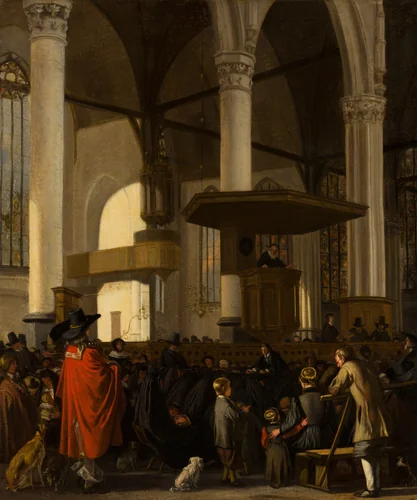
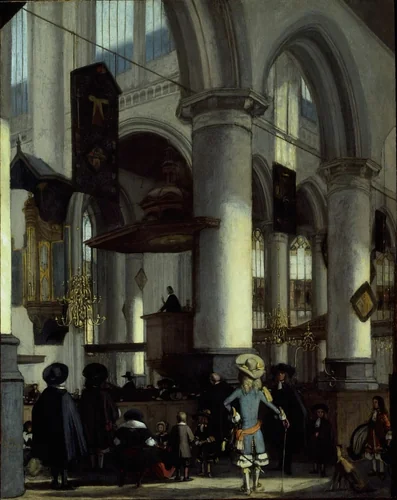
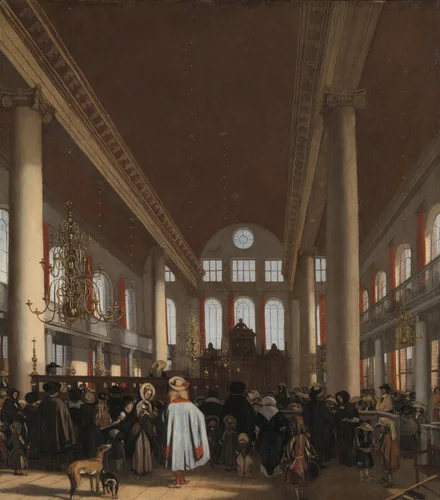
De Witte masterfully utilized perspective to emphasize the scale of the interiors, often subtly altering the actual building dimensions to achieve greater dramatic effect. Crucially, his scenes are populated. The small, often scattered figures, sometimes participating in a service as seen in Interieur van een protestantse, gotische kerk tijdens een dienst, serve to ground the immense volume of the building and inject a sense of movement and contemporary life into the otherwise stoic ecclesiastical setting. This fusion of the monumental and the mundane defines his innovative approach.
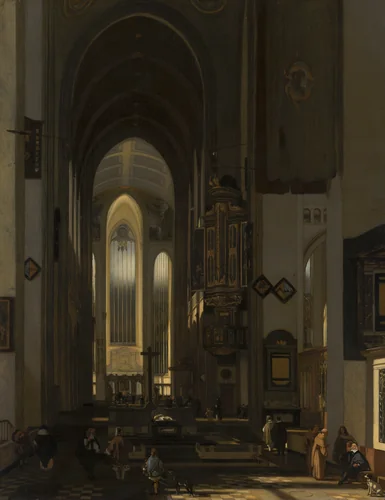
Though overwhelmingly celebrated for these architectural views, De Witte also produced a limited but compelling body of genre paintings. The sheer dominance of his church interiors suggests an artist keenly focused on capturing the sublime quality of vast enclosed spaces, perhaps exhibiting an artistic impatience with the lesser complexities of purely domestic scenes. His output, including both sacred and imaginary compositions like Interior of an Imaginary Catholic Church, is highly sought after. Collectors and scholars continue to study Emanuel de Witte paintings for their revolutionary use of light. Today, his masterful compositions are widely accessible through the public domain, allowing enthusiasts to obtain high-quality prints for study and appreciation. His works are held in premier collections worldwide, including the Art Institute of Chicago and the National Gallery of Art.
Source: Wikipedia · CC BY-SA 4.0