Ellen Thesleff
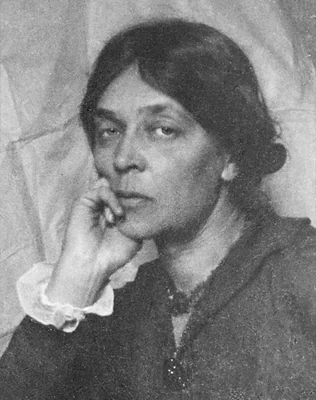
Ellen Thesleff (1869-1954) stands as a foundational figure in early twentieth-century Nordic art, universally recognized as one of Finland's preeminent modernist painters. Her work, characterized by a potent blend of emotional intensity and formal innovation, established her prominence internationally long before Helsinki fully embraced the avant-garde. She is historically categorized as a Finnish Expressionism painter, though her dedication to pictorial freedom allowed her practice to transcend simple stylistic definitions.
Trained initially in Helsinki and Paris, Thesleff swiftly moved past academic conventions. Although her formative years hinted at Symbolism, she quickly adopted the vibrant palette and simplified structures associated with post-Impressionist movements, often focusing on the human figure and the specific light and atmosphere of the Finnish landscape. Unlike some contemporaries who sought to institutionalize a single style, Thesleff maintained a restless artistic independence. Her sustained commitment to exploring the subjective experience rather than adhering to rigid aesthetic doctrines allowed her art to evolve organically over decades.
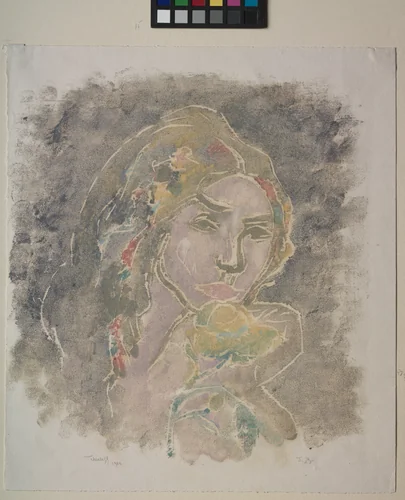
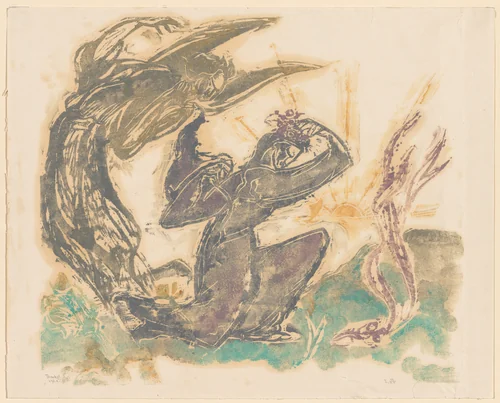
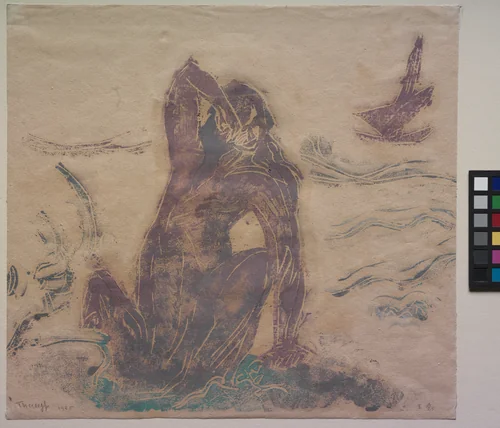
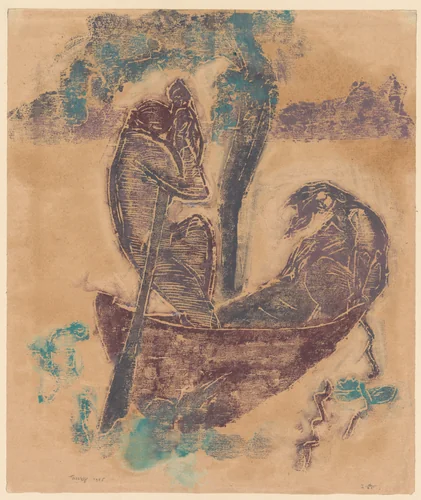
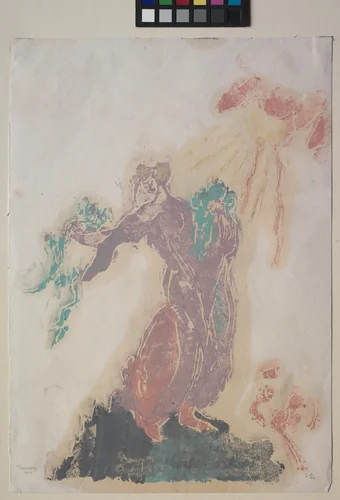
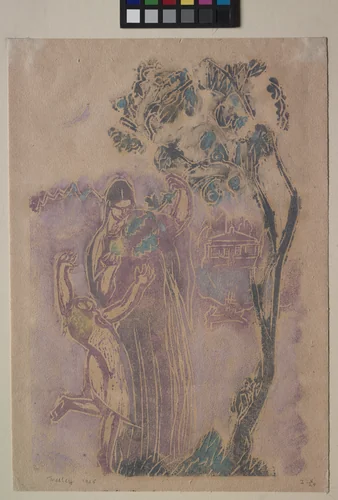
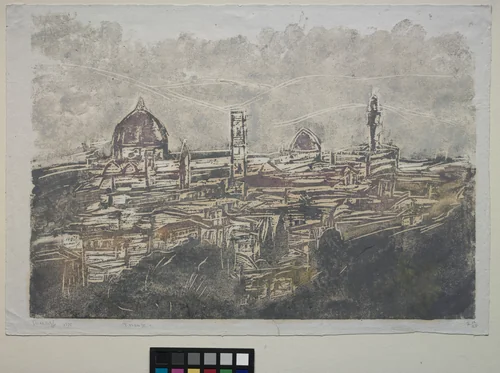
While primarily known for her substantial canvases, Thesleff’s engagement with printmaking in the 1920s offered a sharp, concise counterpoint to her fluid paintings. Active particularly between 1924 and 1925, her graphic output demonstrates a mastery of the woodcut medium, relying on bold lines and stark contrasts typical of the Expressionism movement. This period produced compelling studies such as Girl's Head, the spiritual clarity of The Annunciation, and genre scenes like Boating and At the Seashore. These works are widely held in major collections, including the Cleveland Museum of Art, testament to their museum-quality execution. It is perhaps telling that even in the graphic precision of her prints, such as Flower Girl, there remains an underlying sense of joyous movement characteristic of her most beloved canvases.
The enduring strength and clarity of Thesleff's vision ensure her central place in modern art history. Due to the age of these historic artworks, many original Ellen Thesleff prints are now available in the public domain. This accessibility allows researchers and enthusiasts worldwide to acquire high-quality prints, ensuring her significant contributions to modernist graphic art continue to be appreciated and studied globally.
Source: Wikipedia · CC BY-SA 4.0