Elizabeth Gould
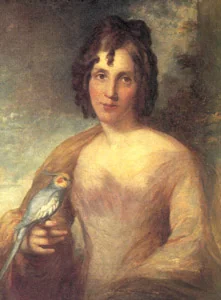
Elizabeth Gould (1804–1841) was a pivotal English scientific illustrator whose technical mastery and artistic clarity defined a generation of ornithological documentation. As the creative force and collaborator alongside her husband, the renowned naturalist John Gould, her contribution extended far beyond mere transcription; she was instrumental in producing the visual narrative that established their reputation for ambitious, definitive works on global avifauna.
Gould’s career reached its peak during the creation of The Birds of Australia, a groundbreaking project initiated following their 1838 expedition. While the immense scope of this endeavor is usually attributed to John Gould, Elizabeth undertook the demanding physical and artistic work of transforming field sketches into final, museum-quality images suitable for publication. Utilizing the relatively new technique of lithography, she produced the initial drawings and plates that captured species previously unknown to European science. Her methodology required balancing rigorous anatomical detail-work with an elegant compositional style, ensuring that each plate was both scientifically accurate and aesthetically appealing.
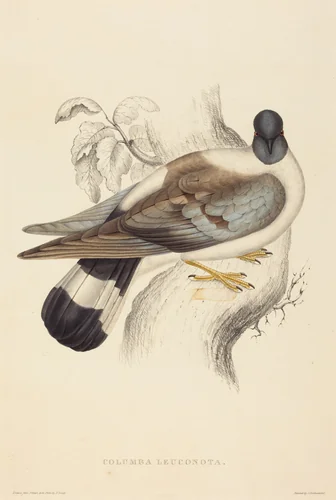
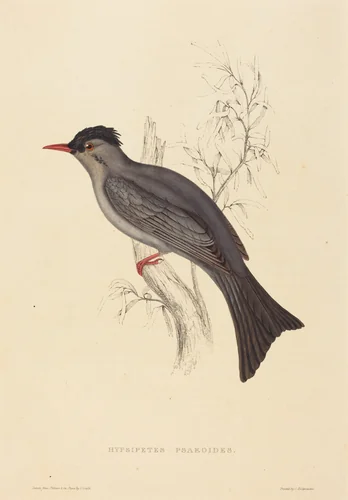
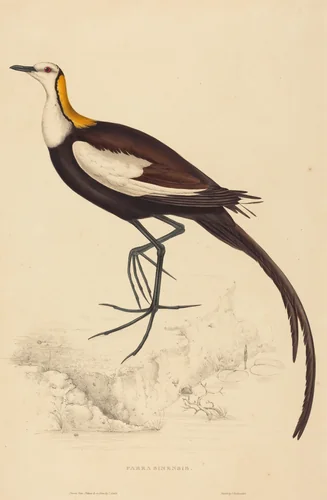
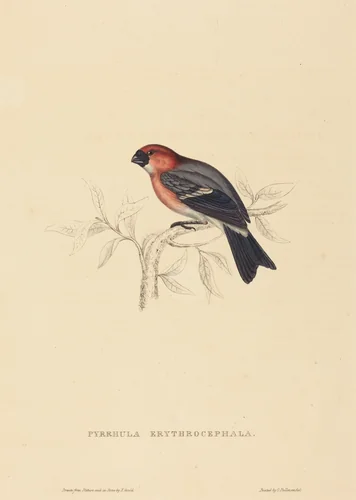
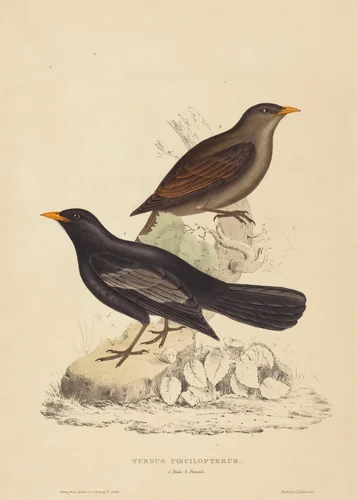
This synthesis of science and artistry is evident in works now held in major collections, including Columba Leuconota (Snow Pigeon) and the exquisitely detailed Hypsipetes Psaroides (Black Bulbul). Her dedication to depicting the exotic beauty of the Southern Hemisphere’s fauna, such as the vibrant Parra Sinensis (Pheasant-Tailed Jacana), cemented her status as a leading illustrator of her time. The enduring popularity of her depictions ensures that Elizabeth Gould prints continue to circulate widely among enthusiasts and scholars.
Despite her prolific output, Gould’s career was tragically brief; she died at the age of 37, having completed approximately 600 plates and drawings. It is perhaps one of the most curious facts of her career that many of the published illustrations derived from her initial sketches were later completed and credited to others following her death, underscoring how vital her foundational draftsmanship truly was. Her legacy persists through the ongoing study of natural history, perpetuated by her detailed imagery now securely in the public domain, allowing for the widespread appreciation of her high-quality prints.
Source: Wikipedia · CC BY-SA 4.0