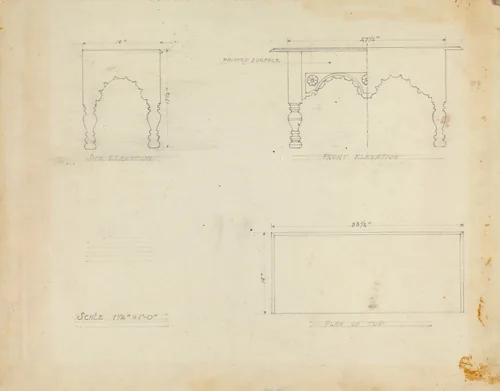
Elizabeth Curtis
Elizabeth Curtis holds an important, though sometimes historically diffused, place within the documentation of American decorative arts during the mid-twentieth century. Active primarily between 1935 and 1953, Curtis was a key contributor to the Index of American Design (IoAD), a significant division of the Federal Art Project established during the Depression era. Her work focused rigorously on documenting and illustrating historical objects, ensuring that American crafts and vernacular furniture traditions were preserved through precise, measured renderings for subsequent scholarly study.
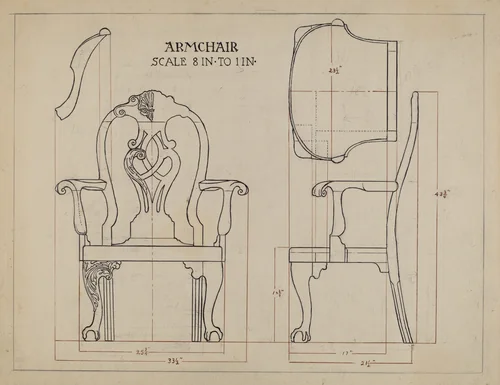
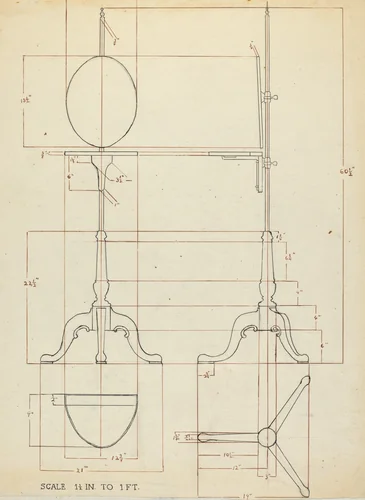
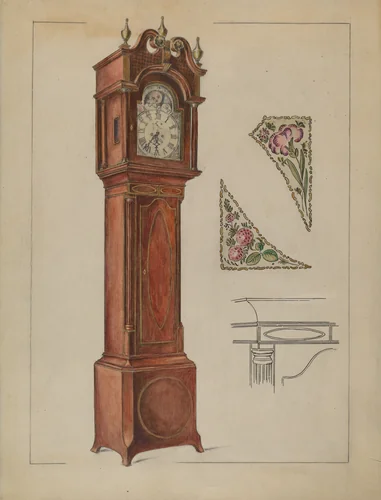
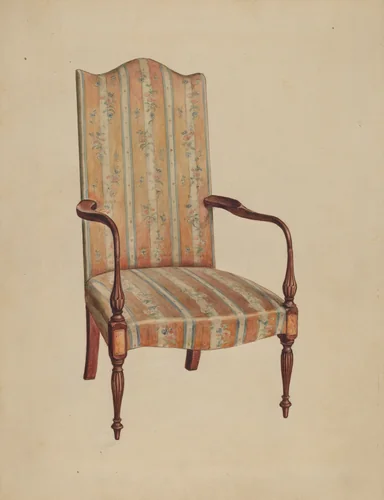
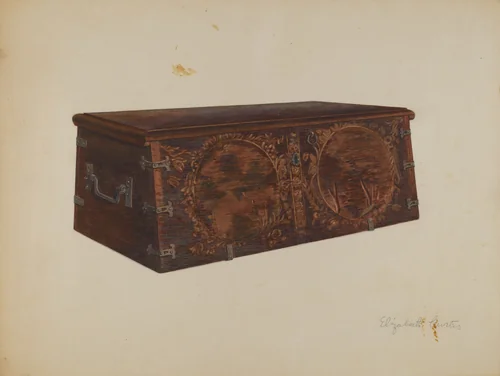
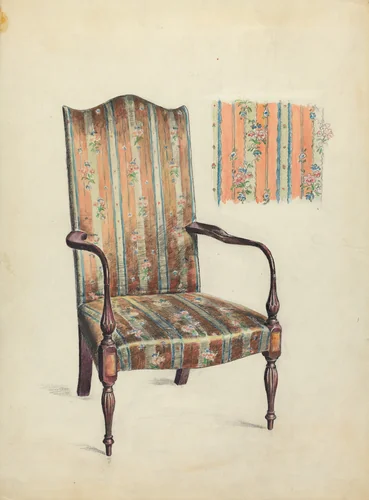
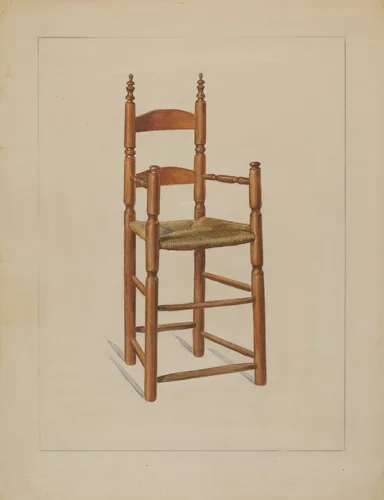
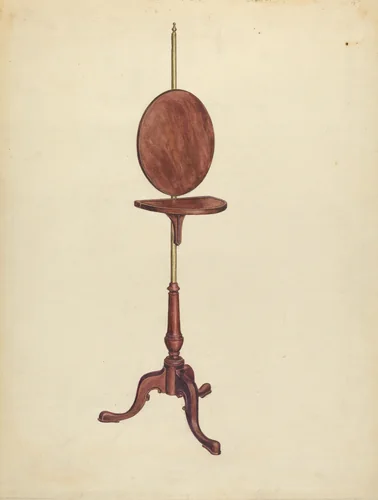
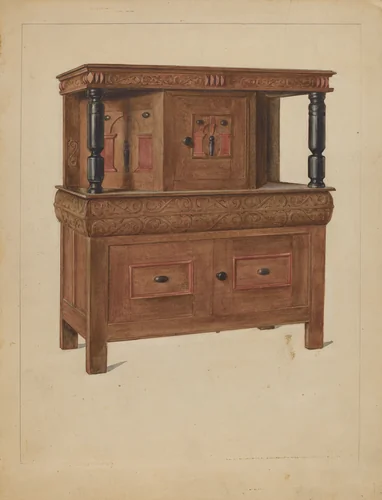
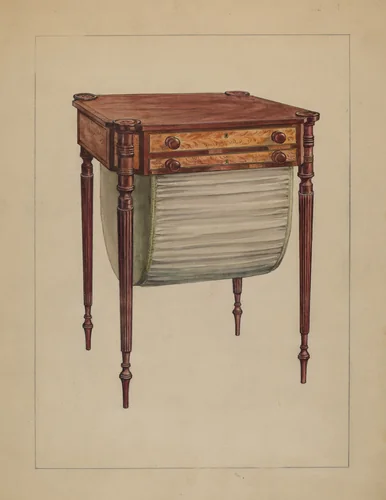
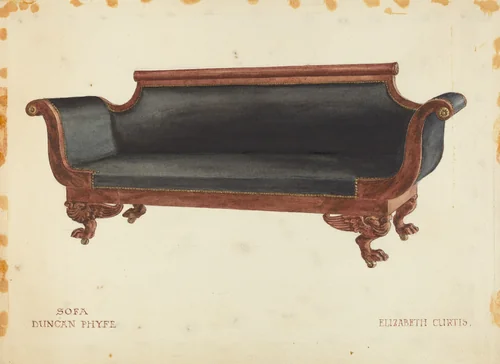
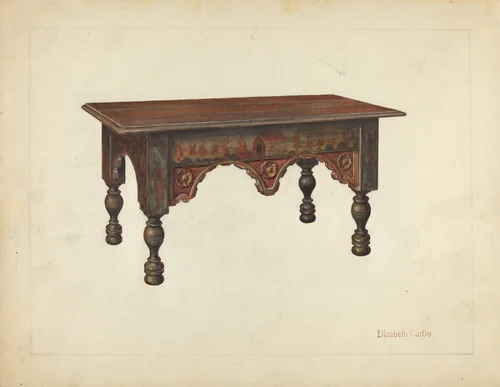
Curtis’s portfolio for the Index encompasses thirteen designs, demonstrating exceptional skill in technical rendering. As prescribed by the IoAD mission, these works serve less as expressive interpretations and more as exacting visual inventories, preserving the precise form, texture, and construction details of early American furniture and utilitarian objects. Among her notable renderings are the complex structure of the Pole Screen and Candlestand, the meticulous proportions of a Tall Clock, and detailed studies of traditional seating, including the Arm Chair and the practical Chest. The objective clarity and fidelity of these documents secured their permanent collection by the National Gallery of Art, ensuring their lasting utility. Such rigorous documentation remains vital for producing museum-quality reproductions and scholarly research materials.
The lasting impact of Curtis’s contribution rests substantially on its accessibility. As works created under the federally sponsored IoAD program, these designs are now readily available in the public domain, making high-resolution images accessible to scholars, designers, and the public globally. Yet, the biographical trail of Elizabeth Curtis presents a fascinating historical challenge. While her professional output is fully cataloged and attributed, her personal identity remains elusive, often confused in historical records with several contemporaries, including the American-British painter Elisabeth Curtis O'Sullivan (1865-1951) or the U.S. National Dancesport Champion of the 1980s. This historical ambiguity only heightens the appreciation for the work itself, allowing the unwavering technical precision of the designs to speak entirely for the artist, detached from personal celebrity. Her legacy is one of highly accomplished technical service to American material history, provided through easily downloadable artwork.