Elie Nadelman
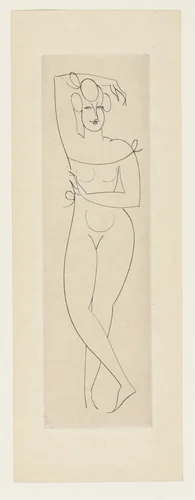
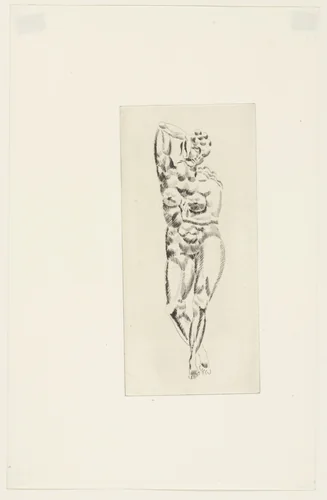
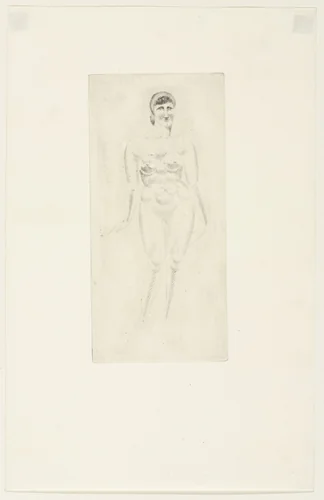
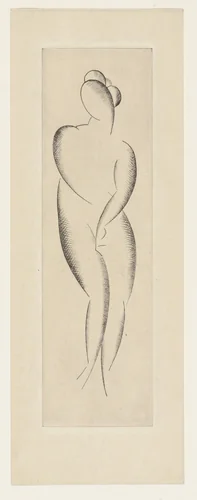
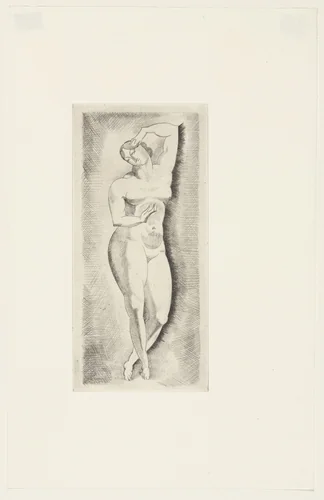
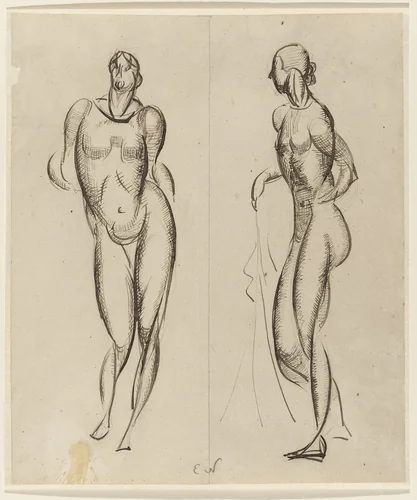
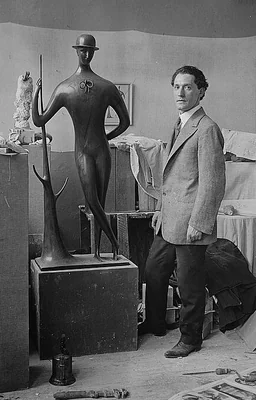
Elie Nadelman (1882-1946) was a foundational figure in early 20th-century modern sculpture and draughtsmanship. As a Polish-American artist associated with the intellectual ferment of the School of Paris, he developed an aesthetic characterized by streamlined elegance and reductive form. Nadelman’s early career, spanning approximately 1897 to 1909, established his reputation as an artist capable of synthesizing classical structure with nascent abstract ideals. His initial explorations focused heavily on the human form, rendered with striking economy, as evidenced by seminal works such as Figure and the various studies in the series Head.
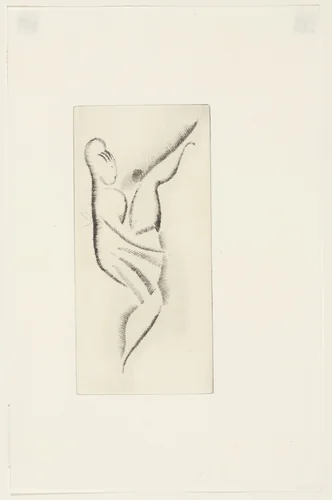
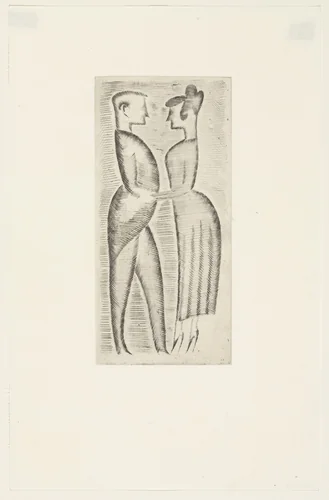
Nadelman’s strength as a draughtsman is widely acknowledged. His production included numerous studies—at least twelve known drawings and three early prints—which reveal his unwavering pursuit of perfect volumetric simplification. He sought a visual purity, distilling complex anatomical subjects into their essential geometric components. This approach separated him decisively from 19th-century academic realism, positioning him squarely within the modernist push towards formal innovation. His iconic rendering Horse, for instance, manages to capture dynamic movement while relying on minimal, sophisticated lines.
A unique aspect of Nadelman’s development, often overlooked when discussing his rigorous Parisian training, was his parallel and abiding interest in folk art. He became a significant collector, appreciating the untrained beauty and directness found in vernacular objects. This dedication to anonymous, traditional craft informed his own work, imbuing his sleek modernist figures with a subtle, timeless charm that belies their intellectual rigor. This commitment to primary forms is part of why high-quality prints of his more popular graphic works, like Head of a Woman, remain valuable resources for contemporary appreciation of Elie Nadelman prints.
Nadelman’s significance is confirmed by his inclusion in major institutional holdings, notably the Museum of Modern Art, which preserves key examples of his oeuvre. Although his career transitioned later into celebrated sculptural pieces, the intellectual foundation laid during his intensive period of drawing and printmaking provides the essential key to understanding his subsequent mastery. Many of these seminal works from his early years are now part of the public domain, offering downloadable artwork for scholarly study and general enjoyment.
Source: Wikipedia · CC BY-SA 4.0