Eishosai Choki
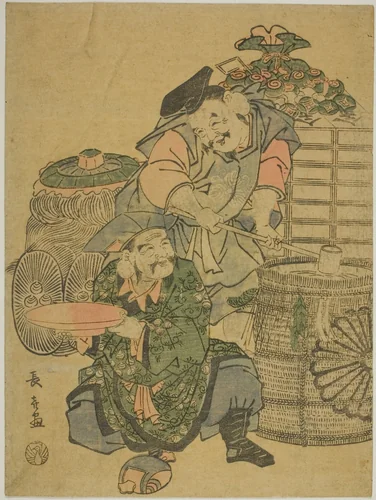
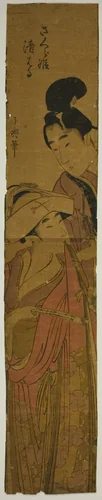
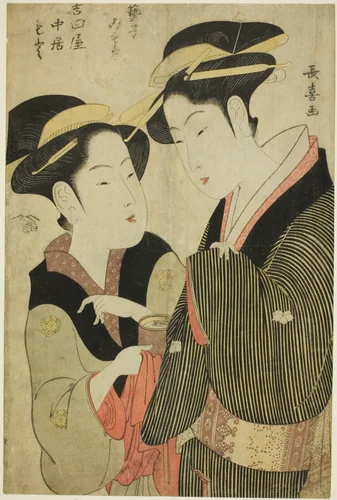
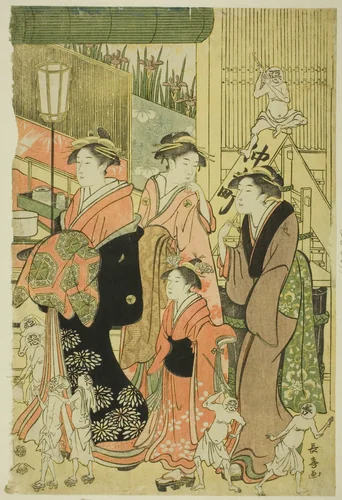
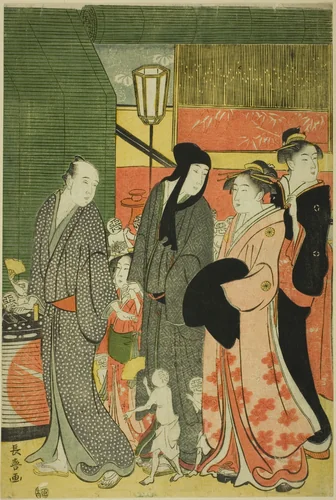
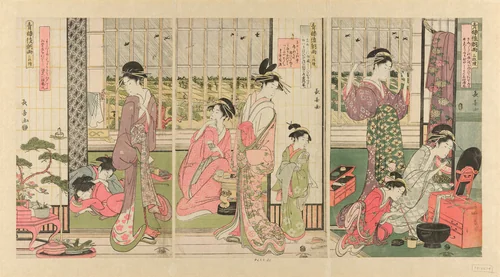
Eishosai Choki, also known by the name Momokawa Choki, was a highly influential designer of ukiyo-e woodblock prints active during the late eighteenth and early nineteenth centuries (c. 1786-1808). Flourishing during the Kansei Era, a peak period for technical refinement in Japanese printmaking, Choki established himself as a master of bijin-ga, the genre dedicated to portraits of beautiful women. His significance is cemented by his association with the renowned painter and printmaker Toriyama Sekien (1712-1788), whose studio also trained his prominent contemporary, Utamaro.
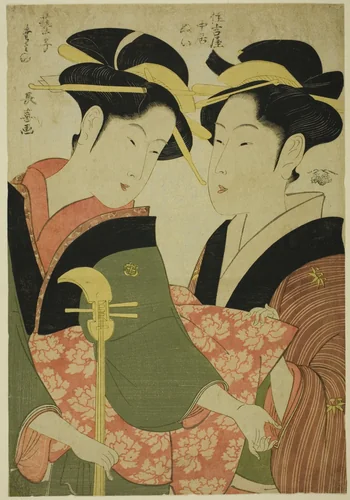
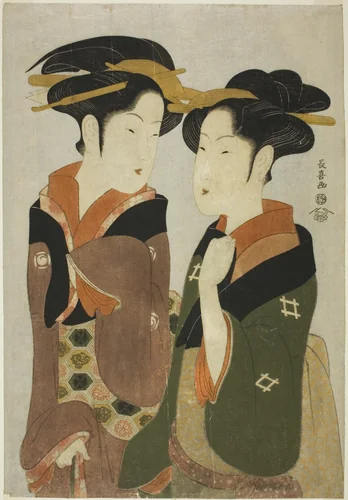
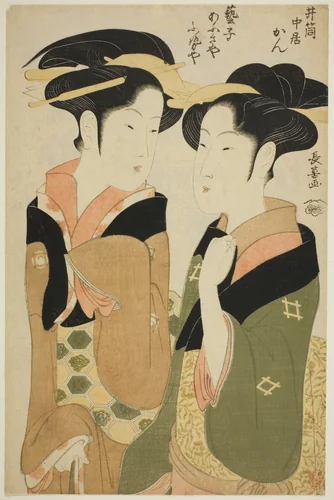
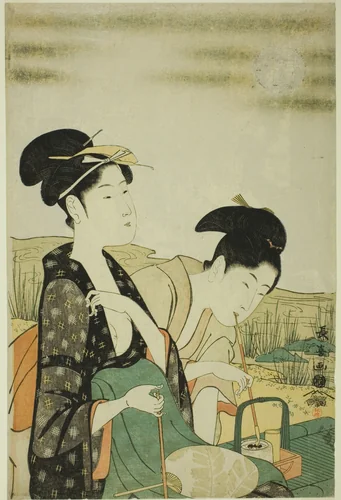
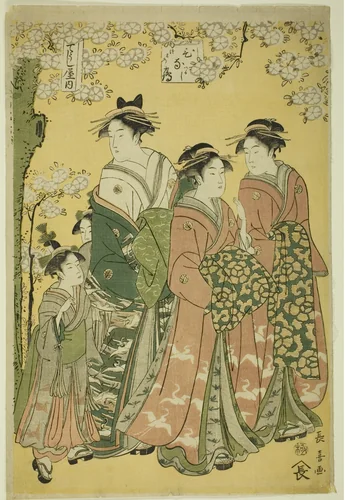
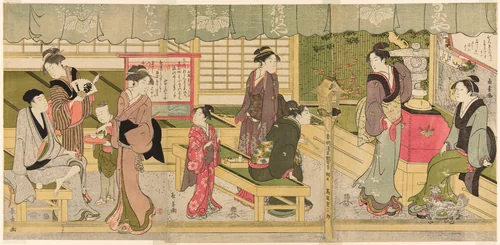
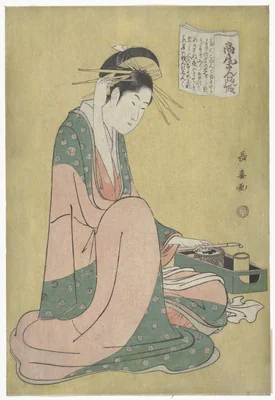
Choki is celebrated for distinguishing his style from his peers through innovative figure composition and atmospheric treatment. While the elegant female form remained central, Choki developed a preference for women characterized by a slightly exaggerated slenderness and refined posture. Crucially, he often abandoned the plain, undifferentiated backgrounds common in earlier prints, instead setting his subjects against intricate, moody, or deeply textured environments that enhanced the psychological depth of the scene. This approach shifted the focus from static portraiture toward subtle narrative suggestion.
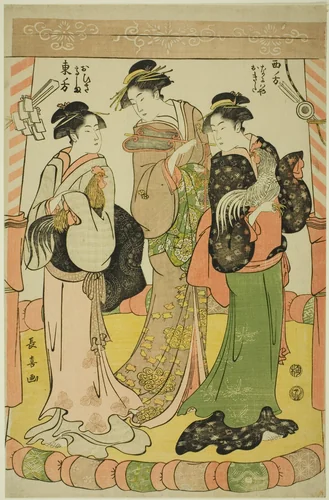
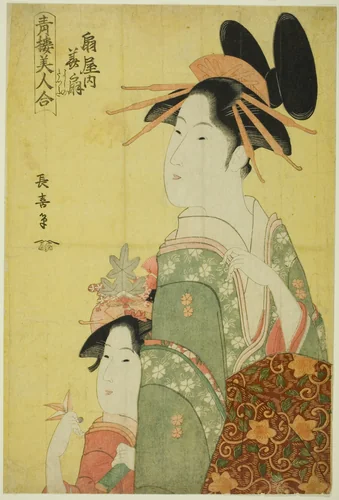
His artistic range spanned the high-status courtesans of the Yoshiwara pleasure quarter, as seen in works like Hanaogi of the Ogiya, from the series Beauties of the Pleasure Quarters (Seiro bijin awase), and intimate, playful domestic dramas. A notable example of his willingness to chronicle Edo's celebrity culture is The Cock Fight - Ohisa of the Takashimaya and Okita of the Naniwaya, which pits two famous teahouse beauties against each other in a fictional, spirited contest. Choki possessed a particular skill for capturing the fleeting expressions and delicate tensions inherent in these high-stakes social interactions, documenting the era’s taste for status and recognized figures.
Although his active period was relatively brief, Choki's contributions to late-Edo ukiyo-e are undeniable, providing a subtle but compelling contrast to the era’s dominant printmakers. His highly sought-after compositions are preserved in major institutions, including the Art Institute of Chicago, offering museum-quality examples of the period's output. Thanks to the accessibility of these historical collections, Eishosai Choki prints are often available as downloadable artwork today, allowing for widespread study of his distinctive hand and sophisticated approach to atmosphere.
Source: Wikipedia · CC BY-SA 4.0